Hatchlands Park
Georgian manor built for a naval hero — Robert Adam interiors, the world's largest collection of composer-owned keyboard instruments and 422 acres of parkland
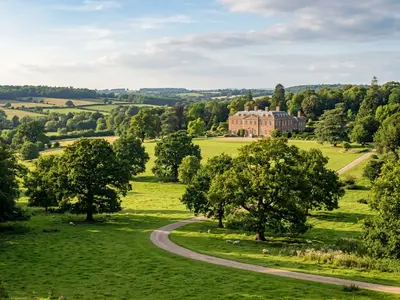
Georgian manor built for a naval hero — Robert Adam interiors, the world's largest collection of composer-owned keyboard instruments and 422 acres of parkland
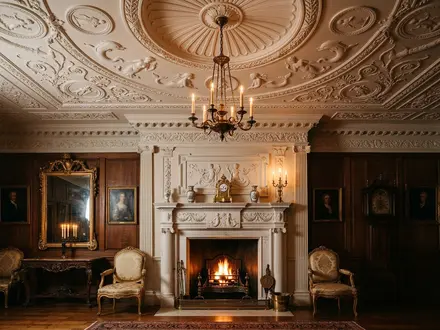
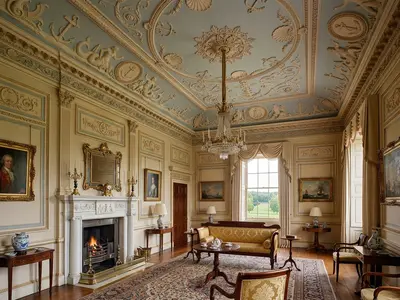
Admiral Edward Boscawen built Hatchlands in 1756 with prize money won defeating the French fleet. He commissioned the young Robert Adam to decorate the interiors — the architect's earliest known work in an English country house. Nautical motifs of dolphins, mermaids and anchors run through the plasterwork ceilings, a tribute to the Admiral's career at sea.
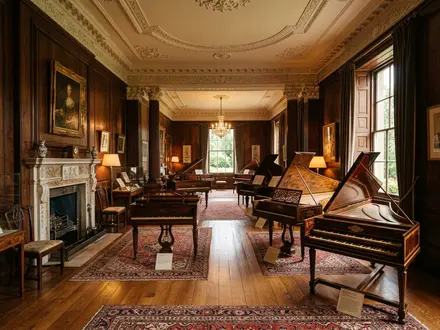
Today the rooms house the Cobbe Collection, one of the world's largest gatherings of composer-related keyboard instruments. Fortepianos once played by Mozart, Chopin and Elgar stand alongside Marie Antoinette's Erard pianoforte. Beyond the house, 422 acres of parkland offer woodland walks, ancient bluebell carpets in spring and views across the Surrey hills.
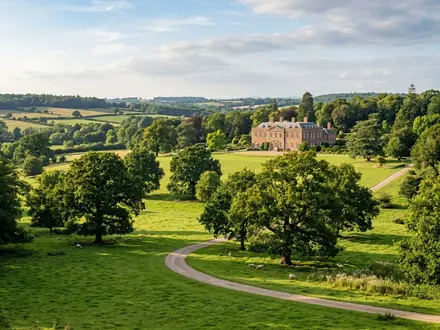
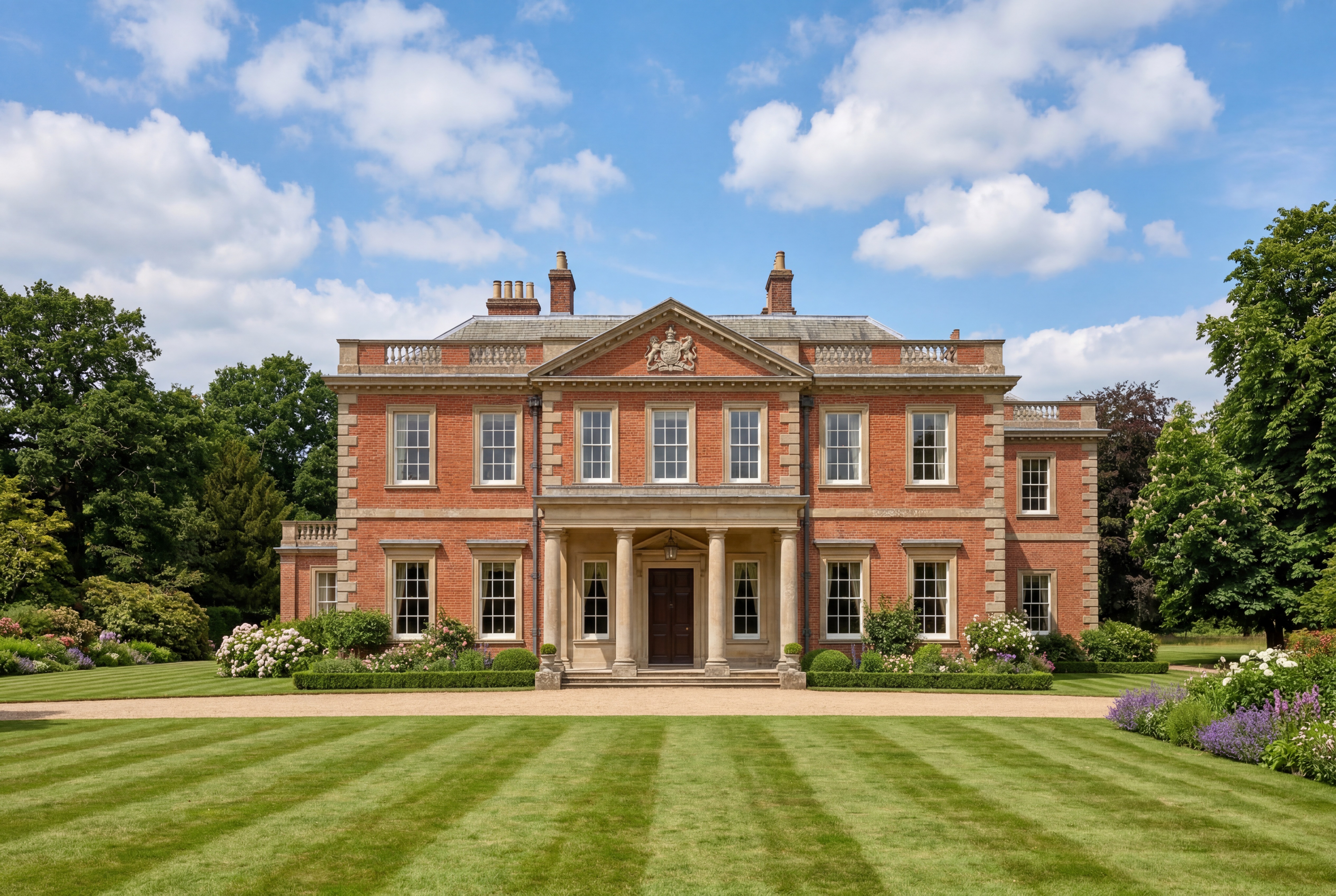
Hatchlands Park owes its existence to the career of Admiral Edward Boscawen, one of the most successful naval commanders of the eighteenth century. Boscawen amassed considerable prize money from captured French vessels during the War of the Austrian Succession, and when his wife Fanny finally found the ideal plot in East Clandon, he had the means to build from scratch. Construction began in 1756, producing the handsome red brick Georgian manor house that stands today.
Boscawen's choice of interior designer proved inspired. The young Robert Adam had recently returned from his Grand Tour of Italy, brimming with ideas drawn from Roman antiquity. Hatchlands became his first commission for an English country house, and the results remain striking. The saloon and library ceilings are decorated with intricate plasterwork featuring nautical themes — dolphins leaping through scrollwork, mermaids, anchors and cannon — a fitting tribute to the Admiral who paid for it all. Sadly, Boscawen died just three years after the house was completed, never fully enjoying the home he had built. The property passed through several families before the architect Harry Stuart Goodhart-Rendel gave it to the National Trust in 1945.
Since 1988, the rooms at Hatchlands have housed the Cobbe Collection, assembled by Alec Cobbe over several decades. It is one of the world's largest and most important gatherings of composer-related keyboard instruments, with over forty pieces spanning three centuries of musical history. Eighteen of these instruments were owned or played by some of the greatest names in Western music.
The collection includes a clavichord associated with Johann Christian Bach, a fortepiano believed to have been played by the young Mozart during his London visit in 1765, and the Pleyel grand piano used by Chopin for his final concerts. Marie Antoinette's Erard pianoforte is another centrepiece. The instruments are displayed in the Adam rooms where they can be heard during occasional recitals — a rare chance to experience historic music on the instruments for which it was written. Beyond the collection, the house itself rewards close attention. Repton-designed grounds frame views from the principal rooms, and later Victorian additions sit comfortably alongside the Georgian core.
The 422-acre parkland at Hatchlands is open 363 days a year and offers some of the finest walking in Surrey. Humphry Repton landscaped the grounds in the late eighteenth century, and his influence is still visible in the sweeping lawns, strategically placed tree groups and carefully framed views towards the North Downs. Several waymarked trails wind through the estate, ranging from short strolls across the west lawn to longer circuits through ancient woodland and open grassland.
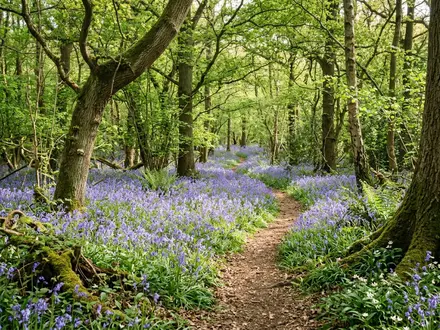
The star attraction for many visitors is the bluebell display. From mid-April to early May, the ancient woodland floor transforms into a sea of blue, drawing walkers and photographers from across the south-east. Timing is everything — the National Trust website publishes updates on the bloom each spring. A small cafe near the car park serves light meals and refreshments throughout the year. The house is only open on limited afternoons between April and October, so check the schedule before visiting if the Adam interiors and Cobbe Collection are priorities. Clandon station is the nearest rail stop, though the walk through the village takes around thirty minutes; a taxi from Guildford is the more comfortable option. Allow two to four hours depending on whether you visit the house, walk the parkland or both.
Under 5s free. Parking included for National Trust members. Grounds-only tickets available at a reduced rate. Prices may vary for special events
The ancient woodland bluebells peak from mid-April to early May. Check the National Trust website for bloom updates before visiting, as the display varies by a week or two each year.
The house is only open Tuesday to Thursday and Sunday afternoons from April to October. The parkland and cafe are open daily year-round, but plan ahead if you want to see the Adam interiors and Cobbe Collection.
The car park fills quickly during peak bluebell season, particularly on sunny weekends. Arriving before 11am gives you the best chance of parking close to the entrance and quieter woodland paths.
Parkland paths can be muddy after rain, especially through the woodland areas. Walking boots or sturdy shoes are advisable for the longer trails across the estate.
The neighbouring Clandon Park, also National Trust, is just a mile away and undergoing a major restoration. Check opening arrangements as access varies during the rebuild programme.

London Travel Writer · 12+ years covering UK attractions and tourism
Last reviewed: March 10, 2026