Ham House and Garden
A magnificently preserved Stuart mansion on the Thames — lavish 17th-century interiors, formal gardens and a productive kitchen garden
A magnificently preserved Stuart mansion on the Thames — lavish 17th-century interiors, formal gardens and a productive kitchen garden
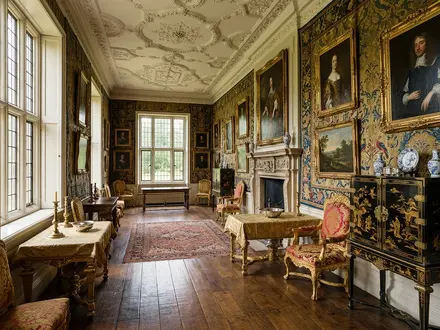
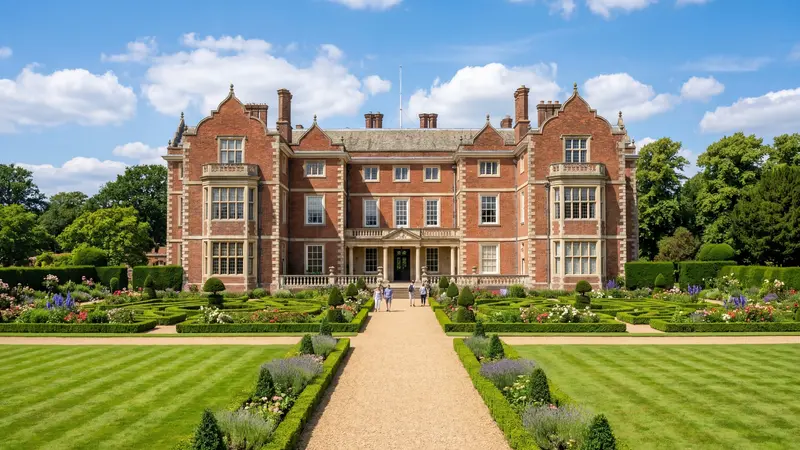
Built in 1610 and lavishly remodelled by the Duchess of Lauderdale in the 1670s, Ham House is one of Europe's best-preserved Stuart interiors. Its rooms still hold the textiles, furniture and paintings that made it a showpiece of Restoration extravagance three and a half centuries ago.
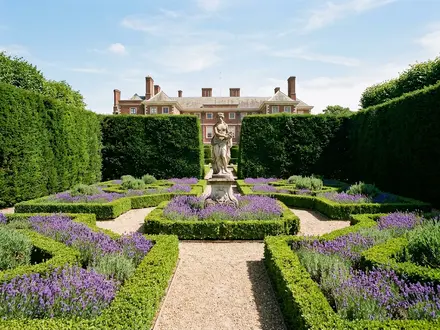
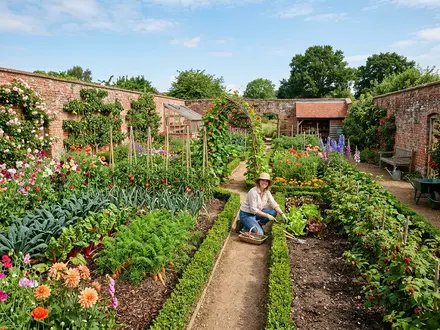
Beyond the house, formal gardens restored to their 17th-century design stretch down to the Thames. A productive walled kitchen garden supplies the Orangery Cafe, while the Cherry Garden and Wilderness offer quiet corners to explore at a leisurely pace.
Ham House was built in 1610 by Sir Thomas Vavasour, Knight Marshal to James I, on the south bank of the Thames near Richmond. The house passed to William Murray, a childhood companion of Charles I, who was given the property in 1626. Murray's daughter Elizabeth inherited the estate and, through her marriage to the Duke of Lauderdale in 1672, transformed Ham House into one of the most lavishly furnished homes in Restoration England.
The couple spared no expense. They employed the finest craftspeople to install richly carved woodwork, gilded leather wall hangings, elaborate plasterwork ceilings and furniture imported from across Europe. After Elizabeth's death in 1698, the house passed to her descendants from her first marriage, the Tollemache family, who occupied it for the next 250 years. Their relative lack of wealth proved a blessing — unable to afford wholesale modernisation, they left the interiors largely untouched.
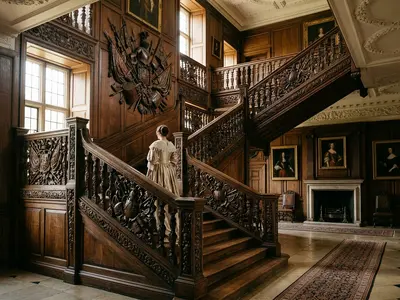
The house tour reveals room after room of original 17th-century decoration. The Great Staircase, carved with military trophies, leads to state apartments hung with tapestries and fitted with period furniture. The Long Gallery, Duchess's bedchamber and closets retain their Stuart fittings in remarkable condition. A collection of miniature portraits, lacquerware and textiles adds to the sense of stepping back in time.
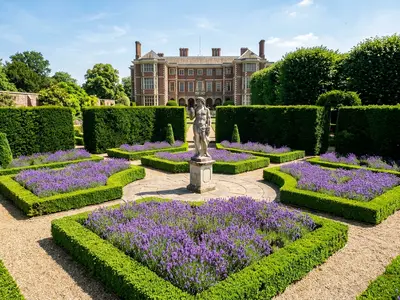
Outside, the gardens have been restored to their 17th-century layout based on surviving plans. The Cherry Garden's box-hedged compartments and central Bacchus statue recreate the Duchess's private parterre. The Wilderness, a formal arrangement of hornbeam hedges and summerhouses, leads to open meadows and the Thames towpath. The walled kitchen garden, cultivated since the 1600s, grows heritage vegetables and cut flowers organically and supplies the Orangery Cafe.
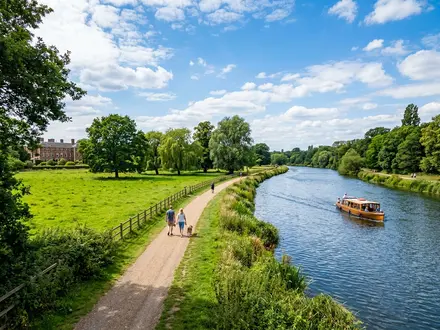
Ham House sits between Richmond and Kingston, easily reached by bus or a pleasant walk along the Thames Path from Richmond station. The riverside towpath connects Ham House to Marble Hill House on the opposite bank (reachable via the seasonal Hammerton's Ferry) and to Richmond town centre upstream. Petersham Meadows, grazed by cattle, lie between the house and Richmond Hill, whose famous view is the only one in England protected by an Act of Parliament.
Allow three to four hours to see the house and gardens at a comfortable pace. The Orangery Cafe serves lunches, cakes and drinks using produce from the kitchen garden. Comfortable shoes are advisable, as paths cross gravel and grass. Check the National Trust website before visiting, as the house occasionally closes for conservation work while the gardens remain open.
Prices include Gift Aid voluntary donation. Garden-only tickets are available at a reduced rate. National Trust members and under 5s enter free
The towpath from Richmond station takes about 30 minutes and is one of the prettiest riverside walks in London. It is flat, well-surfaced and passes Petersham Meadows.
The house interior is compact, so rooms can feel crowded on sunny weekends. Wednesday to Friday visits give you more space to appreciate the Stuart furnishings in peace.
Hammerton's Ferry crosses the Thames from the Ham House grounds to Marble Hill House on the Twickenham bank. It runs daily in summer and at weekends in winter.
The house closes on Mondays and Tuesdays, and sometimes shuts for conservation. The gardens stay open daily. Check the National Trust website for the latest schedule.
The walled kitchen garden is easily overlooked but rewards a slow visit. Seasonal vegetables, heritage fruit and cut flowers grow in tended beds, and produce goes straight to the cafe.

London Travel Writer · 12+ years covering UK attractions and tourism
Last reviewed: March 9, 2026