Chenies Manor House
A Tudor manor in the Chiltern Hills — stepped gables, twisted chimneys and five acres of award-winning gardens
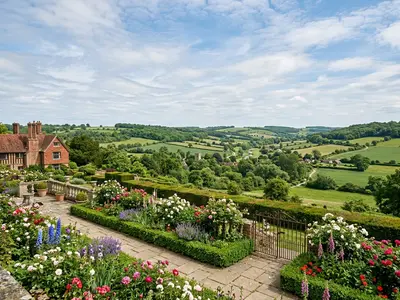
A Tudor manor in the Chiltern Hills — stepped gables, twisted chimneys and five acres of award-winning gardens
Chenies Manor House has stood in the Chess Valley since the fifteenth century. Built by Sir John Cheyne around 1460 and enlarged by the Russell family in the 1530s, it hosted Henry VIII twice — once with Anne Boleyn in 1534 and again with Katherine Howard in 1541. Elizabeth I stayed for a full month in 1570, reportedly losing a gold aglet beneath the ancient oak that still bears her name.
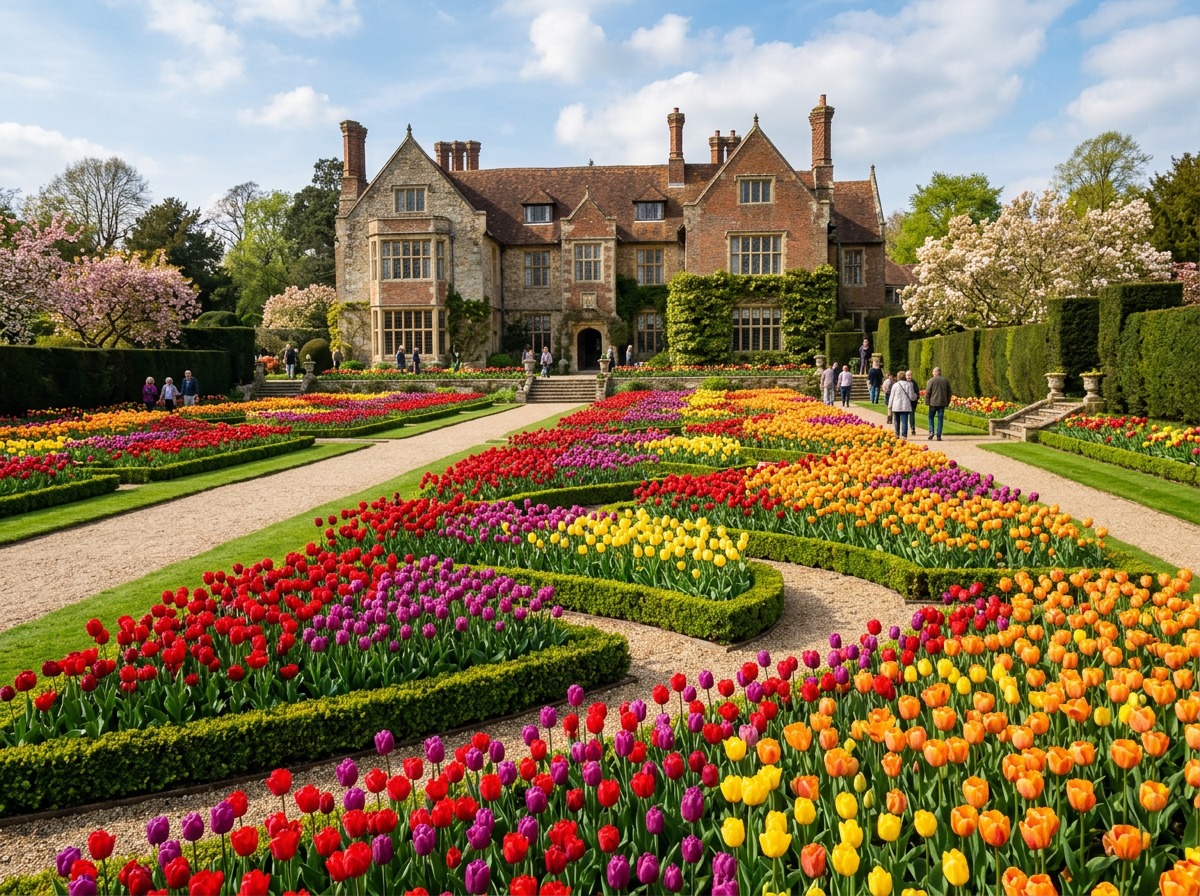
Today the manor is the family home of the MacLeod Matthews family, who have restored both house and grounds since the 1950s. The five acres of gardens won the Historic Houses Association and Christie's Garden of the Year Award, and the spring tulip display draws visitors from across Britain each April and May.
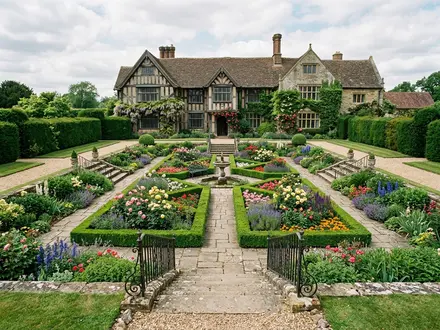
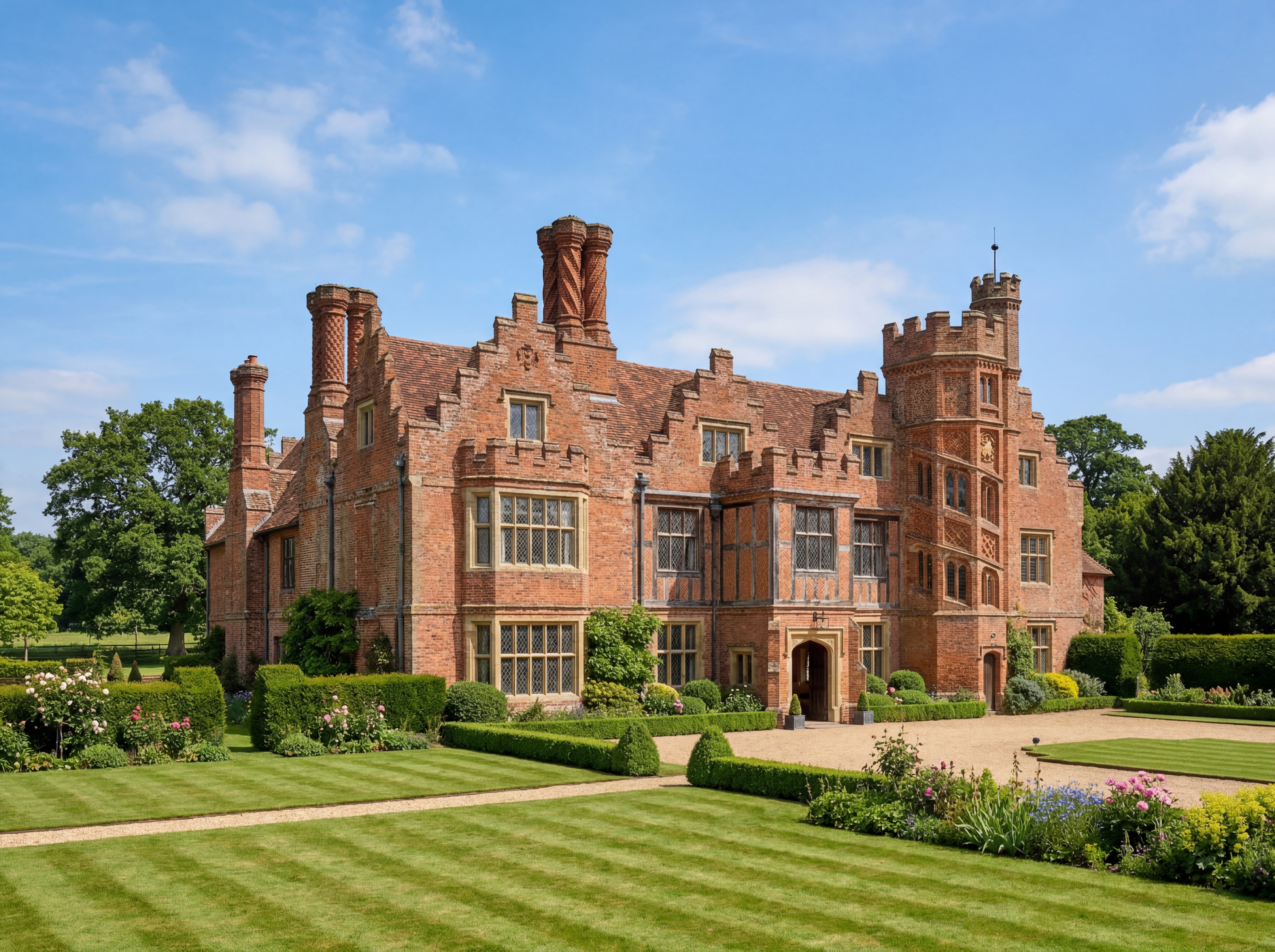
Chenies Manor House sits at the edge of the Chiltern Hills, overlooking the gentle Chess Valley in south Buckinghamshire. The earliest part of the building dates to around 1460, when Sir John Cheyne constructed a fortified brick manor on the site. The crenellated sections visible today belong to this original structure. When the property passed by marriage to the Russell family in the early sixteenth century, John Russell — later the first Earl of Bedford — recognised its convenient position between London and the court, and set about enlarging it.
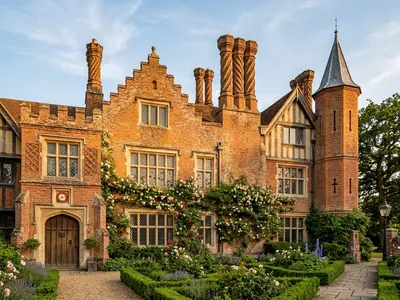
The south range, with its six massive gabled projections crowned by crow-stepped battlements, was added in 1537-38 according to recent tree-ring analysis. The twisted chimney stacks, octagonal staircase tower and stepped gables give the building an almost Flemish appearance, as though a corner of Bruges had been transplanted to the Buckinghamshire countryside. Henry VIII visited twice during this period, bringing a retinue so vast that the village itself had to accommodate the overflow. His visit in 1534 with Anne Boleyn and again in 1541 with Katherine Howard are documented in court records. Elizabeth I's month-long stay in 1570 left its own mark — the ancient oak beneath which she reportedly lost a gold aglet still stands and bears her name.
The five acres of gardens are the main draw for most visitors and have earned national recognition, winning the Historic Houses Association and Christie's Garden of the Year Award. The planting is the work of the MacLeod Matthews family, who acquired the manor in 1956 and have spent decades transforming what were largely ruined grounds into one of the finest private gardens in southern England.
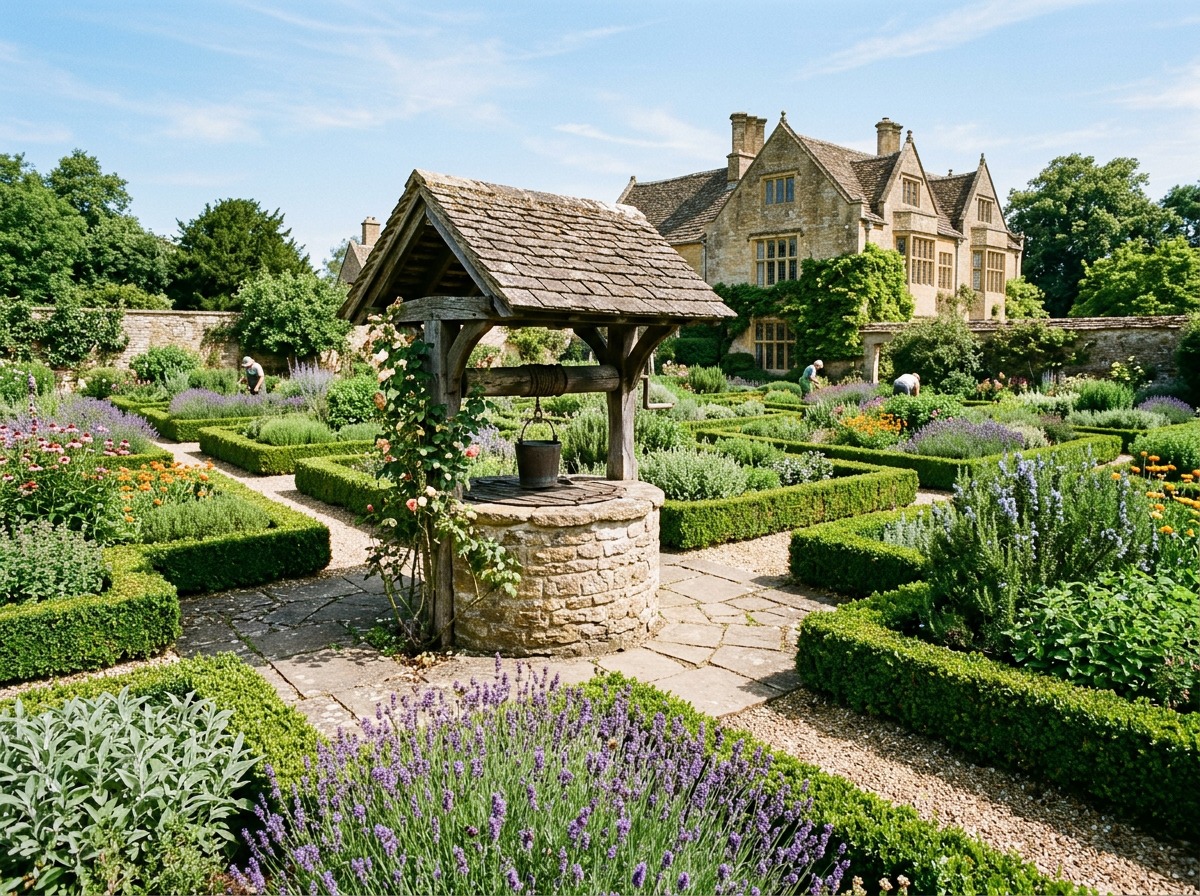
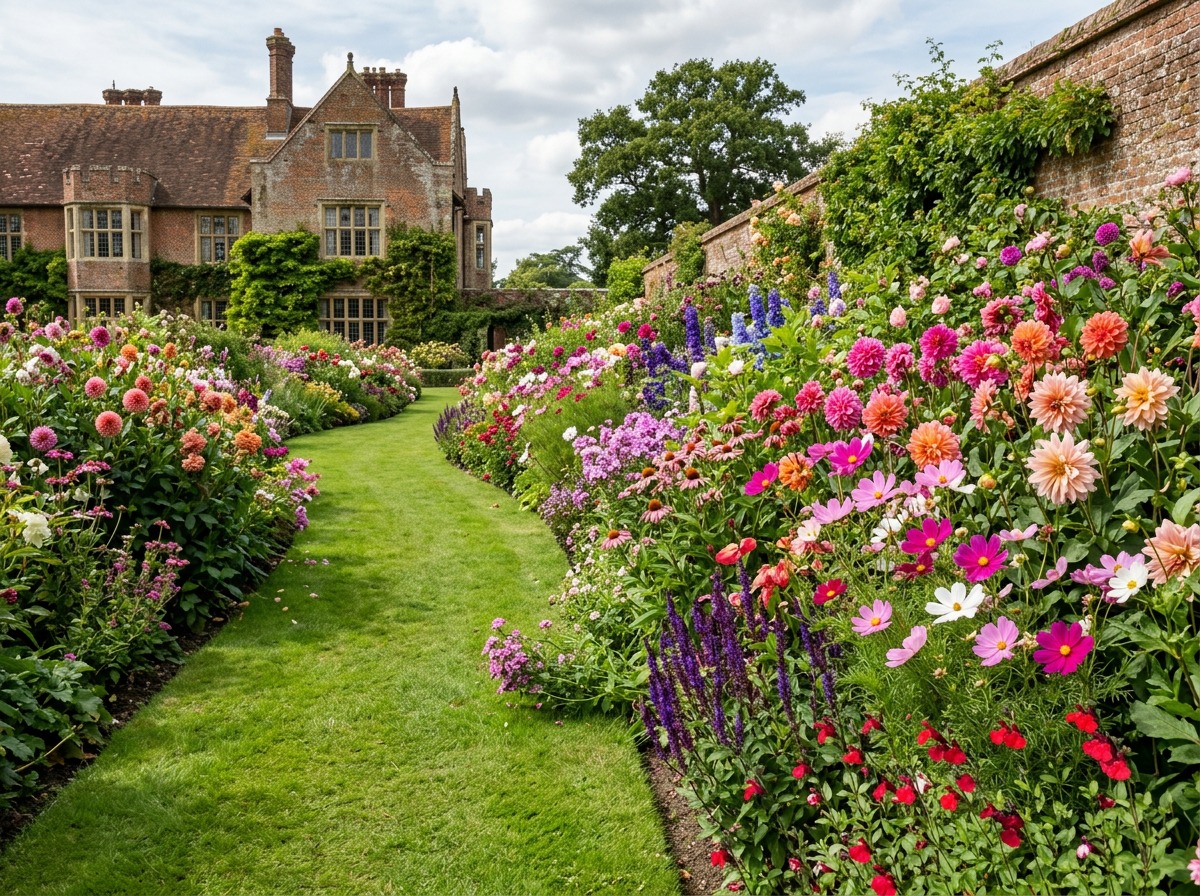
The sunken garden is the centrepiece, its formal beds replanted each season for continuous colour. In late April and early May, thousands of tulips create the display that has made Chenies famous — carefully coordinated blocks of colour in varieties that change from year to year as the family trials new cultivars. By summer, dahlias, cosmos and salvias dominate in rich purples, reds and burnished golds. A white garden offers a cooler counterpoint, while the physic garden — ten beds of medicinal and culinary herbs arranged around a medieval well — is considered one of the finest in England. Two mazes and a productive kitchen garden complete the horticultural circuit.
The house opens to the public on Mondays and Tuesdays only, from April to October, with gates opening at 2pm and last admission at 4.15pm. This limited opening reflects the fact that Chenies remains a private family home rather than a heritage trust property. The interior contains period furniture, tapestries and a collection that spans the building's five centuries of continuous habitation. Guided tours are occasionally available and offer deeper insight into the architecture and its royal connections.
Allow at least two hours for a comfortable visit — one for the house and one for the gardens, though keen gardeners will want longer during peak season. The manor is entirely cashless for admissions. A small tea room serves homemade cakes, cream teas and light refreshments, with seating in the garden on fine days. The village of Chenies itself is worth a short stroll, with the medieval Church of St Michael containing the Bedford Chapel and its remarkable collection of Russell family monuments dating back to the sixteenth century.
Under 5s free. The house is only open on Mondays and Tuesdays from April to October. Check the website for occasional closures due to filming or private events
The tulip display from late April to early May is Chenies at its finest. Arrive early on a Monday or Tuesday afternoon to enjoy the gardens before other visitors. Weekday visits are generally quieter.
The manor occasionally closes for filming and private events without much advance notice. Check the website or phone ahead, especially if travelling a long distance, as the ticket system shows live dates.
Chenies sits on the Chess Valley Walk, a waymarked route through the Chiltern Hills. Walk from Chalfont and Latimer station through fields and woodland for a scenic approach to the manor.
The medieval Church of St Michael next to the manor contains the Bedford Chapel with Russell family tombs dating to the 1500s. Entry is free and it takes about 20 minutes to look around.
While the manor is cashless, a seasonal plant stall near the entrance often operates on an honesty-box basis. Bring coins if you want to pick up herbs or bedding plants to take home.

London Travel Writer · 12+ years covering UK attractions and tourism
Last reviewed: March 10, 2026