Buckler's Hard Village and Maritime Museum
An 18th-century shipbuilding village on the Beaulieu River — where Nelson's warships were built among New Forest oaks

An 18th-century shipbuilding village on the Beaulieu River — where Nelson's warships were built among New Forest oaks
Two rows of Georgian cottages face each other across a wide grass common that slopes gently down to the Beaulieu River. Three centuries ago, this was one of Britain's most important shipyards, where master shipbuilder Henry Adams and his successors constructed over fifty warships for the Royal Navy, including Nelson's favourite vessel, HMS Agamemnon.
Today Buckler's Hard is a remarkably preserved hamlet within the New Forest National Park. The Maritime Museum tells the full shipbuilding story through original artefacts, scale models and interactive displays. Recreated cottage interiors reveal how labourers and shipwrights once lived, and a river cruise along the Beaulieu offers a peaceful coda to any visit.
Buckler's Hard owes its existence to a spectacular failure. In the early 18th century, John, 2nd Duke of Montagu, acquired the Caribbean island of St Lucia and planned to build a port on the Beaulieu River to import sugar. He envisaged a grand new settlement called Montagu Town, with a wide central boulevard running down to deep-water quays. By 1731, barely a handful of houses had been completed, and the sugar trade never materialised. The Duke's grand vision stalled, leaving behind a single wide street of brick cottages facing each other across an expanse of grass.
What saved the hamlet was timber. The surrounding New Forest provided abundant oak, and the sheltered Beaulieu River offered a natural slipway. By the 1740s, the Navy Board had appointed Henry Adams to oversee shipbuilding here. Adams proved extraordinarily capable, and his family ran the yard for three generations. Between 1745 and 1822, over fifty warships slid from the slipways into the river, ranging from 74-gun third-rates to small brigs and transports. The most famous was HMS Agamemnon, a 64-gun ship launched in 1781 that became Nelson's favourite command. Two other Buckler's Hard vessels, HMS Swiftsure and HMS Euryalus, fought at the Battle of Trafalgar in 1805.
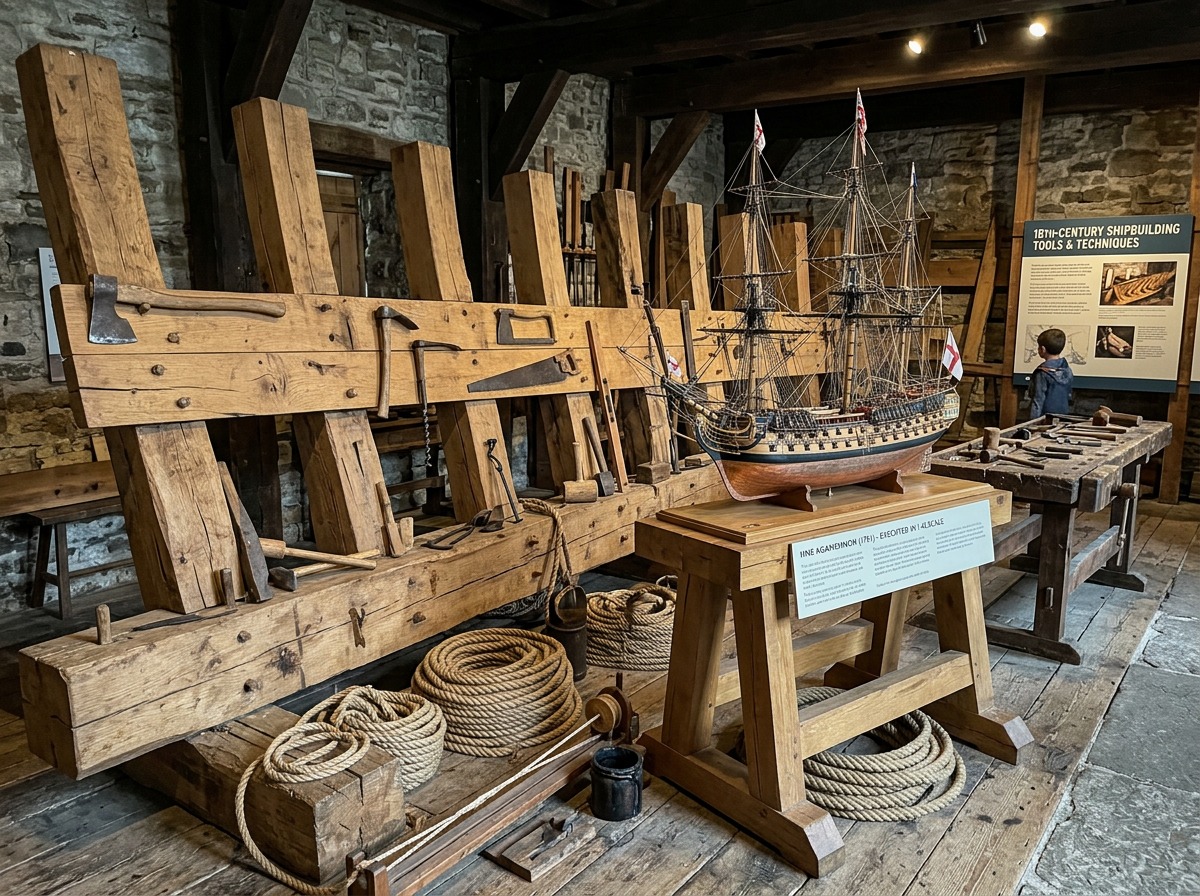
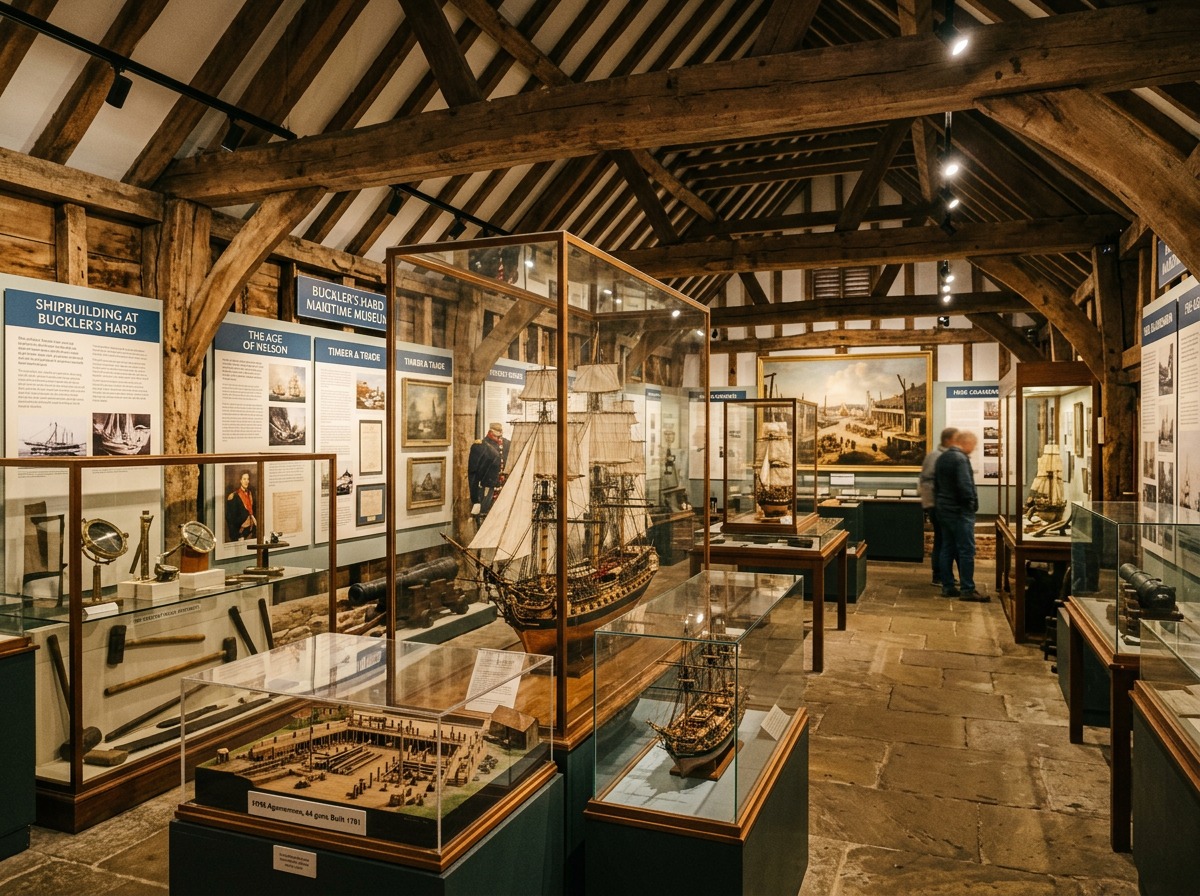
The Maritime Museum occupies a building at the head of the village street and tells the shipbuilding story through a well-curated collection of original artefacts, ship models and interactive displays. Visitors can examine tools used by 18th-century shipwrights, try their hand at tying a bowline or caulking a seam, and study a detailed scale model of HMS Agamemnon. Exhibits also cover the wider history of the Beaulieu River, including displays on Sir Francis Chichester, who set out from Buckler's Hard on legs of his solo circumnavigation, and items recovered from local shipwrecks.
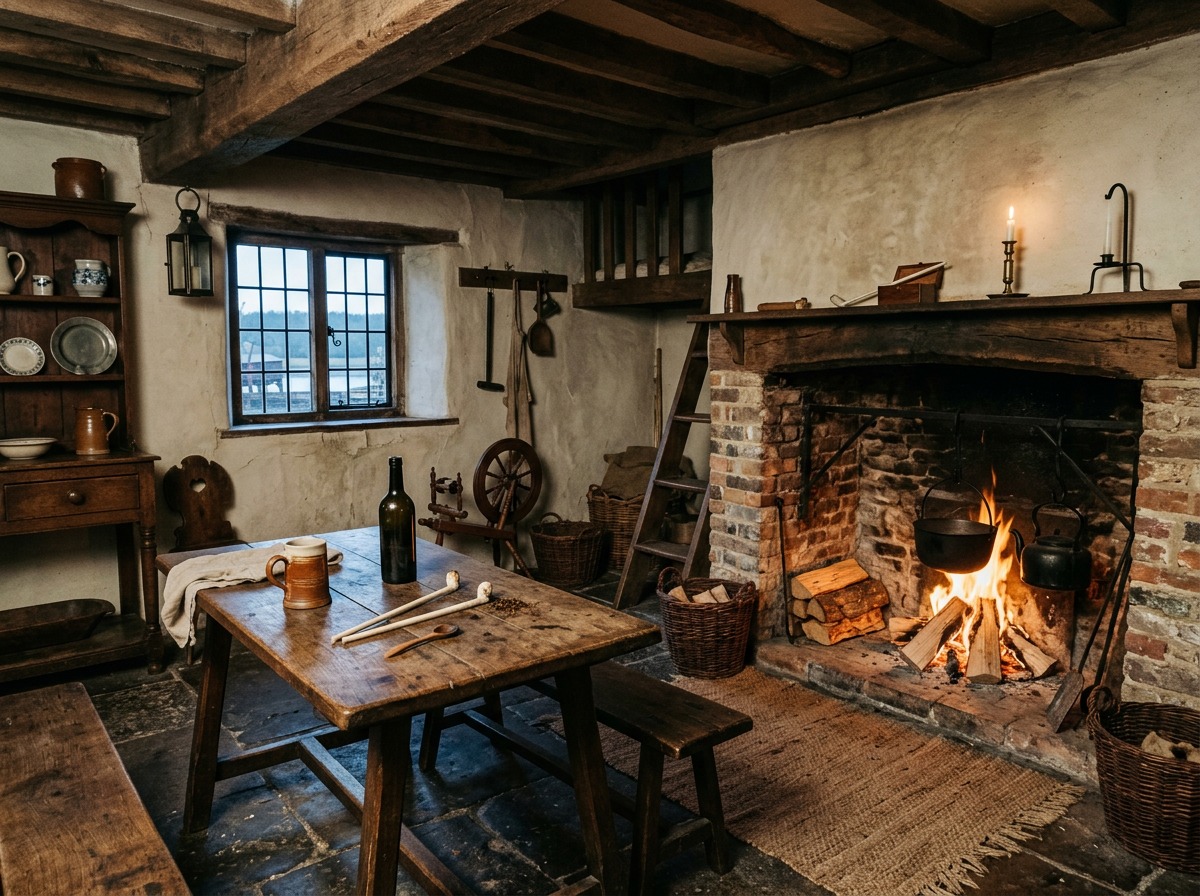
Beyond the museum, the village itself functions as an open-air exhibit. Two cottages have been meticulously recreated to show how different social classes lived in the 18th century. The labourer's dwelling is spartan — rough furniture, a simple hearth, clay pipes on the mantelpiece. The shipwright's cottage, by contrast, reflects the relative prosperity of a skilled tradesman, with better furnishings and domestic comforts. At the New Inn, audio recordings recreate conversations between past residents, offering an immersive glimpse into daily village life. At the southern end of the street, the small Chapel of St Mary provides a quiet place to sit and reflect.
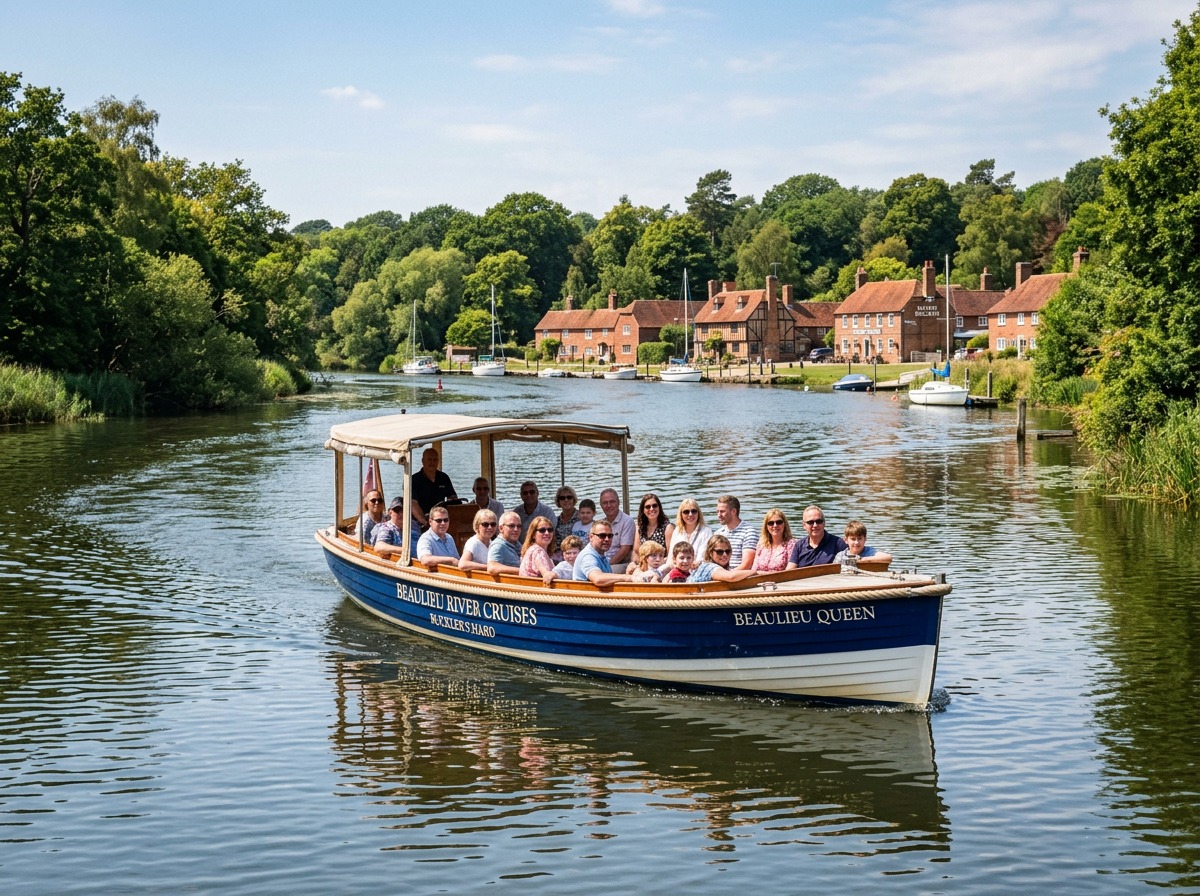
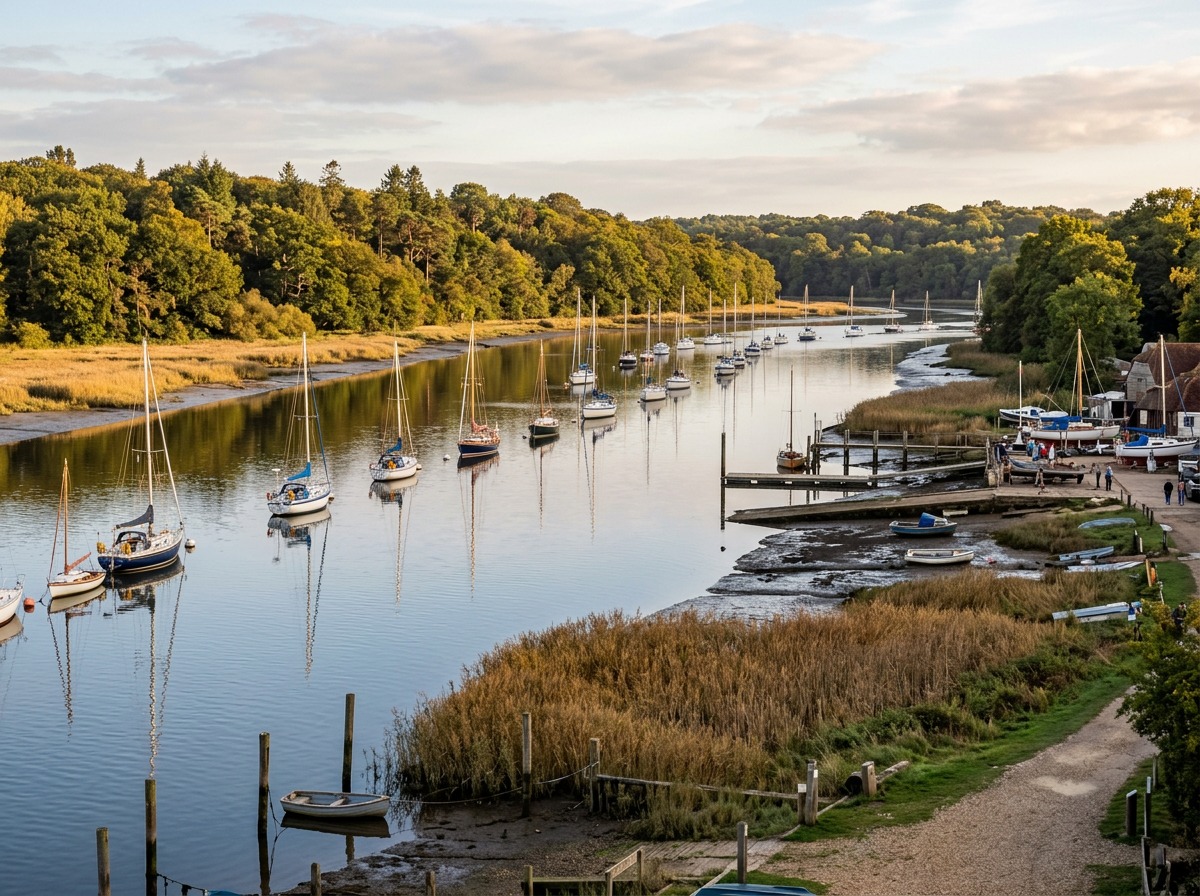
No visit is complete without the Beaulieu River cruise. Operating from late March through October, the half-hour boat trip follows the river downstream through one of the most unspoilt tidal estuaries in southern England. The commentary covers everything from the naval history of the river to the wildlife that inhabits its mudflats and reed beds — herons, egrets, curlews and, occasionally, seals. The Beaulieu is one of very few privately owned rivers in England, which has protected it from development and kept its banks largely wild.
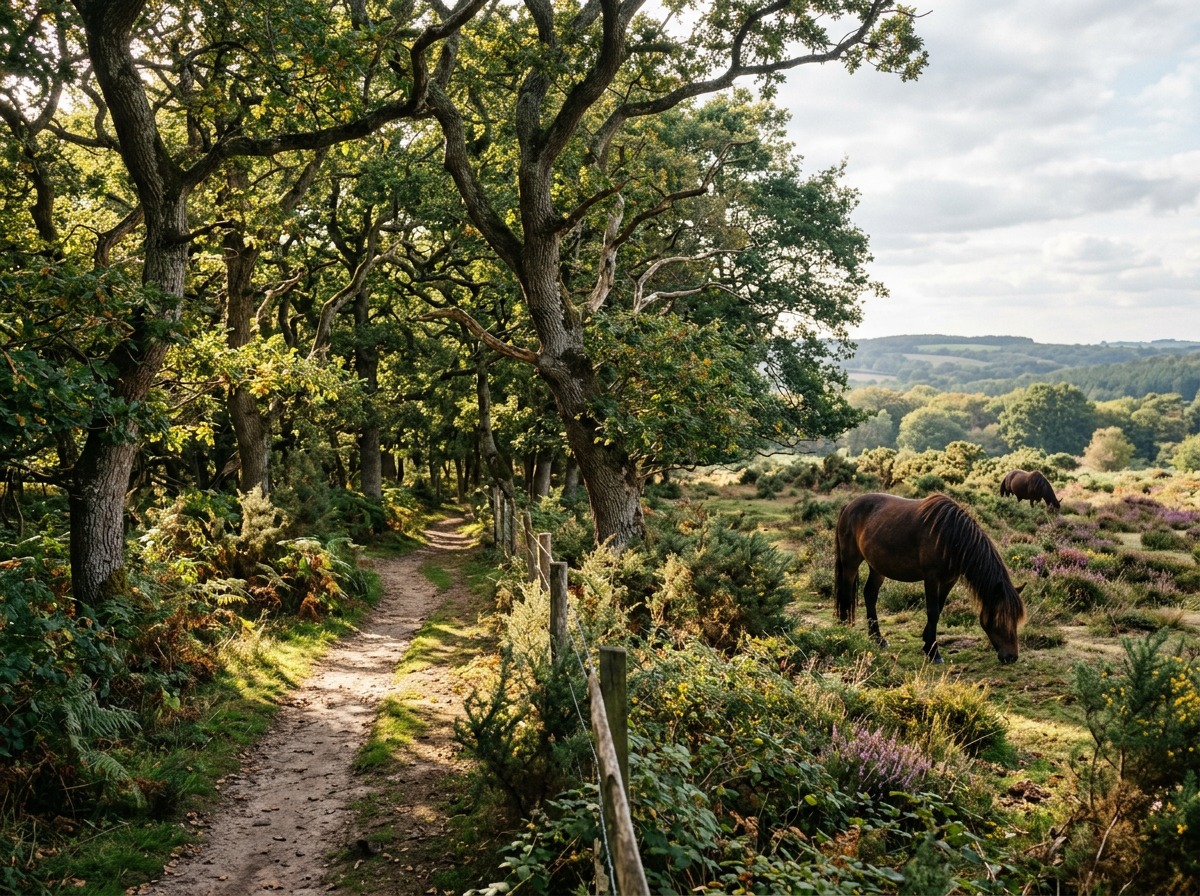
Back on land, waymarked walks lead into the surrounding New Forest. The riverside path to Beaulieu village is a gentle two-mile stroll through ancient oak and beech woodland — the same trees whose ancestors supplied timber for the shipyard. For a longer outing, the Solent Way long-distance footpath passes through Buckler's Hard and connects it to the wider Hampshire coastline. The Captain's Table tearoom in the village serves light meals, cakes and cream teas, and there is a well-stocked gift shop. Families will find the grounds manageable and engaging, with enough variety between museum, cottages, river and forest to fill a leisurely half-day.
Prices include the Maritime Museum and village. River cruise tickets are purchased separately on site. Car parking charges apply. Beaulieu attraction combo tickets are available
The Beaulieu River cruise runs seasonally and lasts around 30 minutes. It offers a perspective on the village and estuary you cannot get from the shore. Buy tickets at the quay on arrival.
The museum, cottage interiors, chapel and village street all deserve proper time. If you add the river cruise and a walk to Beaulieu, three to four hours is more realistic.
The National Motor Museum at Beaulieu is just two miles up the road. Joint tickets are sometimes available and the two sites together make an excellent full day in the New Forest.
The riverside path to Beaulieu passes through woodland that can be muddy after rain. Sturdy footwear with grip is essential, even in summer. The village itself is easy on any shoes.
The pay-and-display car park opens at 8:30am and can fill on summer weekends and bank holidays. Arrive before 10am for the best spaces. The exit gates lock at 8pm.

London Travel Writer · 12+ years covering UK attractions and tourism
Last reviewed: June 2, 2026