Berkhamsted Castle
A striking Norman motte and bailey ruin in the Hertfordshire Chilterns — free English Heritage site with impressive earthworks and a 950-year history
A striking Norman motte and bailey ruin in the Hertfordshire Chilterns — free English Heritage site with impressive earthworks and a 950-year history
Berkhamsted Castle is where England changed hands. In December 1066, the remaining Anglo-Saxon leaders surrendered to William the Conqueror here, ending English resistance to Norman rule. William's half-brother Robert of Mortain then built the timber fortress that became one of the most important castles in medieval England.
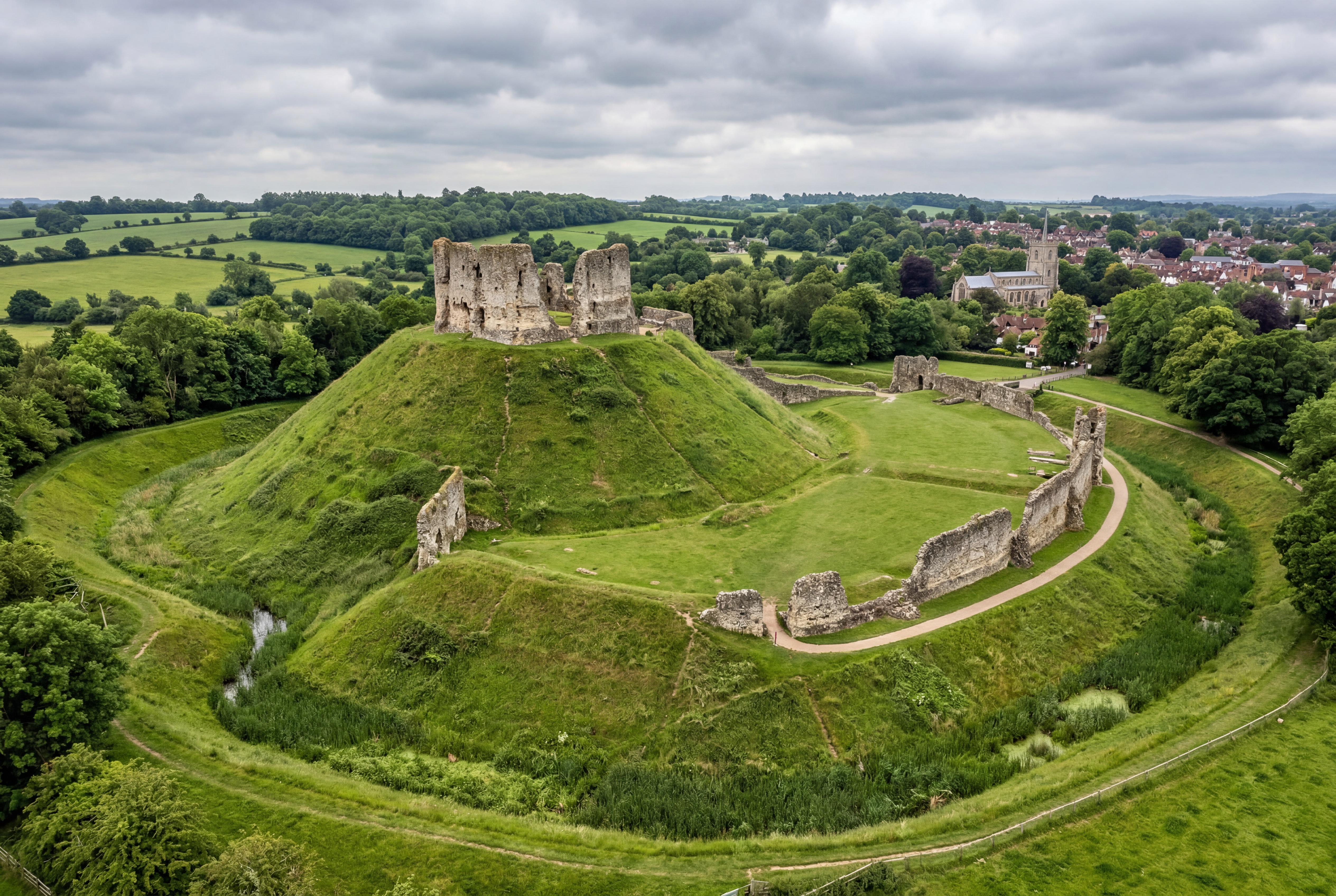
Today the ruins stand as a free English Heritage site just 35 minutes by train from London Euston. The massive earthworks, 14-metre motte, double moats and crumbling flint walls remain remarkably intact, offering one of the finest examples of Norman military architecture in the country.
Berkhamsted Castle occupies a pivotal place in English history. When William the Conqueror marched north from Hastings in late 1066, it was at Berkhamsted that the remaining Anglo-Saxon leadership — including Edgar the Atheling, Archbishop Stigand and the Earls Edwin and Morcar — submitted to Norman rule. William granted the site to his half-brother Robert of Mortain, who constructed the original timber motte-and-bailey fortress to command the strategically vital route through the Chiltern Hills between London and the Midlands.
The castle grew in importance over the following centuries. Thomas Becket held the honour of Berkhamsted from 1155 until his exile in 1164. Richard, Earl of Cornwall and brother of Henry III, transformed the castle into a palatial residence during the 1250s and 1260s, adding stone walls, towers and a three-storey western tower with luxurious living quarters. His son Edmund continued the building work, but after the earldom of Cornwall reverted to the crown, the castle passed through a succession of royal owners including the Black Prince, who used it as both a fortress and a base for his deer park. Five queens held Berkhamsted in succession before Elizabeth I, after whom the castle was largely abandoned by 1495.
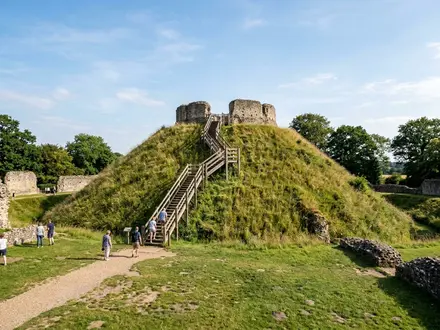
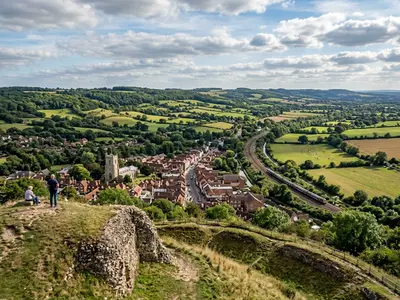
Despite centuries of neglect and stone robbing, Berkhamsted Castle retains some of the most impressive Norman earthworks in England. The motte dominates the site, rising approximately 14 metres above the bailey floor with a base diameter of 55 metres. On its summit sit the flint foundations of a shell keep roughly 18 metres in diameter, which once contained a well. Wooden steps now lead visitors to the top, where the views across the Chiltern Hills and Berkhamsted's rooftops reward the short climb.
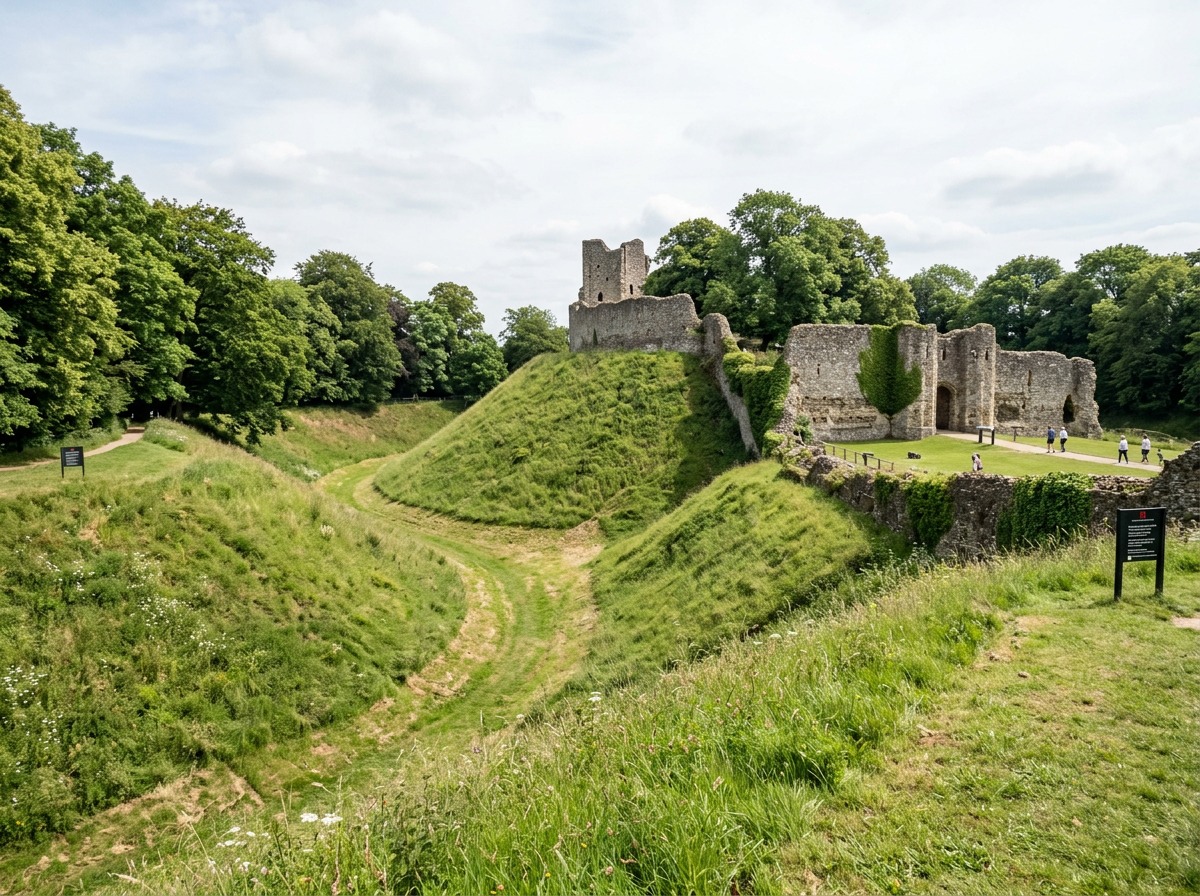
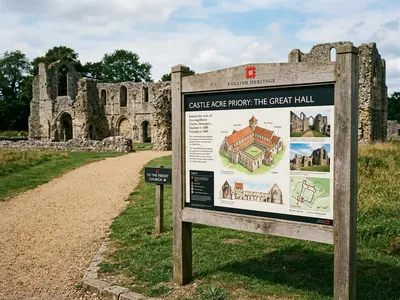
At ground level, the oval bailey is enclosed by substantial earthwork banks and the remains of a flint-and-mortar curtain wall with half-round tower bases at regular intervals. The double moat system is the castle's most distinctive feature: an inner ditch runs directly beneath the curtain wall, while a wider outer moat encircles the entire complex, creating three concentric rings of earthwork defences. English Heritage information boards placed around the site illustrate the castle's original layout and explain each phase of construction, making the ruins easy to interpret even without a guidebook.
Berkhamsted is one of the easiest day-trip castles to reach from London. Fast trains from Euston take around 35 minutes, running two to three times per hour, and the castle is barely five minutes on foot from the station. Simply turn left out of the station exit and follow the path alongside the railway line directly to the entrance on White Hill. There is no parking on site, but Berkhamsted station car park and several town centre car parks are all within easy walking distance.
Allow one to two hours to walk the full circuit of the earthworks, climb the motte and read the information panels. The site is entirely outdoors with uneven terrain, so sturdy footwear is advisable, particularly after rain when the motte steps and grassy banks can be slippery. There are no facilities at the castle — the nearest toilets, cafes and shops are in Berkhamsted High Street, a 10-minute walk away. The town itself has a pleasant mix of independent shops and restaurants along the high street, and the nearby Grand Union Canal towpath makes a good addition to the visit for those with time to spare.
Berkhamsted Castle is completely free to enter. No ticket or English Heritage membership is required. The site is open access during opening hours
The site is entirely outdoors on grass, earth and gravel. The motte steps and banks become slippery after rain, so walking boots or shoes with grip are advisable.
Wooden steps lead to the summit of the 14-metre motte. The views across the Chiltern Hills and Berkhamsted rooftops are the highlight of any visit.
English Heritage panels around the site explain each phase of construction and the castle's layout. Reading them before exploring helps you interpret the earthworks and wall remains.
The Grand Union Canal runs through Berkhamsted, with a towpath ideal for walking. Pick it up near the station for a pleasant extension to your castle visit.
Trains run two to three times per hour and take around 35 minutes. The castle is a 5-minute walk from Berkhamsted station, making it one of the easiest castle day trips from London.

London Travel Writer · 12+ years covering UK attractions and tourism
Last reviewed: June 2, 2026