Bateman's
Rudyard Kipling's 17th-century Sussex manor — a National Trust house with literary history, gardens and a working watermill
Rudyard Kipling's 17th-century Sussex manor — a National Trust house with literary history, gardens and a working watermill
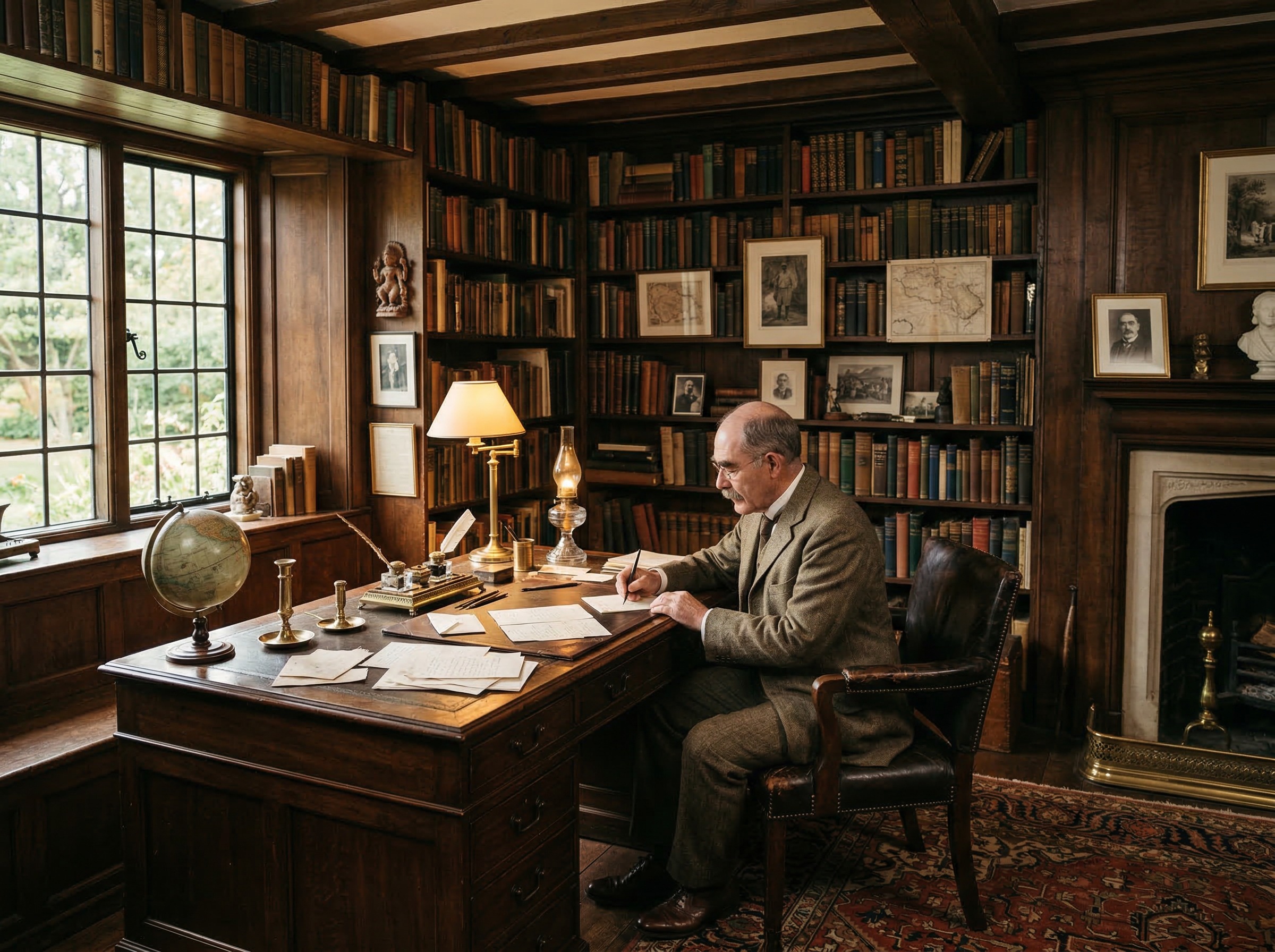
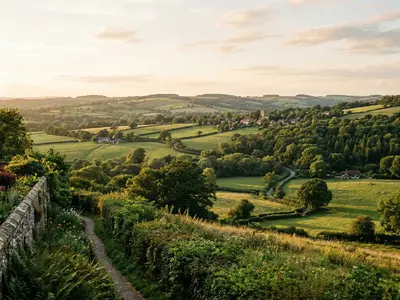
Rudyard Kipling found Bateman's in 1900 and knew immediately he had come home. He bought the Jacobean ironmaster's house two years later and lived here for the remaining thirty-four years of his life, writing some of his finest work in a first-floor study overlooking the Sussex Weald. The landscape of woods, streams and rolling hills fed directly into the stories of Puck of Pook's Hill and Rewards and Fairies.
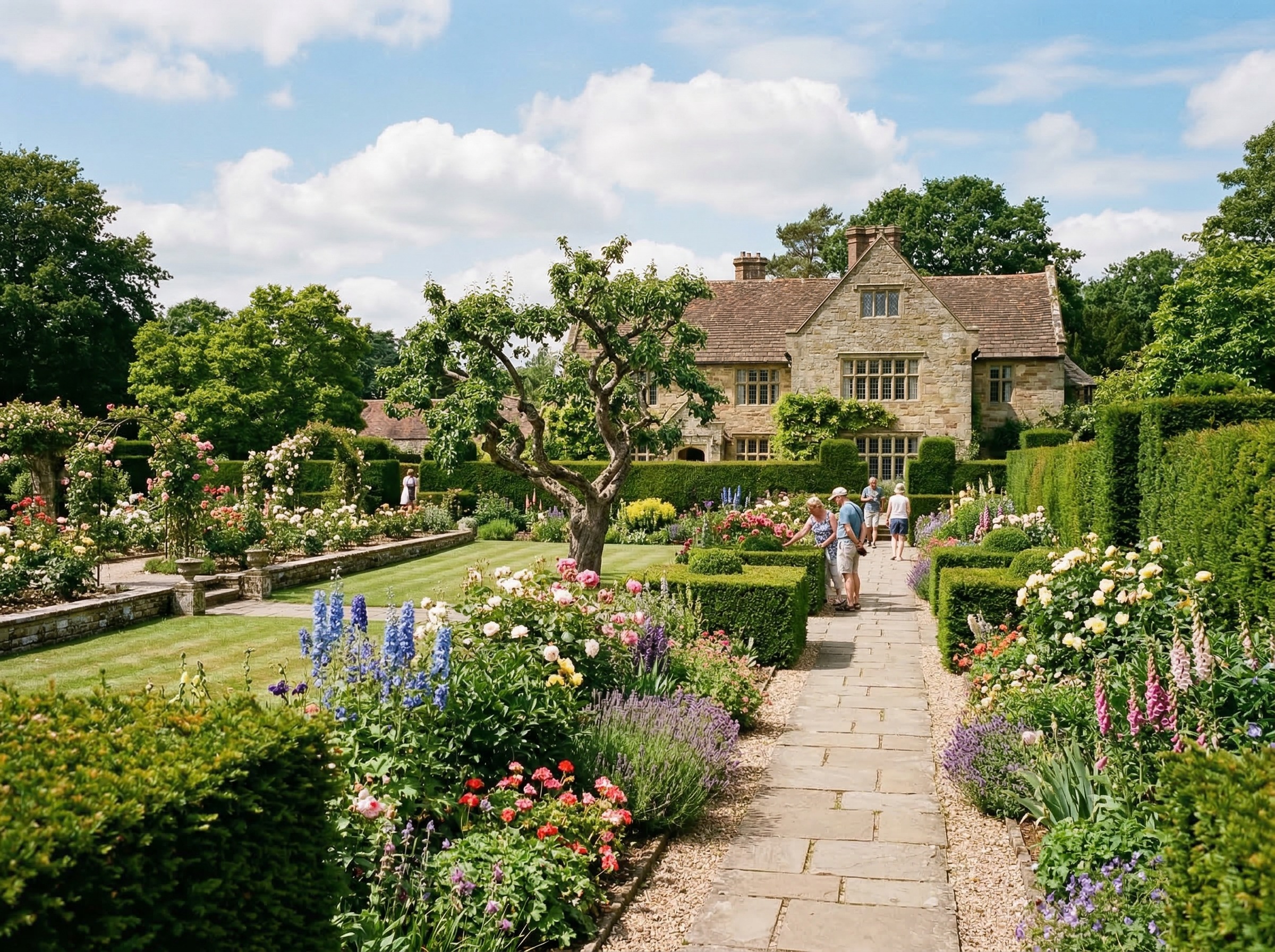
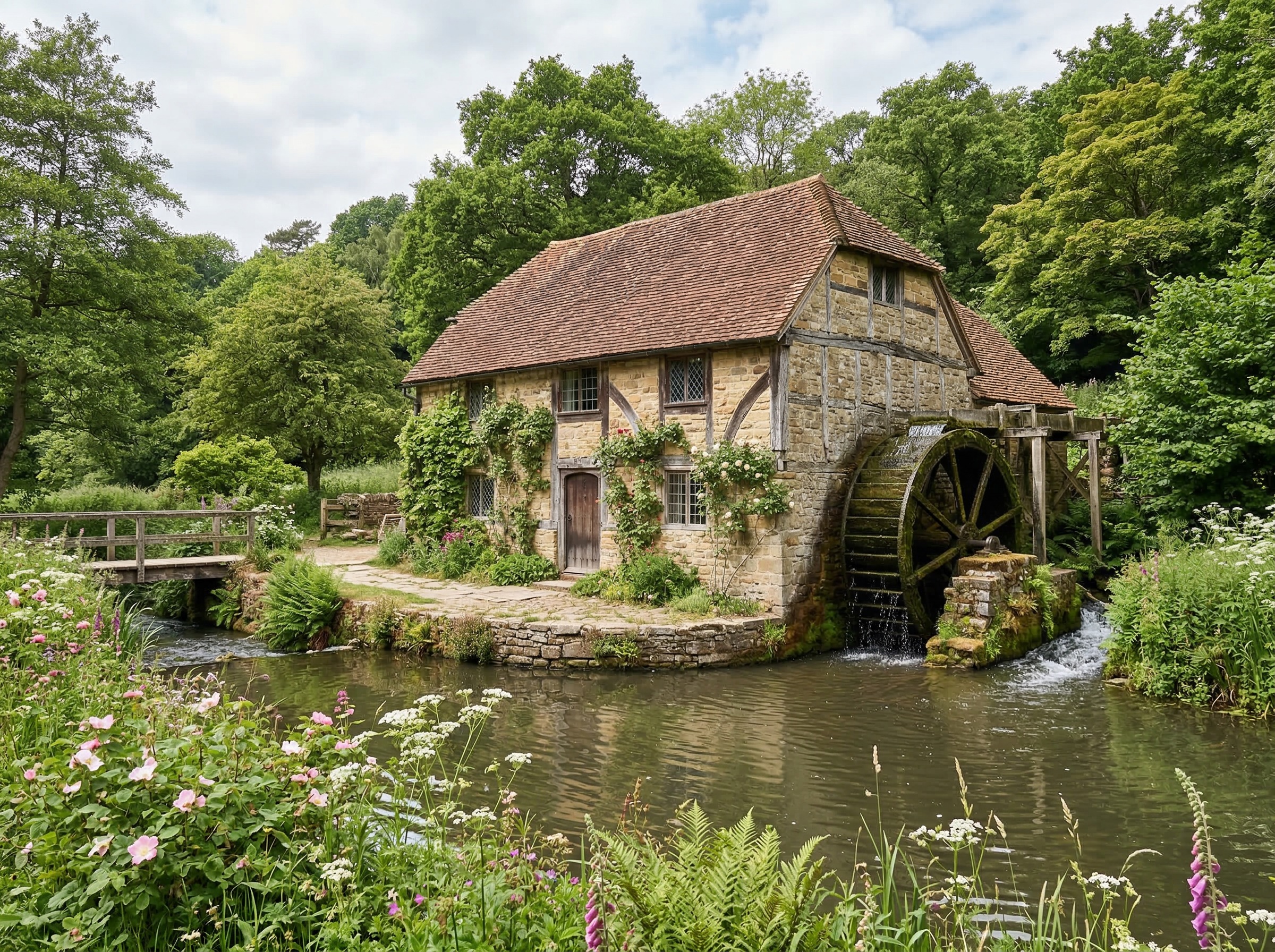
Today the house stands much as Kipling left it, filled with his books, furniture and personal belongings. Outside, the gardens he designed with Nobel Prize money give way to wildflower meadows, a working watermill dating from the 1750s and 33 acres of estate threaded with footpaths along the River Dudwell.
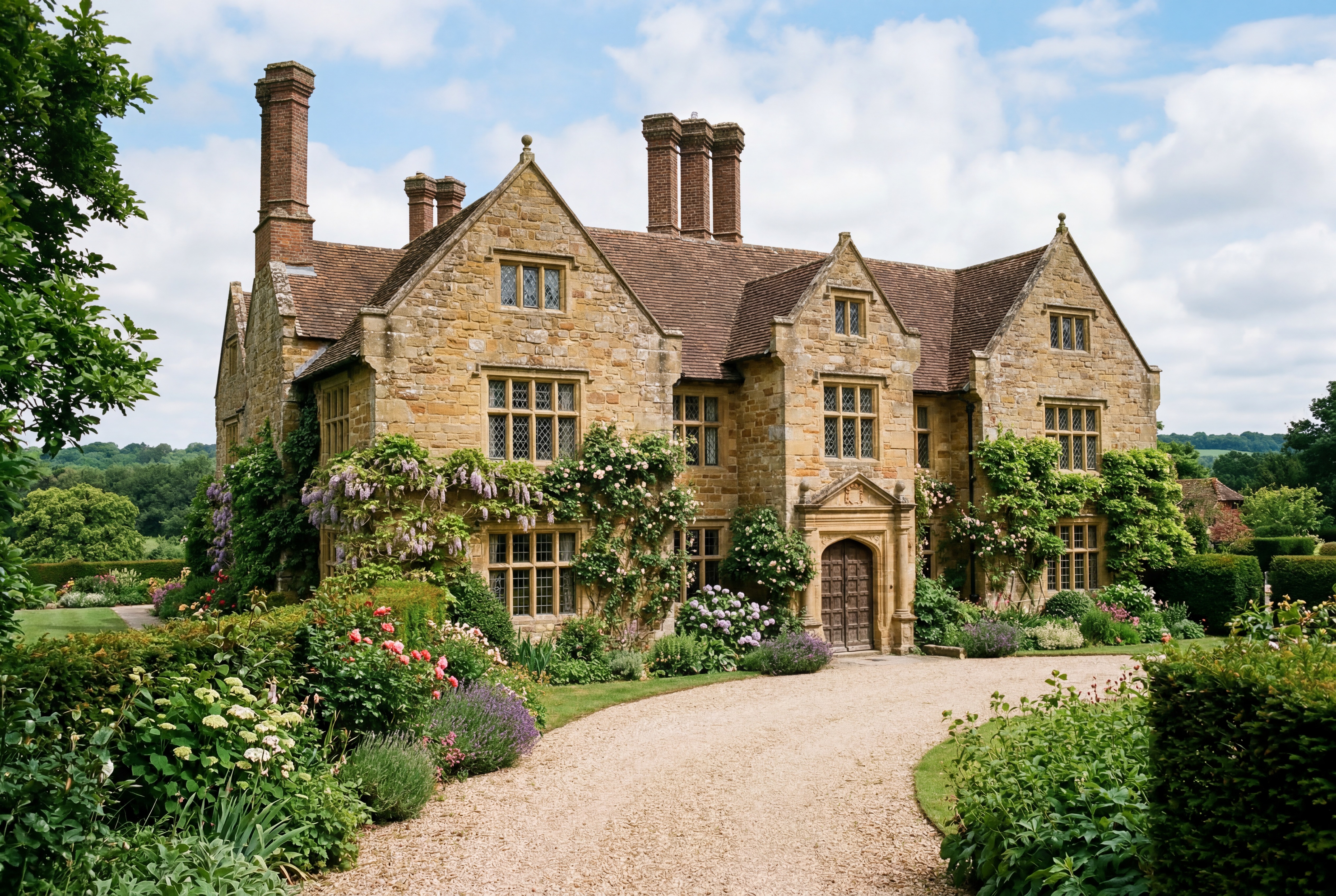
Bateman's was built in 1634 by a local ironmaster during the heyday of the Wealden iron industry. The house is constructed from local sandstone with a stone-tiled roof and the distinctive mullioned windows of the Jacobean period. By the time Rudyard Kipling first saw it in 1900, the building had settled quietly into the landscape of the Dudwell valley, hidden from the village of Burwash along a narrow lane.
Kipling was already the most famous writer in the English-speaking world when he and his wife Caroline purchased Bateman's in 1902 for £9,300. They were looking for privacy after years of unhappy publicity surrounding a family feud in Vermont and the death of their daughter Josephine. The secluded Sussex manor offered exactly what they needed. Kipling described the house as standing "her own unkempt garden like a beautiful, old woman who makes no effort" and immediately set about making it his own.
He wrote in a first-floor study with views over the garden and the valley beyond, producing works including Puck of Pook's Hill, Rewards and Fairies, the Just So Stories revisions and much of his later poetry. The landscape around Bateman's — Pook's Hill is a real place visible from the garden — infused his writing with a deep sense of English history and belonging. Kipling lived here until his death in January 1936, and Caroline bequeathed the house and its contents to the National Trust in 1939.
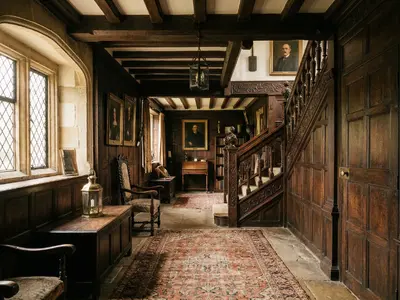
The interior is presented much as the Kiplings left it. The ground floor rooms contain original furniture, Oriental rugs and artworks collected during the family's years in India and America. Kipling's study upstairs is the centrepiece: his walnut writing desk faces the window, his pen tray and ink well sit ready, and the bookshelves hold his working library. A whalebone chair and various personal effects complete a room that feels as though the author has merely stepped out for a walk.
Outside, the gardens represent Kipling's most sustained creative project beyond literature. He began redesigning them in 1907, using his Nobel Prize winnings to fund the work. The Mulberry Garden — formerly a farmyard — became a formal arrangement of box-edged beds and a productive orchard. The Rose Garden, designed from Kipling's own sketches still displayed in the house, centres on a gravity-fed fountain connected by a rill to a rectangular lily pond. Yew hedges divide the garden into a series of rooms that lead naturally from one to the next.
Beyond the formal gardens, wildflower meadows slope down to the River Dudwell and the estate's watermill. The present mill building dates from the 1750s, though a mill has occupied the site since at least 1246. Kipling converted it to generate electricity using a water turbine — one of the earliest private hydroelectric installations in the country. On milling days, volunteers demonstrate the restored machinery and produce stoneground flour sold in the shop.
Bateman's sits in deep rural East Sussex, roughly three miles south of Burwash village. The most practical public transport option is a train to Etchingham followed by a short taxi ride. Drivers reach the estate in about ninety minutes from London via the A21. The car park is a short walk from the house and is free for National Trust members.
Allow two to three hours for a comfortable visit covering the house, gardens and watermill. The house is best explored at a gentle pace — volunteers in each room share stories about the Kipling family and are happy to answer questions. The gardens offer several marked walks, including a riverside path along the Dudwell valley that takes roughly forty minutes. A tearoom beside the oast house serves light lunches, cream teas and cakes using ingredients from the estate where possible. The estate shop stocks the mill's flour alongside Kipling editions and local products. Bateman's is quieter than many National Trust properties, particularly on weekday mornings, and retains the peaceful, slightly remote character that drew Kipling here over a century ago.
Under 5s free. Car parking included for National Trust members. Gift Aid admission adds a small supplement for tax-efficient donations. Prices may vary for special events
The watermill operates on selected days, typically weekends and school holidays. Check the National Trust website before visiting if you want to see the machinery in action and buy freshly ground flour.
A circular footpath follows the River Dudwell through wildflower meadows and woodland. The walk takes about 40 minutes and offers views back towards the house and mill that Kipling would recognise.
Bateman's is quieter than many National Trust properties. Weekday mornings outside school holidays are particularly peaceful, letting you explore the house rooms without crowds.
The National Trust's Bodiam Castle is just 5 miles east and makes an excellent pairing for a full day. Both properties are comfortably manageable if you start early.
Paths through the meadows and woodland can be muddy, particularly after rain. The walk to the watermill involves uneven ground. Walking boots or sturdy shoes are recommended.

London Travel Writer · 12+ years covering UK attractions and tourism
Last reviewed: March 10, 2026