Basing House
A ruined Tudor palace and English Civil War siege site — atmospheric ruins, Civil War history and peaceful gardens in Old Basing
A ruined Tudor palace and English Civil War siege site — atmospheric ruins, Civil War history and peaceful gardens in Old Basing
Basing House was once the largest private residence in Tudor England. Built from 1531 by William Paulet, 1st Marquess of Winchester, the fortified palace sprawled across fifteen acres and rose to five storeys in places, with around 360 rooms rivalling Hampton Court in scale and grandeur. Henry VIII, Elizabeth I and Mary I all visited, and Mary even honeymooned here with Philip of Spain in 1554. The house commanded the strategic road from London to the west, which sealed its fate when the English Civil War erupted in 1642.
John Paulet, 5th Marquess of Winchester, declared for King Charles I and garrisoned the house. Parliamentary forces besieged it three times between 1643 and 1645, but the Royalists held out each time, earning it the nickname Loyalty House. On 14 October 1645 Oliver Cromwell arrived with heavy siege artillery and stormed the walls. The garrison fell within an hour. Among those captured was the architect Inigo Jones, then aged 72, who was carried out wrapped in a blanket after soldiers stripped him of his clothes. Cromwell's troops looted the house, and a fire burned for twenty hours, reducing the Tudor palace to ruins. Today the atmospheric remains, managed by Hampshire Cultural Trust, sit within peaceful walled gardens alongside a seventeenth-century Great Barn, a Civil War museum and exhibition spaces.
The story of Basing House begins in 1531 when William Paulet, later 1st Marquess of Winchester, began building a vast new palace on the site of a medieval castle in the Hampshire village of Old Basing. Paulet served as Lord Treasurer to three Tudor monarchs and needed a residence that reflected his status. The result was extraordinary. The fortified palace spread across fifteen acres and contained around 360 rooms arranged across buildings that rose to five storeys in places. It was the largest private house in England, built in the characteristic red brick of the Tudor period and fitted out with every luxury of the age. Henry VIII visited, Elizabeth I was entertained here, and Mary I chose Basing House for her honeymoon with Philip of Spain in 1554.
The house passed through five generations of the Paulet family until the English Civil War tore the country apart in 1642. John Paulet, the 5th Marquess, was a committed Royalist and Catholic. He garrisoned the house for King Charles I, and its position commanding the main road from London to the west made it a prime target for Parliament. Between 1643 and 1645, Parliamentary forces besieged Basing House three times. The garrison, bolstered by the 5th Marquess's personal motto of Love Loyalty, held firm through each assault, earning the house the nickname Loyalty House. Among those sheltering within the walls were some of the most notable figures of the age, including the architect Inigo Jones and the writer Thomas Fuller.
On 8 October 1645, Oliver Cromwell himself arrived with heavy siege artillery, including a cannon-royal firing sixty-pound shot. After several days of bombardment, the walls were breached. On 14 October the assault went in, and the garrison fell within an hour. The slaughter was severe. Cromwell's troops looted the house of its treasures, and a fire that may have been deliberate burned for twenty hours, reducing the great Tudor palace to the ruins that survive today.
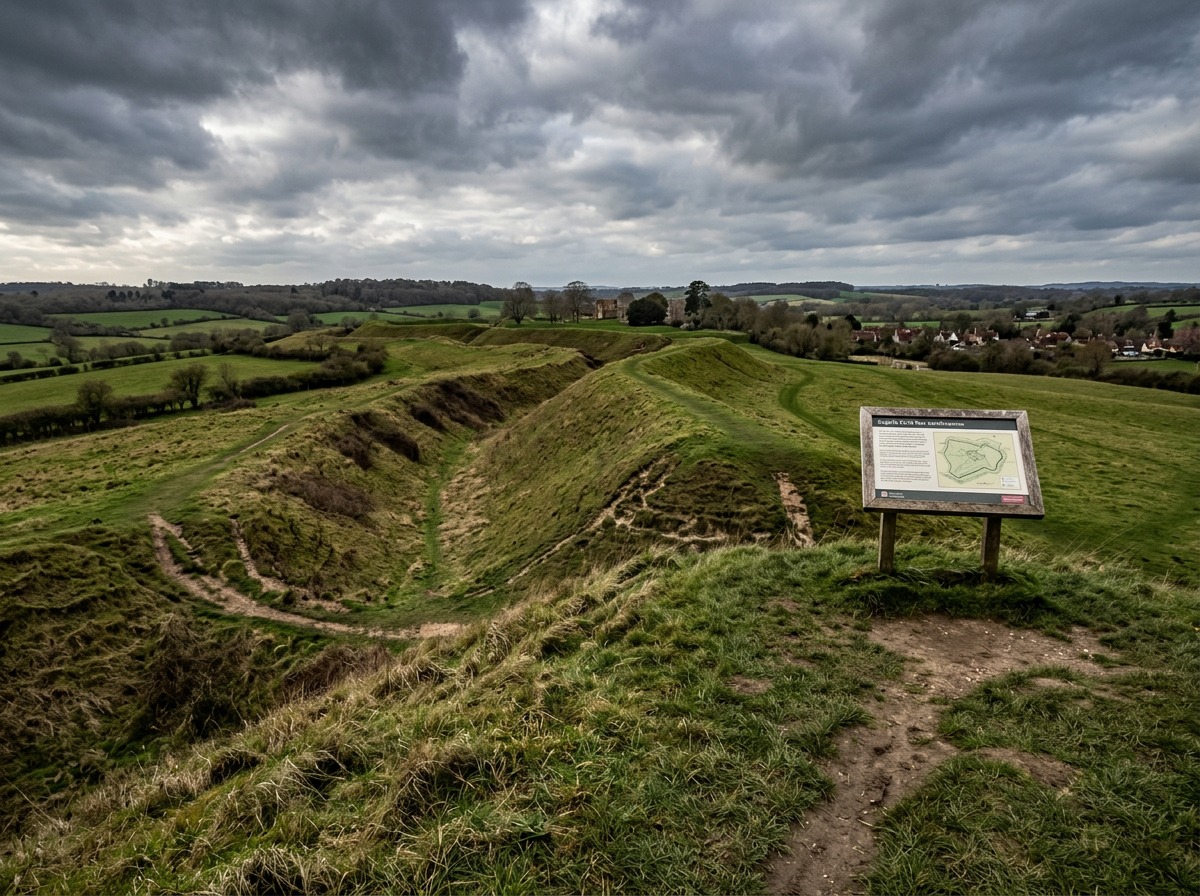
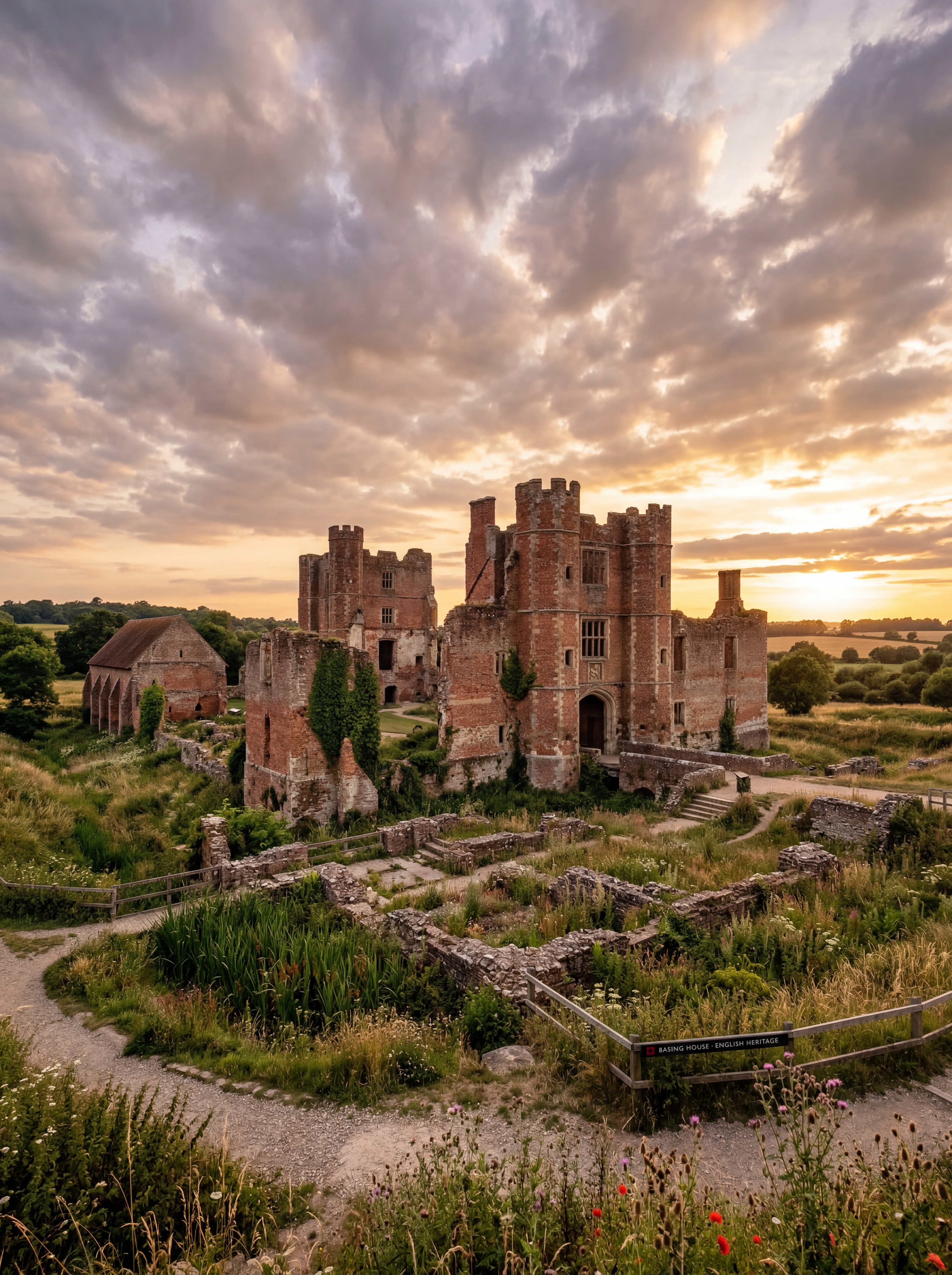
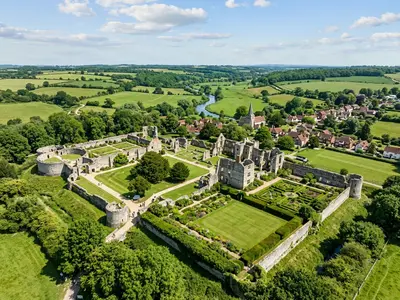
The ruins of Basing House are more extensive than many visitors expect. The excavated foundations trace the footprint of the original palace, with standing walls of red Tudor brick still marking out rooms, corridors and defensive positions. Interpretive panels placed throughout the site explain what each area was and how it functioned, from the Great Hall where monarchs dined to the kitchens that fed a household of hundreds. The Civil War earthworks that surround the palace are among the best-preserved siege lines in England, with ramparts, ditches and gun emplacements that bring the military history vividly to life.
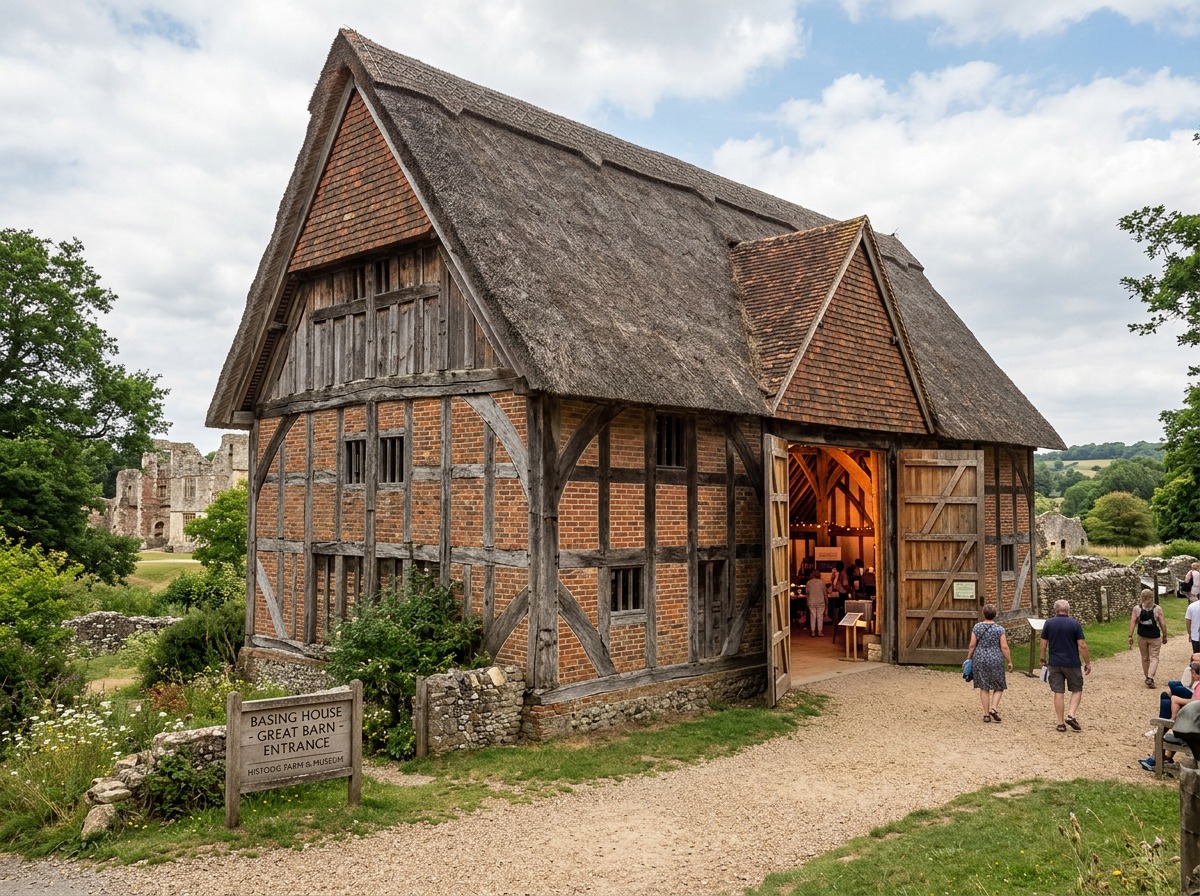
The seventeenth-century Great Barn sits at the heart of the site and houses the museum and exhibition space. Display cases hold archaeological finds recovered from decades of excavation, including musket balls, cannonballs, pottery, coins and personal items that tell human stories from both the Tudor and Civil War periods. The barn is also used for events, talks and the annual Sealed Knot Civil War re-enactment weekend, when costumed soldiers recreate the siege with musket fire, pike drills and cavalry displays across the grounds.
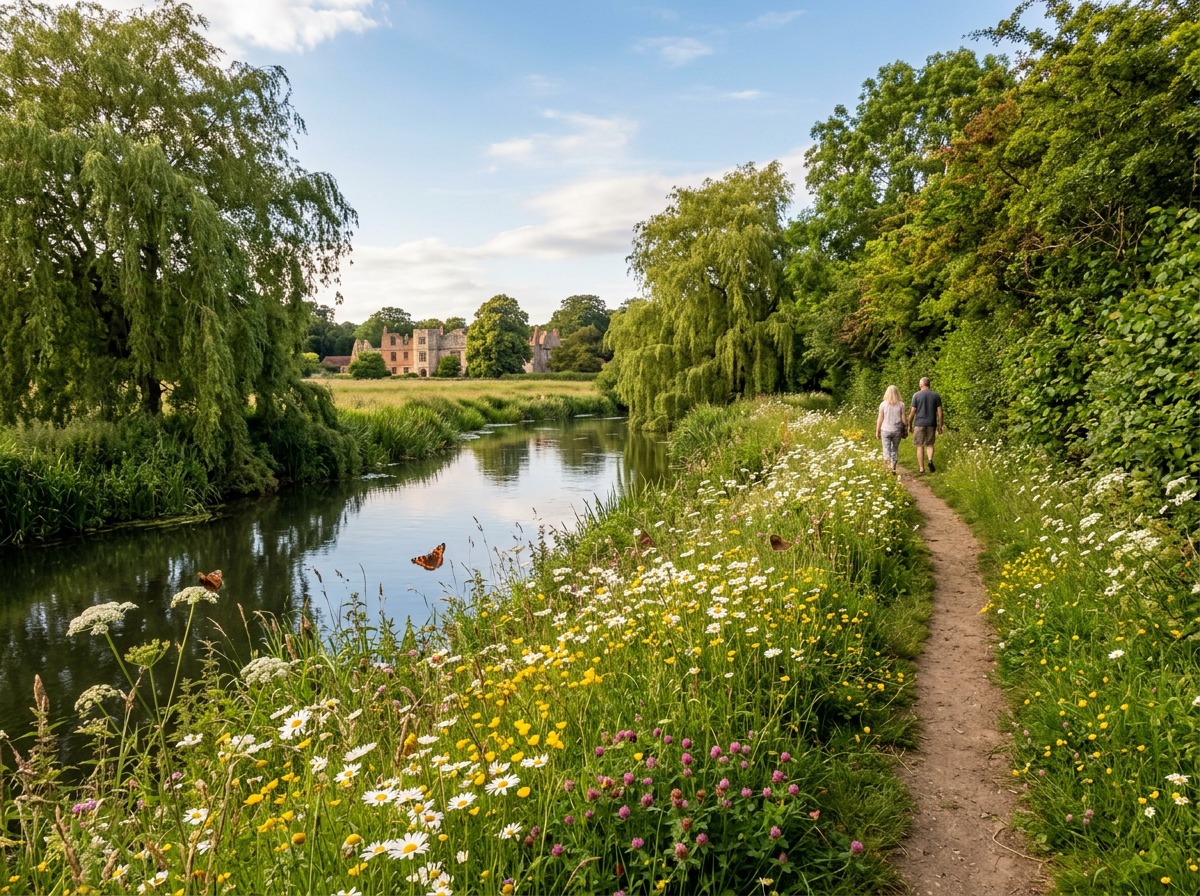
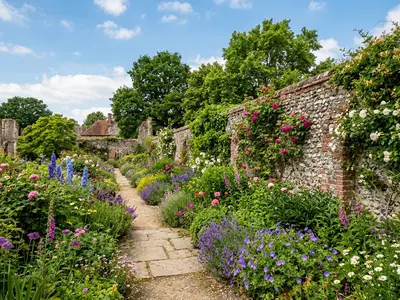
Beyond the ruins, the walled gardens offer a peaceful contrast. Herbaceous borders, mature specimen trees and wildflower meadows fill the spaces between the old walls, and the grounds are alive with butterflies and birdsong through the summer months. A riverside walk along the Loddon connects the car park to the site and passes through water meadows that have barely changed since the seventeenth century.
Basing House is open seasonally from March to October, Wednesday to Sunday, 11am to 4pm. The site is closed on Mondays and Tuesdays. Volunteer-led guided tours run on Wednesdays at 1.30pm, weather permitting, and are well worth timing your visit around. Special events, including the popular Sealed Knot re-enactment weekend, are listed on the Hampshire Cultural Trust website.
Getting to Basing House from London is straightforward. Basingstoke station is around 45 minutes from Waterloo on South Western Railway, with frequent services throughout the day. From the station, the Basing Trail is a flat, pleasant 40-minute walk through Eastrop Park to Old Basing. The number 10 bus from Basingstoke bus station also serves the village. By car, the M3 junction 6 is the closest motorway exit, with brown signs directing you to the free car park off Bartons Lane. Allow two to three hours for a thorough visit covering the ruins, museum, gardens and riverside walk. The village of Old Basing itself has a pleasant pub, the Millstone, next to the car park, making it easy to combine a visit with lunch.
Tickets allow unlimited return visits for a full year. Available online or in person at the visitor centre. Concessions apply to over-66s, disabled visitors and military personnel
Volunteer guides lead a walking tour of the ruins every Wednesday at 1.30pm, weather permitting. The guides bring deep knowledge of the Tudor and Civil War history that the panels alone cannot match.
The Sealed Knot re-enactment weekend and other special events draw large crowds and offer a very different experience from a quiet midweek visit. Check the Hampshire Cultural Trust website before travelling.
The site is largely outdoors with uneven ground around the ruins and earthworks. Paths can be muddy after rain, so walking boots or wellies are advisable in wet weather.
The flat riverside walk from Basingstoke station through Eastrop Park takes around 40 minutes and is a pleasant approach to the site. It follows the Loddon valley and avoids the need for a bus or taxi.
The Millstone pub next to the car park serves food and is a natural stop before or after your visit. The village has a medieval church and attractive cottages worth a short stroll around.

London Travel Writer · 12+ years covering UK attractions and tourism
Last reviewed: March 10, 2026