Audley End House and Gardens
Jacobean mansion on the site of a medieval abbey — with Capability Brown parkland, Robert Adam interiors and an organic kitchen garden
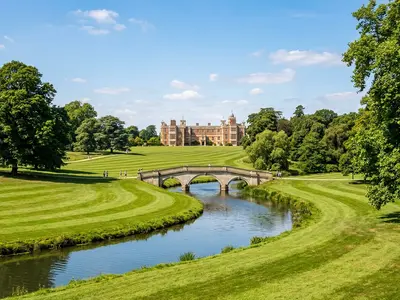
Jacobean mansion on the site of a medieval abbey — with Capability Brown parkland, Robert Adam interiors and an organic kitchen garden
Built between 1605 and 1614 on the site of a dissolved Benedictine abbey, Audley End was designed on the scale of a royal palace. Charles II was so impressed he bought the estate for £50,000 in 1667 as a base for attending the races at Newmarket.
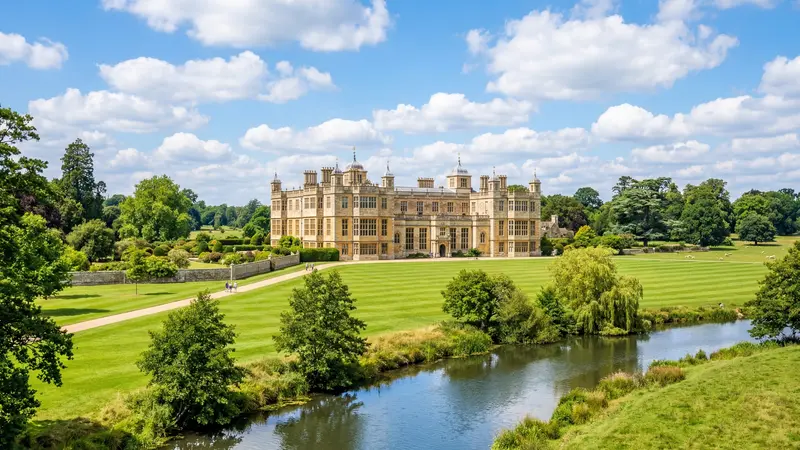
Today the house is roughly a third of its original size, yet what remains is still magnificent. Capability Brown landscaped the parkland, Robert Adam redesigned the reception rooms, and an organic walled kitchen garden grows the same varieties the Victorians would have cooked with below stairs.
The story of Audley End begins with Walden Abbey, a Benedictine priory founded in 1139 by Geoffrey de Mandeville, Earl of Essex. The monastery thrived for four centuries until Henry VIII dissolved it in 1538 and granted the estate to his Lord Chancellor, Sir Thomas Audley. Audley converted the abbey buildings into a comfortable manor house, but it was his grandson, Thomas Howard, 1st Earl of Suffolk, who transformed the site between 1605 and 1614 into one of the largest and most ambitious houses in England.
Built around two enormous courtyards with symmetrical state apartments for the king and queen, the house was designed to rival a royal palace. It evidently succeeded — Charles II purchased the estate in 1667 for £50,000 so he could break his journey to the Newmarket races. The Crown returned it to the Howard family in 1701, and by the 1720s much of the outer court had been demolished to reduce crippling maintenance costs. What remains today is roughly a third of the original building, yet it is still one of the finest Jacobean houses in England.
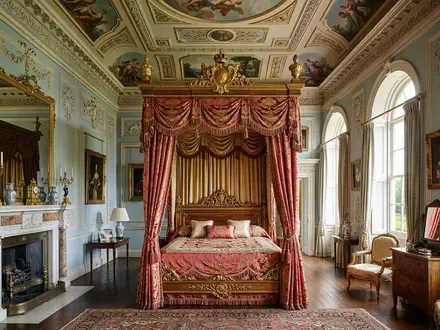
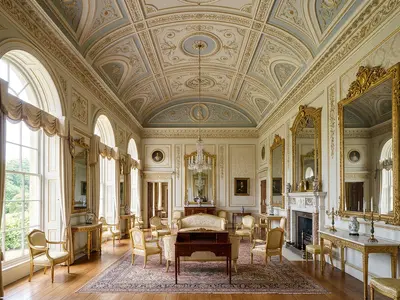
The house interior spans several centuries of taste and fortune. Robert Adam's neoclassical reception rooms on the ground floor, created for Sir John Griffin Griffin in the 1760s, feature painted ceilings, elegant plasterwork and gilded furniture. Upstairs, the Great Hall and state apartments retain their Jacobean grandeur. The 1830s nursery invites children to try on period costumes and play with replica Victorian toys, while the 4th Baron Braybrooke's natural history collection displays hundreds of mounted birds in one of the finest surviving country-house cabinets of its kind.
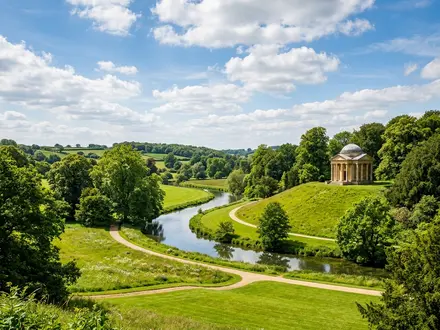
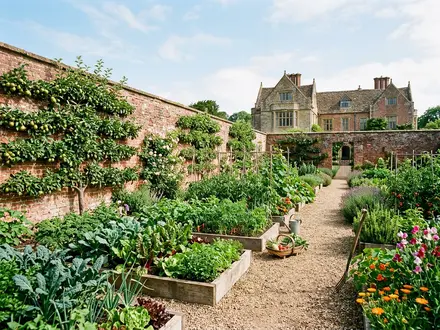
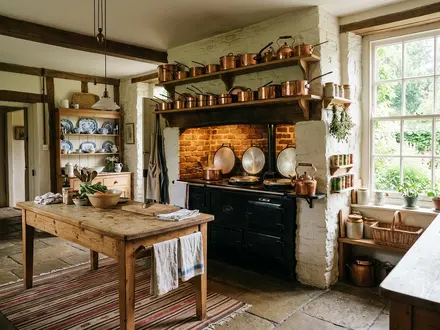
Outside, Capability Brown's parkland stretches along the River Cam, crossed by ornamental bridges and overlooked by the Temple of Concord. The organic walled kitchen garden, tended using traditional methods, grows heritage vegetables and espaliered fruit. Below stairs, the restored Victorian service wing brings the domestic workings of the estate to life — the kitchen, laundry, dairy and stable yard are all open to explore. A second-hand bookshop in the grounds is worth a browse, and a new adventure playground opens in April 2026.
The most convenient route by public transport is the Greater Anglia train from London Liverpool Street to Audley End station, which takes about an hour. From the station, the house is roughly a mile and a half — a pleasant 25-minute walk through the village or a quick taxi ride. If driving, junction 8 of the M11 leads to Saffron Walden, and the house has a free car park.
Allow at least half a day to do the estate justice. The house closes to new visitors at 2pm and the grounds at 3pm, so arriving at opening time is sensible. Comfortable shoes are essential, as paths cross grass, gravel and uneven surfaces. Note that the house is closed on Mondays and Tuesdays, and seasonal variations apply — check the English Heritage website before travelling.
English Heritage members enter free. Book online in advance for a 15% discount on standard prices. Under 5s free
Last entry to the house is 2pm, two hours before the grounds close. Get there at opening time to explore the interiors first, then spend the afternoon in the gardens.
English Heritage offers a 15% discount on advance online bookings compared to on-the-day prices. Book at least a day ahead to guarantee entry and save money.
Audley End station is about 25 minutes on foot from the house, through a pleasant stretch of countryside. The route is flat and well signposted, making it a lovely start to the visit.
The organic walled kitchen garden is tucked away and easy to miss. Save it for the end of your visit — it is one of the most peaceful spots on the entire estate.
The house is closed on Mondays and Tuesdays year-round, and opening hours vary by season. Check the English Heritage website before travelling to avoid disappointment.

London Travel Writer · 12+ years covering UK attractions and tourism
Last reviewed: June 2, 2026