Ascott House and Gardens
A Rothschild treasure house near Wing — Old Masters, Chinese porcelain and 30 acres of Victorian gardens with a famous topiary sundial
A Rothschild treasure house near Wing — Old Masters, Chinese porcelain and 30 acres of Victorian gardens with a famous topiary sundial
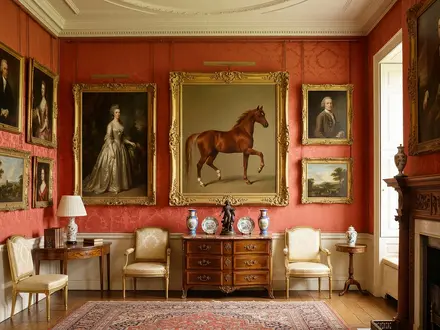
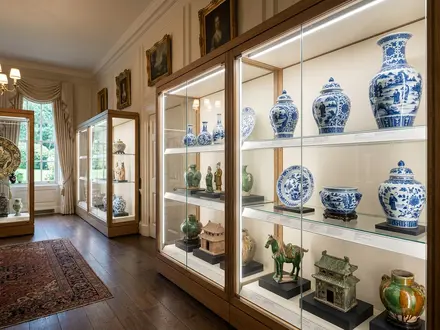
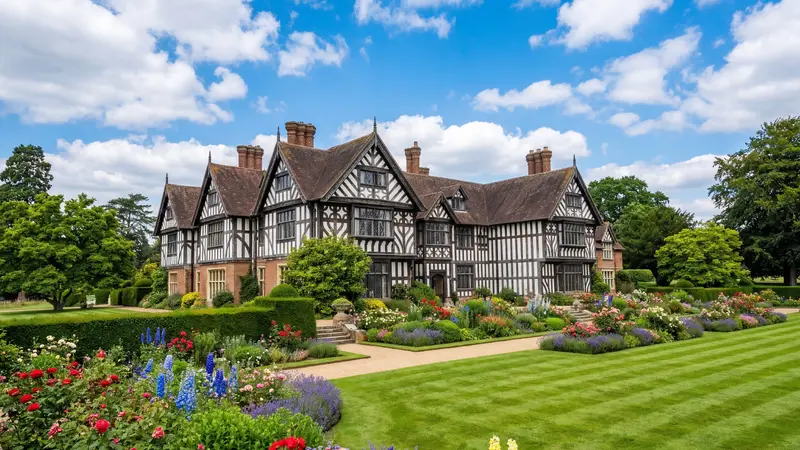
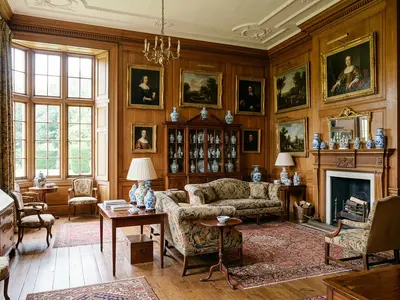
Ascott began life as a Jacobean farmhouse in 1606. When Leopold de Rothschild acquired it in 1873, he filled the rooms with Gainsboroughs, Turners and one of the finest private collections of Chinese porcelain in Britain — pieces dating back to the Han dynasty, some 2,200 years old. The house still feels more like an inhabited family home than a museum.
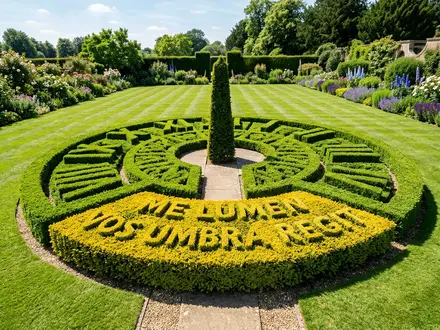
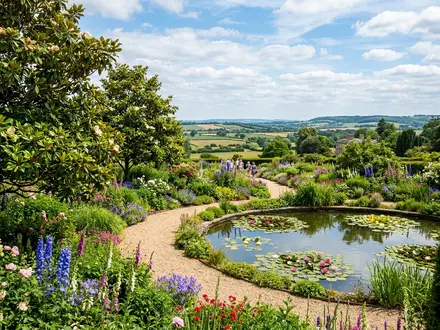
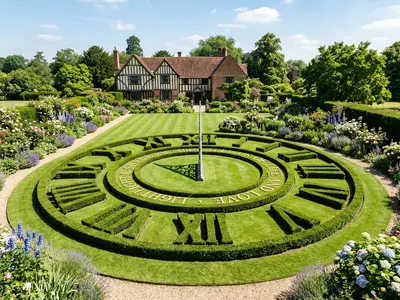
Outside, thirty acres of Victorian gardens descend through a lily pond, serpentine walks and a magnolia dell to the famous topiary sundial, its Roman numerals clipped from yew and box with the motto "Light and shade by turn, but love always" picked out in golden yew. On a clear day the views stretch across the Vale of Aylesbury.
A carved beam above the front door dates the original building to 1606, when Ascott was a modest farmhouse known as Ascott Hall. The property changed hands several times before Baron Mayer de Rothschild purchased it in 1873 as part of the family's extensive Buckinghamshire landholdings, which already included nearby Mentmore Towers and Waddesdon Manor.
Mayer passed the house to his nephew Leopold, who initially used it as a hunting box. Finding it too small for entertaining, Leopold commissioned the architect George Devey to enlarge the property from 1874 onwards. Devey's approach was deliberately informal — he designed additions that looked as though the building had grown organically over centuries, mixing authentic Tudor elements with new half-timbered wings. The result was a comfortable country house rather than the grand statement that other Rothschild properties represented.
The interior is arranged as a family home rather than a museum, with paintings hung in domestic groupings rather than chronological order. The dining room contains George Stubbs's celebrated Five Mares alongside works by Reynolds and Romney. Dutch and Flemish Old Masters fill the corridors, and a rare Andrea del Sarto Madonna and Child from 1520 hangs in the morning room. The Chinese porcelain collection is the house's quiet triumph — cabinets of Han dynasty burial wares, Song celadon and Kangxi blue-and-white line the ground floor rooms.
Outside, the gardens were laid out from 1902 under the direction of Sir Harry Veitch, the renowned Victorian plantsman. The topiary sundial is the centrepiece, its yew and box numerals still telling the correct time on sunny days. Beyond it, a serpentine walk leads through a magnolia dell to the lily pond, while herbaceous borders provide colour from spring through autumn. A thatched skating hut designed by Devey survives near the top of the grounds.
Ascott sits two miles southwest of Leighton Buzzard, well signposted from the A418. Drivers reach it in roughly ninety minutes from central London via the M1. By public transport, regular trains from Euston to Leighton Buzzard take under an hour, and a local bus covers the short distance to Wing.
The estate is entirely cashless. The Pavilion Tea Room serves cream teas, light lunches and cakes, with seating both indoors and in the gardens. Allow at least an hour for the house and collection, then a further two hours to explore the grounds properly. The site is open from March to September only, and closes for winter. Mobility buggies are available for visitors who find the thirty acres of gardens challenging on foot.
Under 5s free. House tickets are an add-on to gardens entry and require a timed slot — pre-book online for weekends and school holidays
House and collection entry requires a timed slot booked separately from garden tickets. Weekend and school holiday slots sell out quickly, so book online up to 18 hours ahead.
Gardens open at 11:30am and deserve at least two hours. Explore the topiary sundial, lily pond and magnolia dell first, then use your timed house slot in the afternoon.
On clear days the Vale of Aylesbury stretches for miles from the upper gardens. The views are particularly striking from near the topiary sundial on the south-facing slope.
Waddesdon Manor, another Rothschild National Trust property, is just 10 miles away and makes an excellent pairing for a weekend exploring the family's Buckinghamshire estates.
Ascott accepts card payments only for tickets, the tea room and shop. Bring a contactless card or ensure your phone payment is set up before you arrive.

London Travel Writer · 12+ years covering UK attractions and tourism
Last reviewed: March 9, 2026