Windsor Great Park
A 4,800-acre royal parkland south of Windsor Castle — home to ancient oaks, deer herds and the Savill Garden
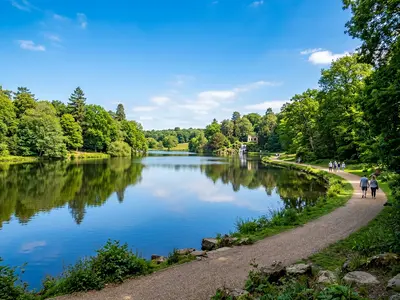
A 4,800-acre royal parkland south of Windsor Castle — home to ancient oaks, deer herds and the Savill Garden
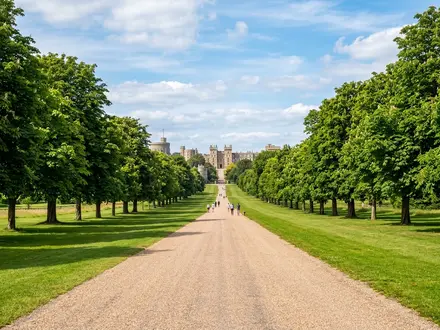
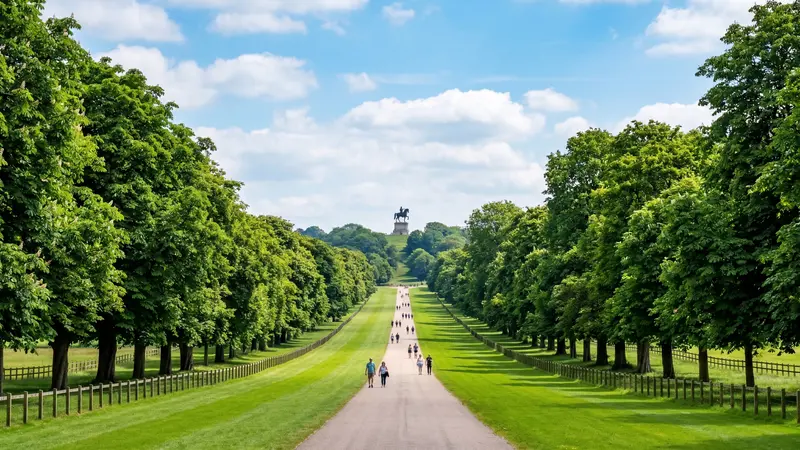
Windsor Great Park stretches across 4,800 acres of ancient woodland, open grassland and ornamental gardens immediately south of Windsor Castle. The Long Walk, a 2.65-mile tree-lined avenue laid out by Charles II in 1680, connects the castle to the Copper Horse statue on Snow Hill, framing one of the most recognisable views in England.
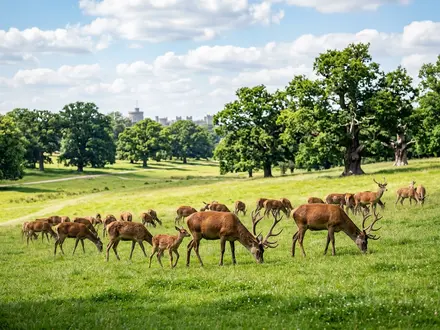
Visitors can walk among 500 free-roaming red deer, explore the award-winning Savill Garden, follow lakeside paths around Virginia Water and discover a 100-foot Canadian totem pole hidden among the trees. The park is free to enter on foot and open every day of the year.
Windsor Great Park has served the Crown since at least the 1360s, when it was enclosed as a royal hunting ground attached to Windsor Castle. The park's origins may stretch back further still: William the Conqueror is believed to have hunted in the surrounding forests after establishing his castle on the chalk bluff above the Thames in the 1070s. For centuries the park supplied the castle with venison, timber and recreation for successive monarchs.
Charles II transformed the park's character after his restoration to the throne in 1660. Having spent years in exile at the Palace of Versailles, he commissioned the Long Walk in 1680, a grand double avenue of 1,652 elm trees stretching 2.65 miles from the castle gates to Snow Hill. The trees have been replanted several times since, most recently with London planes and horse chestnuts, but the proportions and sightlines remain unchanged. The Copper Horse, a monumental equestrian statue of George III, was placed on Snow Hill in 1829 and provides the focal point at the avenue's southern end.
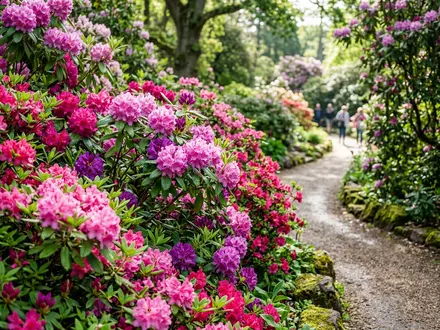
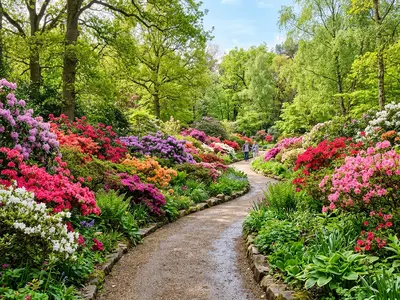
The Savill Garden is the park's horticultural centrepiece, created by Sir Eric Savill in 1932 with the support of George V and Queen Mary. Its 35 acres contain interconnected gardens ranging from alpine meadows to temperate woodland, and it holds National Collections of magnolias and rhododendrons. The peak period for azalea and rhododendron colour runs from late April to mid-May. A curved timber-and-steel visitor centre, completed in 2006 and designed by Glenn Howells Architects, houses a shop, restaurant and gallery.
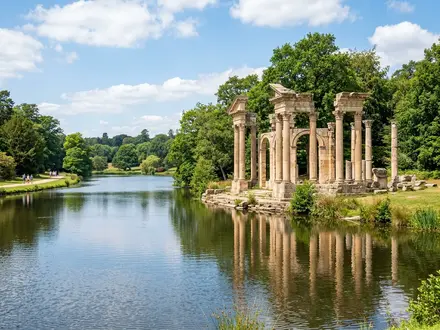
Virginia Water, an ornamental lake nearly two miles long in the park's southern reaches, was created in the 1740s for the Duke of Cumberland. The lakeside walk passes the Valley Gardens, a 250-acre landscape of azaleas and exotic trees, and reaches the Leptis Magna ruins, genuine Roman columns and entablatures from a second-century city in Libya, installed by George IV in 1826. Nearby stands the 100-foot totem pole gifted by Canada in 1958. The Deer Park, re-established by the Duke of Edinburgh with red deer in 1979, offers the chance to see around 500 animals grazing in open parkland.
Windsor Great Park is free to enter on foot every day from 7am to dusk. The Savill Garden charges a separate admission fee and operates from 10am to 6pm in summer, with reduced winter hours. Several car parks line the A332, which runs through the park; most charge a fee, though a few are free. Only residents and staff may drive through the park itself, so visitors arriving by car should plan their parking around the specific area they wish to visit.
From London, the most straightforward route is by train from Waterloo to Windsor & Eton Riverside, a journey of around 55 minutes. The Long Walk entrance is a short walk from the town centre. For visitors heading to Virginia Water or the Savill Garden, Virginia Water station on the southwestern side provides more direct access. Windsor Castle, Eton College and the riverside town centre are all within walking distance of the park's northern edge.
Children under 5 enter the Savill Garden free. The main parkland, Long Walk, Virginia Water and Valley Gardens are free to access on foot year-round.
Walking down the Long Walk from Windsor Castle to the Copper Horse gives you the full 2.65-mile avenue experience. The view back towards the castle is equally impressive on the return.
Advance online booking secures the best price and guarantees entry on busy spring weekends. Walk-up tickets cost more and may not be available when the garden reaches capacity during peak azalea season.
The lakeside circuit is roughly four miles and very popular at weekends. Midweek mornings are noticeably quieter, especially outside school holidays. The Leptis Magna ruins and totem pole are at the southern end of the lake.
Many paths through the park are unsurfaced grass or woodland tracks that become muddy after rain. The Long Walk and main Savill Garden paths are well maintained, but outlying routes can be rough.
The red deer are wild and can be dangerous, particularly stags during the autumn rut from September to November. Maintain at least 50 metres distance and never attempt to feed or approach them.

London Travel Writer · 12+ years covering UK attractions and tourism
Last reviewed: March 10, 2026