London's best attractions at the best prices

Grand Union Canal

England's longest canal network — 137 miles of towpath, narrowboats and waterside heritage from London to Birmingham
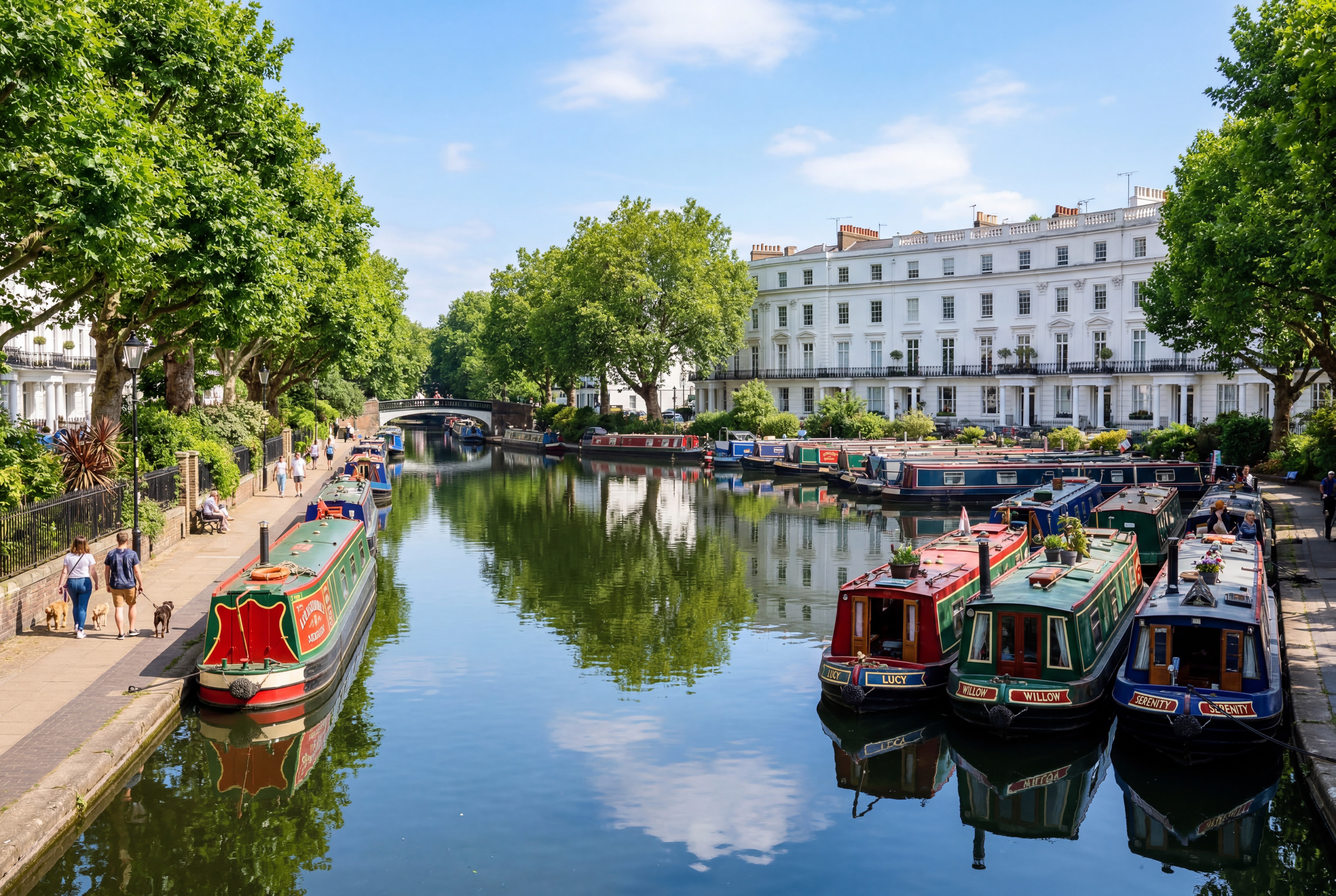
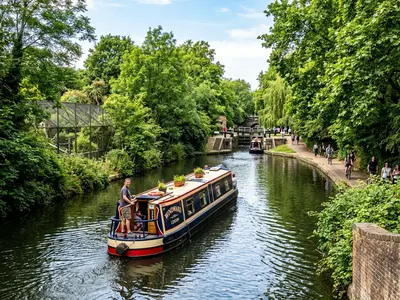
The Grand Union Canal stretches 137 miles from the heart of London to central Birmingham, making it the longest canal in England. Formed in 1929 through the merger of several older waterways — most notably the Grand Junction Canal of 1793 — it passes through some of the finest scenery in the Home Counties, from the mansion-lined pool at Little Venice to the beech woods of the Chiltern Hills.

For visitors based in London, the canal offers an easy escape into countryside that feels far removed from the city. The towpath is free to walk or cycle along its entire length, and narrowboat trips run from several points including Little Venice and Rickmansworth. Canalside pubs, working locks and abundant wildlife make this one of the most rewarding waterside walks within reach of the capital.

Area London to Buckinghamshire and beyond
Price Free to walk the towpath
Duration 1 hour to full day, depending on section
Best Time Spring and summer for narrowboat trips and towpath cycling, or autumn for quieter walks through the Chilterns

Highlights

Little Venice and Paddington Basin

Little Venice and Paddington Basin

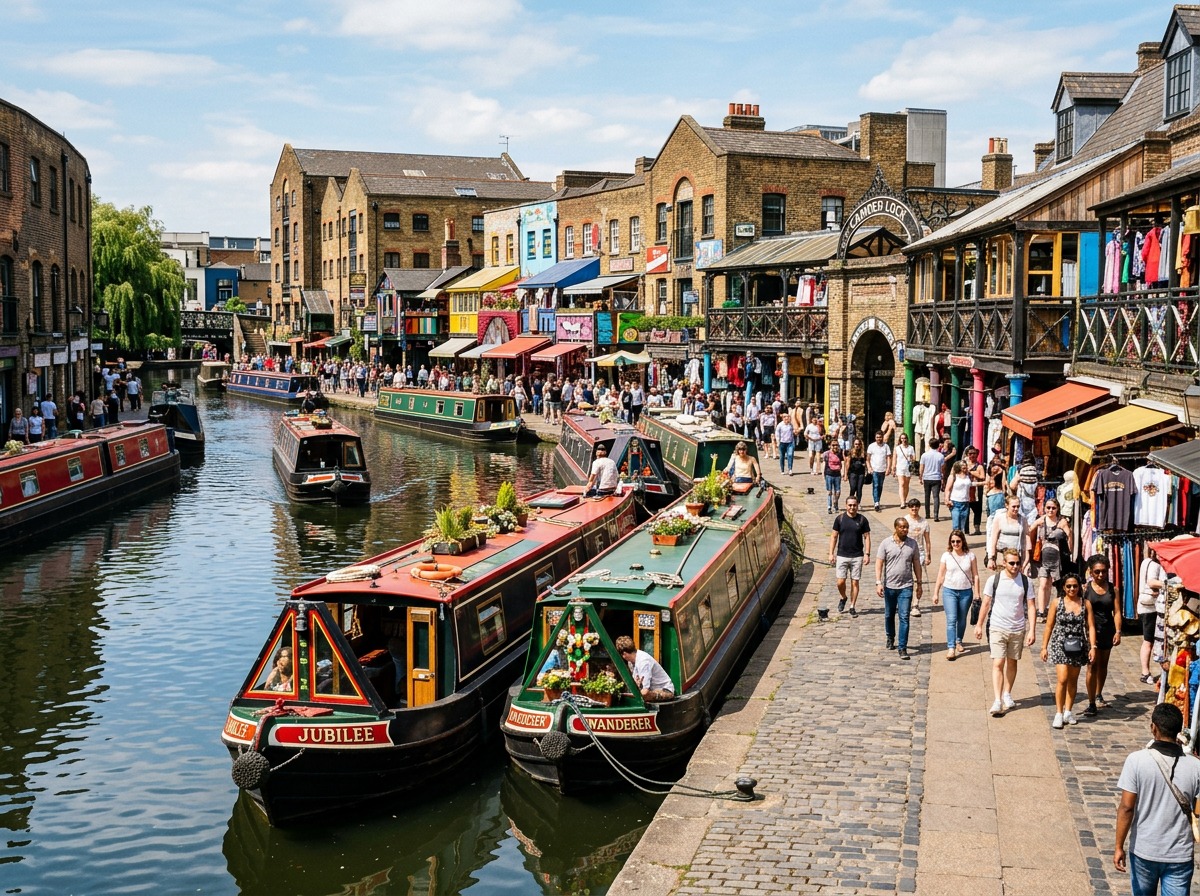
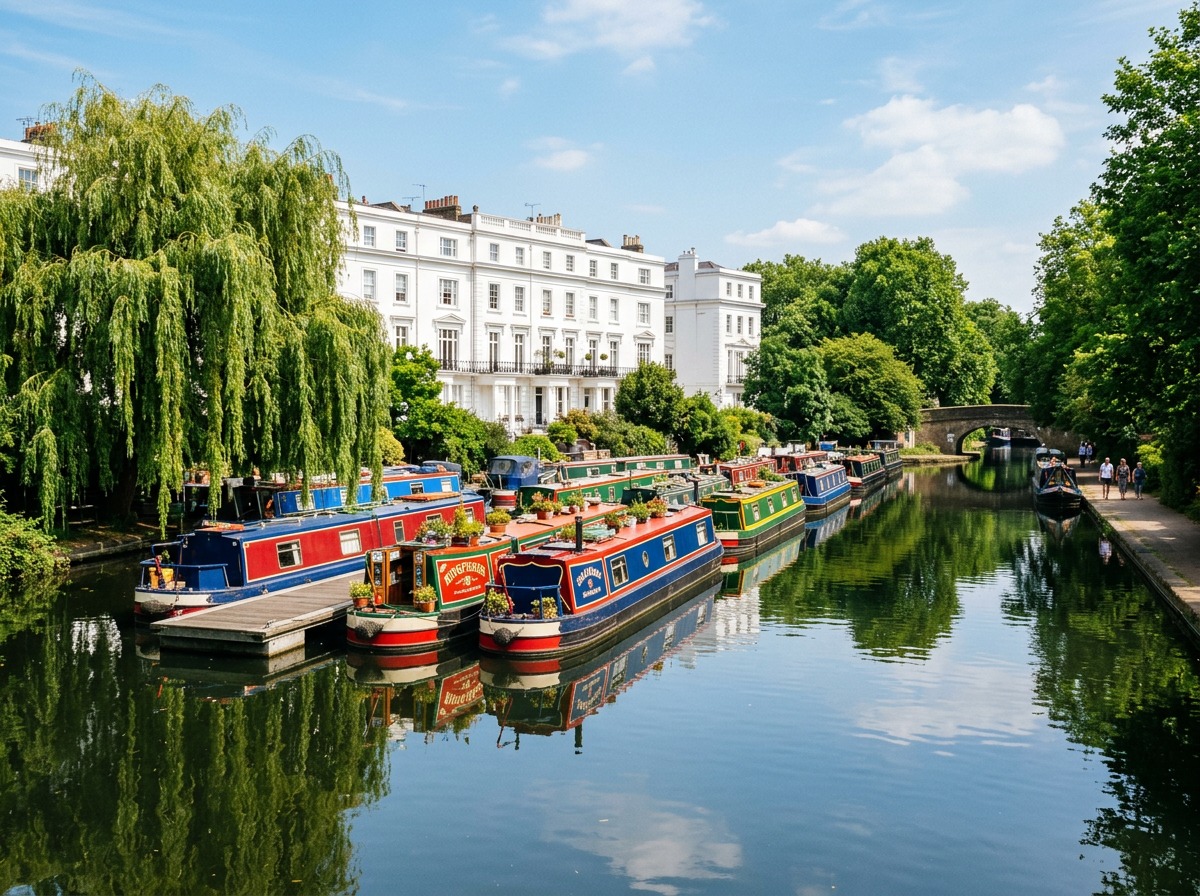
The canal's London terminus is a surprisingly tranquil pool where the Grand Union meets Regent's Canal. Houseboats line the water beneath white stucco terraces, and the Waterside Cafe sits on a moored barge. The poet Robert Browning lived nearby from 1862 to 1887 and is said to have coined the name Little Venice. From here, the London Waterbus runs narrowboat trips to Camden Lock through Regent's Park and London Zoo.

Camden Lock and Regent's Canal

Camden Lock and Regent's Canal

Though technically a separate waterway, the Regent's Canal links directly to the Grand Union at Little Venice and carries much of its London traffic. The towpath walk from Little Venice to Camden passes through the 249-metre Maida Hill Tunnel, skirts the northern edge of Regent's Park, and emerges at the bustling Camden Lock Market. The London Waterbus trip takes about 45 minutes and passes through the grounds of London Zoo.

Cassiobury Park and Watford Locks

Cassiobury Park and Watford Locks

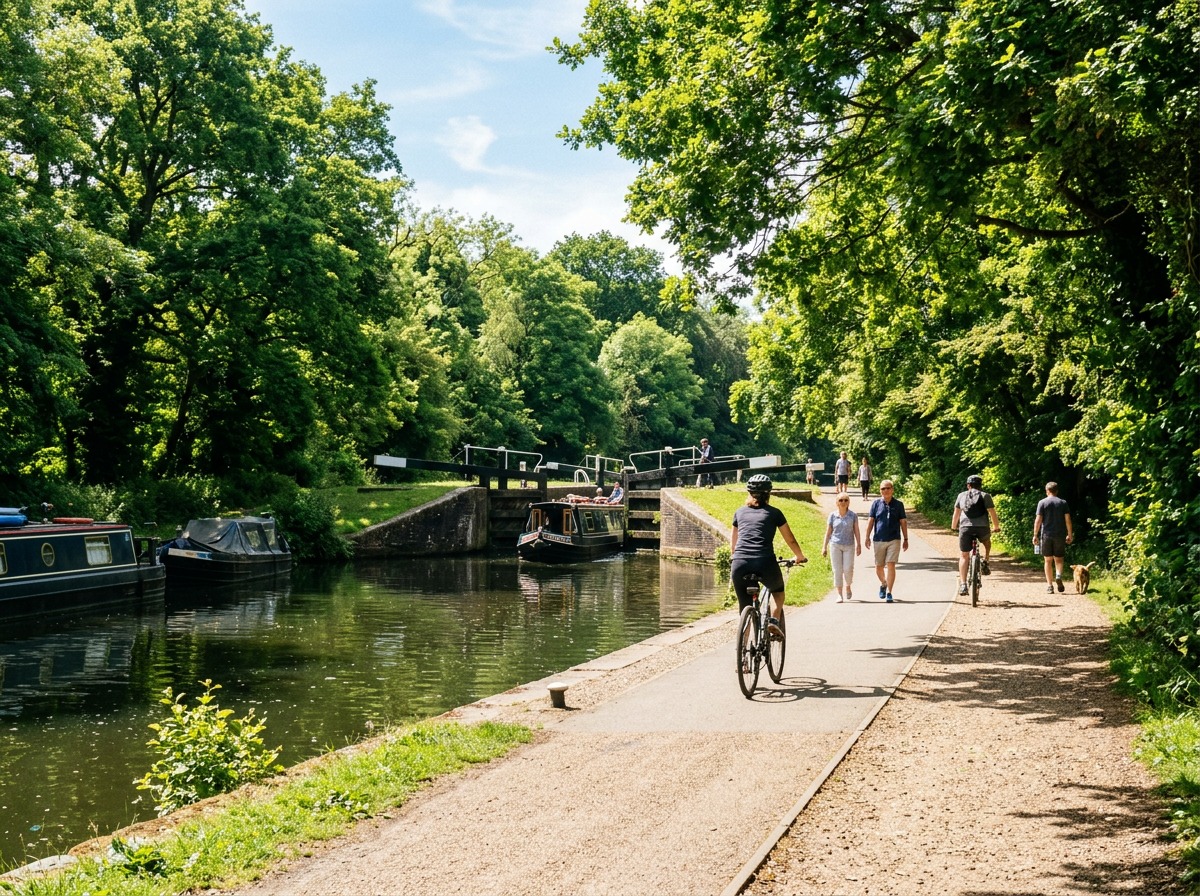
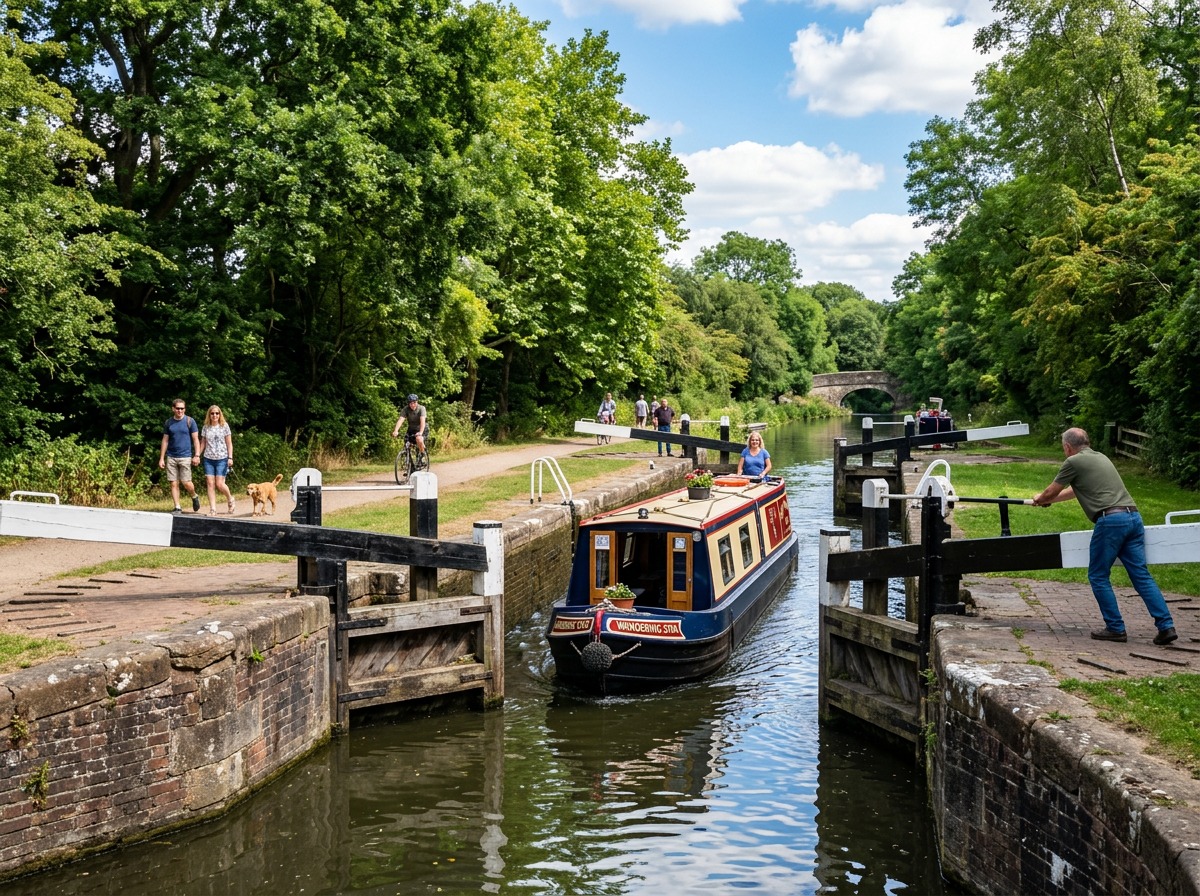
At Watford, the canal passes through Cassiobury Park in what the Shell Book of Inland Waterways called one of the loveliest stretches of canal near a town anywhere in Britain. Four locks carry boats uphill through mature woodland and open parkland, with Whippendell Woods on the opposite bank. The towpath here is well surfaced and popular with runners and cyclists heading out towards Rickmansworth and the Colne Valley.

Tring and the Chiltern Summit

Tring and the Chiltern Summit

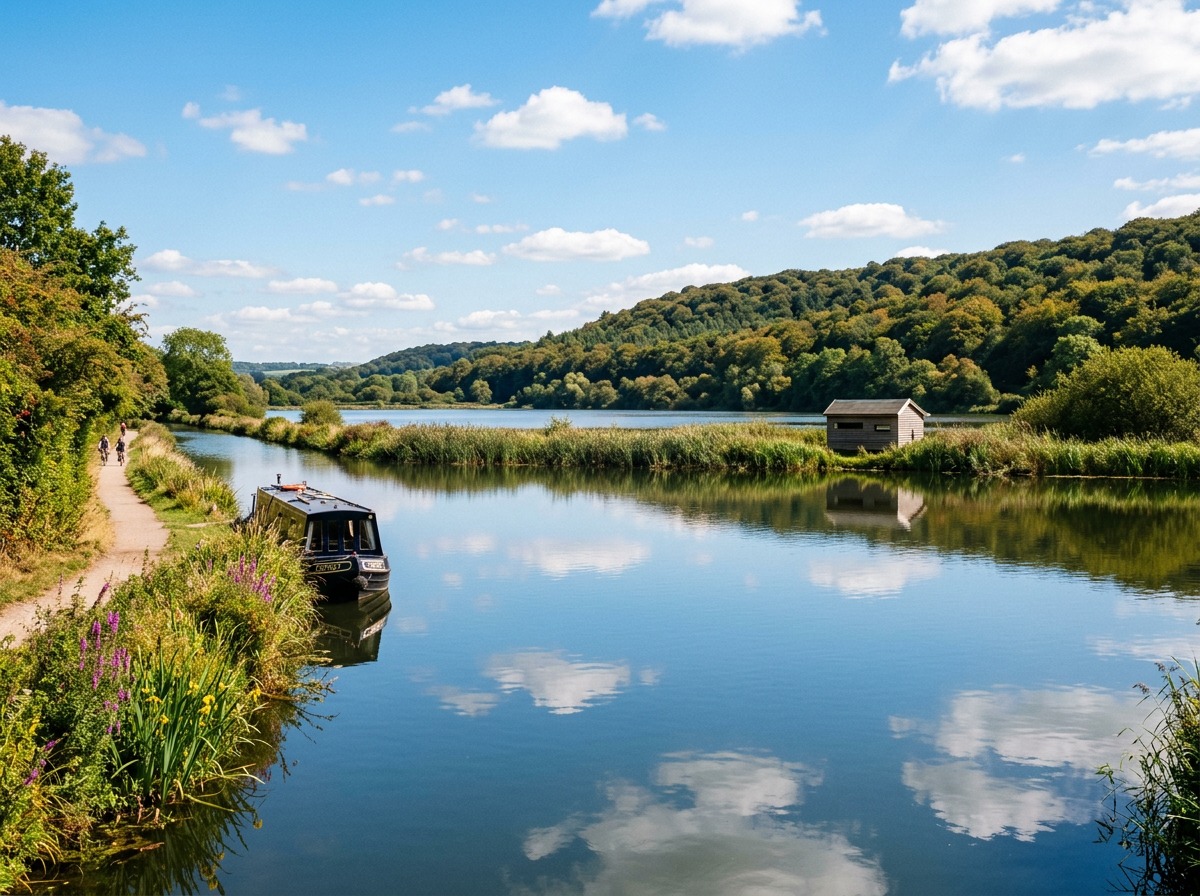
The canal's highest point sits in a deep cutting near Tring, 120 metres above sea level. The summit pound is fed by four reservoirs built in the 1800s, now managed as Tring Reservoirs National Nature Reserve and home to grebes, herons and overwintering wildfowl. The towpath through here follows the canal beneath overhanging beech trees, passing the village of Marsworth where two flights of locks mark the start of the long descent towards the Midlands.

From Grand Junction to Grand Union

The canal that runs through London today began life as the Grand Junction Canal, authorised by an Act of Parliament in 1793 and fully opened in 1805. Its purpose was direct and commercial — to create a shorter route between London and Birmingham, cutting 60 miles off the existing path via the Oxford Canal and the River Thames. The engineer William Jessop oversaw the main line, which ran from Braunston in Northamptonshire down through the Chiltern Hills to a terminus at Paddington, then a village on the western edge of London.

By the early twentieth century, competition from railways had diminished canal trade, and in 1929 the Grand Junction merged with the Warwick and Napton Canal, the Birmingham and Warwick Junction Canal and five smaller waterways to form the Grand Union Canal. A government-funded modernisation programme in the 1930s widened many of the narrow locks between Braunston and Birmingham to take wider boats, though the locks south of Braunston remained narrow. The Duke of Kent opened the new broad locks at Hatton in 1934, and further improvements continued until 1937. Commercial carrying dwindled through the mid-twentieth century, and the last regular cargo runs ended in the 1970s.

Walking the London Sections

The most accessible stretch for visitors begins at Little Venice in Maida Vale, where the Grand Union meets the Regent's Canal at a wide, tree-lined pool known as Browning's Pool. From here, you can walk east along the Regent's Canal towpath to Camden Lock in about 45 minutes, passing through the Maida Hill Tunnel, skirting the northern boundary of Regent's Park and passing the back of London Zoo before emerging at Camden's famous market.

Heading west and then north from Little Venice, the Grand Union towpath follows the Paddington Arm through residential streets before opening out into the suburbs. The canal passes through Alperton, Greenford and Southall — areas with a strong South Asian community, where canalside temples and restaurants add unexpected colour to the walk. Beyond the M25, the character changes entirely. The canal enters the Colne Valley at Rickmansworth, where the River Colne, the Chess and several lakes create a network of waterways and wetlands. Cassiobury Park in Watford is a highlight, with four locks carrying the canal through mature woodland that the Shell Guide to Inland Waterways singled out as among the finest urban canal scenery in Britain.

Into the Chilterns and Beyond

North of Watford, the canal climbs through Kings Langley and Hemel Hempstead towards the Chiltern summit at Tring. The landscape becomes increasingly rural, with the towpath running through beech woodland, past chalk grassland and alongside the four Tring Reservoirs, built between 1802 and 1839 to feed the summit level. These reservoirs are now a National Nature Reserve, managed by Natural England, and attract birdwatchers year-round — great crested grebes, grey herons and overwintering teal and shoveler are regular sights.

The market town of Berkhamsted sits directly on the canal, with the ruins of its Norman castle visible from the towpath. Further north, the canal descends through Marsworth and Leighton Buzzard before continuing across the Midlands to Birmingham. While most London visitors will explore the southern sections, the full towpath is a designated long-distance walking route of 147 miles, waymarked by the Canal and River Trust and walkable in stages over several days.

Did You Know?

  • The Grand Union Canal was formed in 1929 by merging eight separate canal companies, the largest being the Grand Junction Canal which had opened in 1805
  • The canal has 166 locks along its main line, including the spectacular 21-lock flight at Hatton in Warwickshire, nicknamed the Stairway to Heaven
  • Two of the longest canal tunnels in Britain sit on the Grand Union — Blisworth Tunnel at 2,794 metres and Braunston Tunnel at 1,887 metres
  • Little Venice earned its name from the poet Robert Browning, who lived at nearby Warwick Crescent from 1862 to 1887 and compared the pool to Venice

Pricing

  • Towpath walking and cycling Free
  • London Waterbus (Little Venice to Camden, adult) £12.00
  • London Waterbus (child 3–15) £8.00
  • Narrowboat day hire (from various operators) From £150

The towpath is entirely free to walk or cycle. Narrowboat trip prices vary by operator and route. The London Waterbus Company runs regular scheduled services between Little Venice and Camden Lock. Day boat hire is available from several marinas along the canal, typically starting from around £150 for a half day.

Getting There

Towpath accessible from multiple points — Little Venice (London W2) to Birmingham

Tube: For Little Venice, take the Bakerloo line to Warwick Avenue station and walk five minutes south to the canal basin. Paddington station (Hammersmith and City, Circle, Bakerloo and Elizabeth lines) is also a short walk from the canal via Paddington Basin. For the Regent's Canal connection to Camden, walk the towpath east from Little Venice or take the Northern line to Camden Town

Train: For sections beyond London, take a train from London Euston or Marylebone. Berkhamsted station (35 minutes from Euston) sits directly beside the canal. Rickmansworth is on the Metropolitan line. Watford Junction and Kings Langley are both close to good towpath access points along the Hertfordshire stretch

Driving: Driving to the canal is straightforward outside London. For Cassiobury Park in Watford, follow the M25 to junction 19 and take the A411 into Watford. Free parking is available at Cassiobury Park car park. For Tring, exit the A41 at Tring and follow signs towards Marsworth — there is a small car park near the reservoir visitor centre

Visitor Tips

Start at Little Venice for the best introduction

Warwick Avenue tube station is a five minute walk from the canal basin and gives immediate access to the towpath in both directions. Head east for Camden Lock or north to follow the Grand Union into the suburbs.

Take the London Waterbus for a different perspective

The narrowboat trip from Little Venice to Camden Lock takes about 45 minutes and passes through Regent's Park and London Zoo. It is a relaxing way to see a stretch of the canal without walking the full towpath.

Cycle the towpath for longer stretches

The towpath is well surfaced for cycling in most sections, particularly between Little Venice and Uxbridge. Give way to pedestrians and slow down near locks and narrow bridges. Some sections can be muddy after rain.

Combine Cassiobury Park with a canal walk

Watford Junction is 20 minutes from London Euston. Walk to Cassiobury Park and pick up the towpath heading north through the locks and into the Colne Valley towards Rickmansworth for a rewarding half-day outing.

Bring binoculars for the Tring Reservoirs

The four reservoirs near Tring are a National Nature Reserve with excellent birdwatching. Great crested grebes breed here in summer and wildfowl overwinter in large numbers. The towpath runs right alongside them.

Common Questions About Grand Union Canal

The main line runs 137 miles from London to Birmingham with 166 locks. Including all branches, the canal network stretches over 286 miles. The London-accessible sections from Little Venice to Tring cover roughly 35 miles of towpath.

Yes. The towpath is entirely free for walking and cycling along its full length. It is managed by the Canal and River Trust and open 24 hours a day, year-round. No ticket or permit is needed.

Most of the towpath is open to cyclists, though some short sections near locks or tunnels require dismounting. The surface varies from tarmac in urban areas to compacted gravel and earth in rural stretches. After heavy rain, some sections can be muddy.

Take the Bakerloo line to Warwick Avenue station. The canal basin is a five minute walk south along Blomfield Road. Paddington mainline station is also nearby, with access to the canal via Paddington Basin.
James Whitfield

James Whitfield

EDITORIAL REVIEW

London Travel Writer · 12+ years covering UK attractions and tourism

Last reviewed: March 10, 2026
Visit

  • Towpath accessible from multiple points — Little Venice (London W2) to Birmingham
  • +44 303 040 4040
  • Daily 24 hours (towpath)
  • canalrivertrust.org.uk

Discover More

Discover more attractions and things to do in London.

Browse All Attractions

Parks & Gardens

More Parks & Gardens

All Parks & Gardens
Hyde Park Free

Hyde Park

350-acre royal park in central London with the Serpentine lake, Speakers' Corner, Diana Memorial Fountain and year-round open access

Free Mayfair / Knightsbridge