Dungeness Nature Reserve
RSPB reserve on Europe's largest shingle headland — birdwatching hides, rare wildflowers and otherworldly coastal landscapes in Kent
RSPB reserve on Europe's largest shingle headland — birdwatching hides, rare wildflowers and otherworldly coastal landscapes in Kent
RSPB Dungeness sits on the southern tip of the Dungeness peninsula in Kent, one of the largest expanses of shingle in Europe. The RSPB first acquired land here in 1931, making it one of the charity's oldest reserves. Today the site covers over 1,000 hectares of shingle, freshwater gravel pits, reedbeds, wet grassland and wildflower meadows.
The reserve is home to more than 600 plant species — roughly a third of all those found in Britain — and draws birdwatchers year-round. Winter brings smew, bittern, bearded tits and large flocks of wigeon and teal to the flooded gravel pits. Spring and summer see breeding terns, avocets and marsh harriers, while autumn passage brings waders in their hundreds. A network of trails and six bird hides provides close-up views across the wetland habitats.
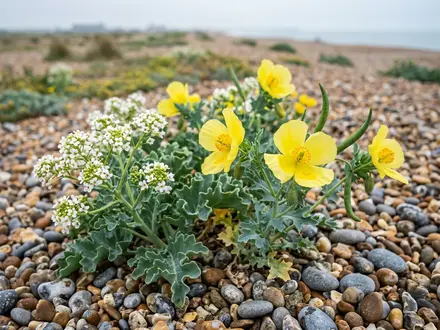
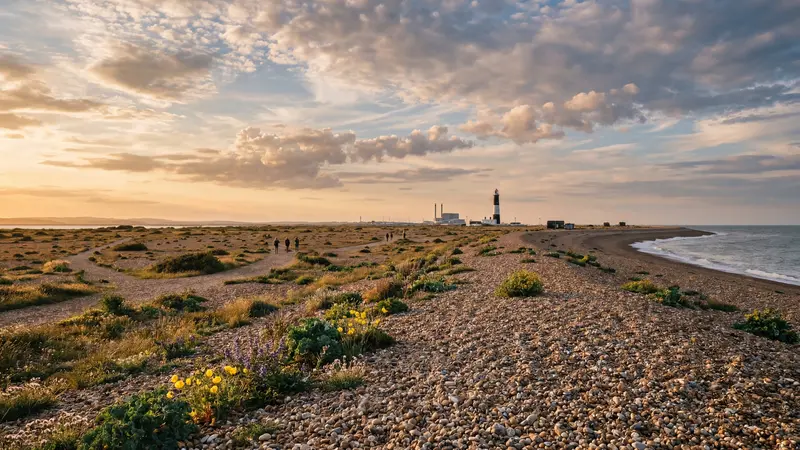
Nothing quite prepares you for Dungeness. The peninsula juts out into the English Channel at the southern edge of Romney Marsh, and the landscape is unlike anywhere else in Britain. Mile after mile of flint shingle stretches in every direction, dotted with sea kale, yellow horned poppies and the skeletal forms of fishing boats pulled above the tide line. Two lighthouses, a nuclear power station and scattered wooden cottages complete a scene that feels more like the edge of the world than the Kent coast.
The RSPB reserve occupies over 1,000 hectares of this extraordinary headland. The charity first purchased land here in 1931 to protect breeding birds on the shingle, making Dungeness one of its oldest reserves. Since then, the site has expanded to include former gravel extraction pits that have flooded to create freshwater lakes, along with reedbeds, wet grassland and wildflower meadows. These varied habitats support an exceptional diversity of wildlife throughout the year.
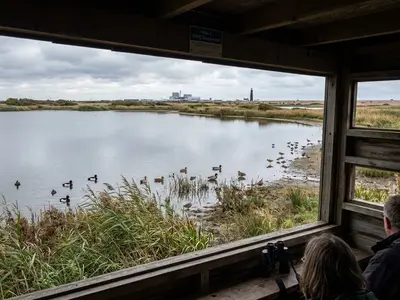
The heart of the reserve is a network of freshwater gravel pits surrounded by reedbeds and open shingle. Six bird hides are positioned around these wetlands, each offering different views and species. The 3.2-kilometre Discovery Trail links the main hides and can be walked comfortably in an hour and a half, though most birdwatchers spend considerably longer. Denge Marsh Hide overlooks extensive reedbeds where marsh harriers quarter the ground in spring and summer, and bitterns boom from deep cover. The ARC Pit attracts diving ducks including goldeneye and smew in winter, along with great crested grebes and cormorants.
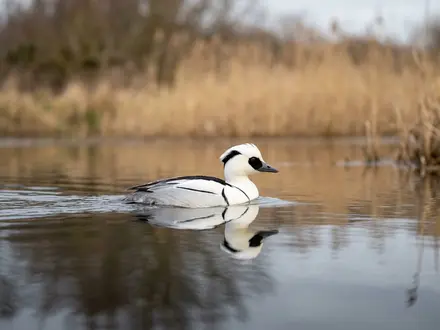
Winter is arguably the prime season. Dungeness is considered the best site in Britain for smew, the handsome black-and-white sawbill duck that arrives from Scandinavia in small numbers each December. Large flocks of wigeon, teal, shoveler and pochard fill the pits, while Bewick's and whooper swans are occasional visitors. Bitterns stalk through the reedbeds, and bearded tits flit between reed stems on calm mornings.
Spring brings breeding terns, avocets and lapwings to the shingle and islands. Common and Sandwich terns nest in noisy colonies visible from the hides, while avocets sweep their upturned bills through the shallow margins. Marsh harriers display overhead and Cetti's warblers call explosively from the scrub. Summer sees the shingle flora at its best, with yellow horned poppies, viper's bugloss and Nottingham catchfly in bloom among the stones.
Autumn passage brings wading birds in their hundreds, stopping to refuel on their southward migration. Little stints, curlew sandpipers and black-tailed godwits appear on the muddy margins, and ospreys occasionally pass through on their way to Africa. The reserve also supports a rich invertebrate community, including rare moths, beetles and spiders adapted to the shingle habitat.
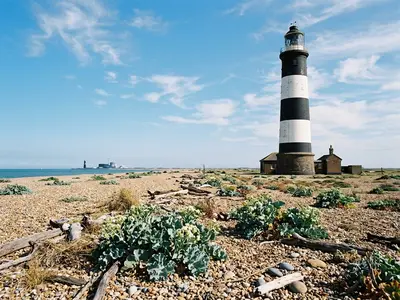
Beyond the RSPB reserve, the Dungeness peninsula rewards exploration. The Old Lighthouse, built in 1904 and decommissioned in 1960 when the power station blocked its beam, is open for visitors to climb its 169 steps for panoramic views across Romney Marsh and the Channel. Derek Jarman's Prospect Cottage, the striking black-painted fisherman's dwelling with its famous driftwood and shingle garden, sits nearby on the beach — it was saved for the nation by a public fundraising campaign and is now managed by the Art Fund.
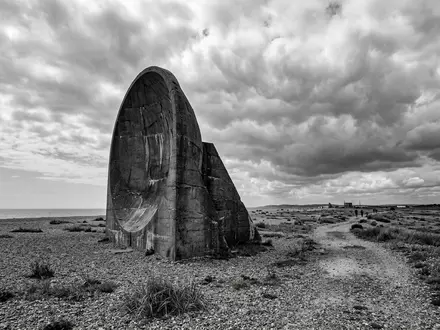
The Denge Sound Mirrors, three vast concrete structures built between 1928 and 1935 to detect approaching enemy aircraft by amplifying engine noise, stand on the shingle east of the reserve. They were rendered obsolete by the invention of electronic radar but remain as haunting monuments to interwar military engineering. Guided walks to the mirrors are run periodically by the Romney Marsh Countryside Partnership.
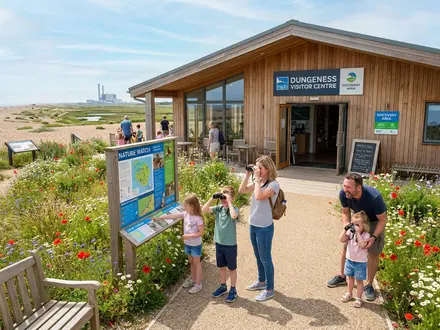
The reserve is open daily from 9am to 5pm throughout the year, except Christmas Day and Boxing Day. The visitor centre at Boulderwall Farm opens from 10am to 4pm five days a week — check the RSPB website for current opening days as these can vary. Staff post daily sightings updates on the reserve noticeboard and on the RSPB website, so it is worth checking what has been seen before deciding which hides to prioritise.
Non-member admission is £5 for adults and £2.50 for children, with the first child free. Non-member vehicle parking is £6, payable by phone, app, website or card at the visitor centre. RSPB members enter and park free. The Discovery Trail is mostly flat on compacted gravel and shingle, with some uneven sections. Wheelchairs can access the main trail and two of the hides. Dogs are not permitted on the reserve to protect ground-nesting birds.
Dungeness is exposed to wind and weather, so bring layers even in summer. Binoculars are essential and a telescope is useful for the more distant hides. The nearest shops and cafes are in Lydd, one mile north. There is no cafe on the reserve itself, though the visitor centre sells drinks and snacks when open.
Entry to the reserve trails and hides is free for RSPB members, who also park free of charge. Non-member admission covers access to all trails, hides and the discovery area. Under-fives enter free and the first child with each paying adult is also free. Parking for non-members is £6 per vehicle, payable by phone, app, website or card at the visitor centre. Annual RSPB membership starts from around £4 per month and gives free access to over 170 reserves
Staff update the sightings board at the visitor centre and online each morning. This tells you which hides are producing the best views and what species have been seen that day.
The hides overlook large areas of water and some birds are distant. A telescope on a tripod makes a real difference. If you do not own one, the visitor centre sometimes has loaners.
Dungeness is the best place in Britain for smew, which arrive from December. The ARC Pit hide gives the closest views. Midweek mornings are quietest in the hides.
The shingle headland is exposed and can be very windy even on sunny days. Temperatures feel several degrees colder than inland. A windproof jacket is essential year-round.
Dogs are not allowed anywhere on the reserve to protect ground nesting birds and wintering wildfowl. This applies all year round, not just in the breeding season.

London Travel Writer · 12+ years covering UK attractions and tourism
Last reviewed: March 10, 2026