Claremont Landscape Garden
A National Trust 18th-century landscape garden shaped by four master designers — turf amphitheatre, serpentine lake and grotto in Surrey
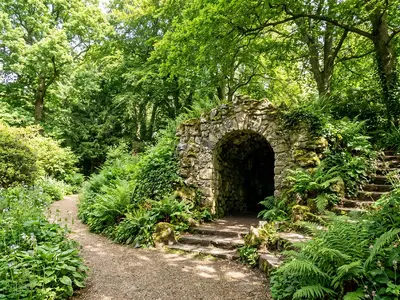
A National Trust 18th-century landscape garden shaped by four master designers — turf amphitheatre, serpentine lake and grotto in Surrey
Claremont Landscape Garden has been shaped by four of the most influential garden designers in English history: Sir John Vanbrugh, Charles Bridgeman, William Kent and Lancelot "Capability" Brown. By 1727, barely a decade after work began, the garden was already described as "the noblest of any in Europe."
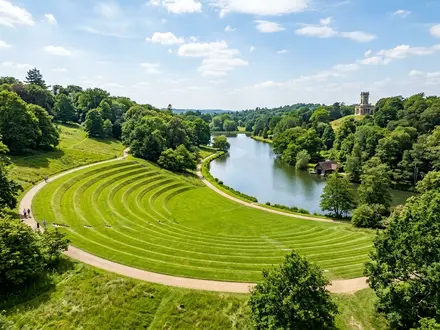
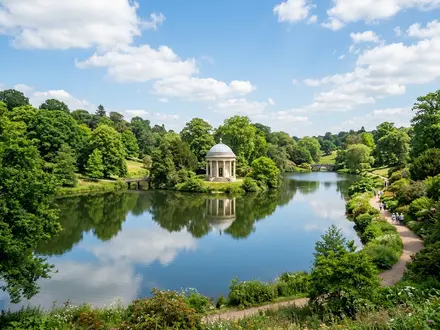
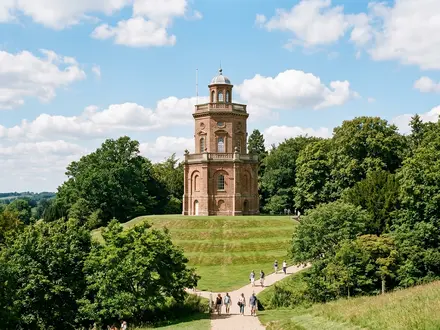
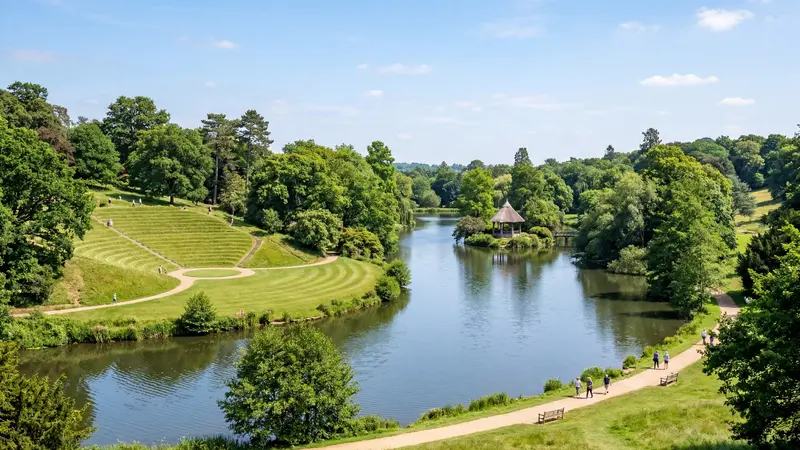
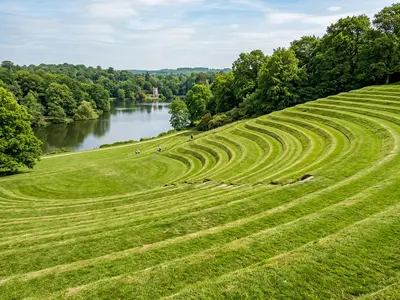
Spread across 20 hectares in Esher, the Grade I listed garden offers a serpentine lake with an island pavilion, the earliest surviving turf amphitheatre in Europe, a grotto, Camellia Terrace and a Belvedere Tower. Rowing boats are available on weekends in summer, and a woodland play area keeps younger visitors occupied.
Claremont's story begins in 1709 when the playwright and architect Sir John Vanbrugh purchased Chargate Farm on the hill above Esher. He built a small villa and the Belvedere Tower that still stands on the estate's highest point. In 1714 Vanbrugh sold the property to Thomas Pelham-Holles, 1st Duke of Newcastle, who renamed it Claremont and commissioned Charles Bridgeman to lay out the pleasure grounds. Bridgeman's most remarkable contribution — the turf amphitheatre carved into the hillside around 1725 — survives as the earliest known example of its kind in Europe.
By the 1730s William Kent had been called in to reshape the garden in the new naturalistic style. He replaced Bridgeman's formal round pond with the serpentine lake, added the island pavilion and cascade, and planted carefully arranged groves of trees to create picturesque views. When Robert Clive of India acquired the estate in 1769, he employed Lancelot "Capability" Brown and Henry Holland to further soften the landscape, diverting the Portsmouth Road and altering the ha-ha to extend the views across the Surrey countryside.
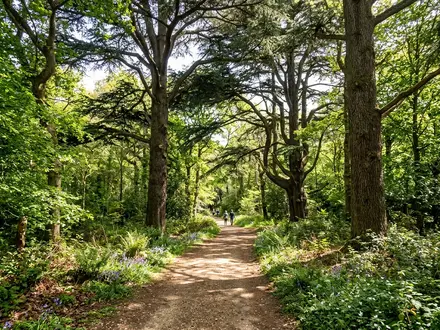
The circular walk around the lake takes in most of the garden's key features in about an hour. From the entrance, paths descend through mature woodland — including some of England's finest Cedars of Lebanon — to the water's edge. The grotto provides a shaded detour, and the island pavilion is visible across the lake from several vantage points. On weekends during late spring and summer, rowing boats are available to hire on the lake.
The turf amphitheatre rewards a short climb from the lakeside. Its grassed tiers offer a panoramic view over the water and surrounding canopy, and the scale of Bridgeman's earthworks is best appreciated from the top. The Camellia Terrace, at its best in late winter and early spring, sits near the garden's eastern boundary. Badger's Basecamp — a woodland play area with slides and climbing walls — gives children space to explore between the more formal garden walks.
The on-site cafe serves light lunches, soups, sandwiches and freshly baked cakes, closing 30 minutes before the garden. Dogs on short leads are welcome throughout the garden except in the children's play area and around the lake edge. Free parking is available on site, and the car park opens at 10am.
Claremont sits within easy reach of other Surrey attractions. Hampton Court Palace is a 20-minute drive north, and RHS Garden Wisley is roughly the same distance south along the A3. The garden's seasonal opening hours mean longer visits are possible in summer, when the gates stay open until 6pm and the cafe runs a full afternoon service.
National Trust members enter free — bring your individually named membership card as digital versions are not accepted
The loop around the serpentine lake takes about an hour and passes the grotto, amphitheatre viewpoints and island pavilion. It gives the best overview of the whole garden.
The Camellia Terrace flowers from late February through March. Most visitors come in summer, so an early spring visit offers both the blooms and a quieter garden.
Boats are available on the lake at weekends during late spring and summer. Arrive before midday for the shortest queue, especially on bank holiday weekends.
The woodland paths and lakeside routes can get muddy after rain. Waterproof boots make a big difference, particularly on the lower paths near the water.
RHS Garden Wisley is roughly a 20-minute drive south on the A3. The two gardens make a full day out and cover very different styles of English gardening.

London Travel Writer · 12+ years covering UK attractions and tourism
Last reviewed: March 9, 2026