Capel Manor Gardens
Thirty acres of themed gardens and animal paddocks at a historic Enfield estate — open year-round with over 60 displays
Thirty acres of themed gardens and animal paddocks at a historic Enfield estate — open year-round with over 60 displays
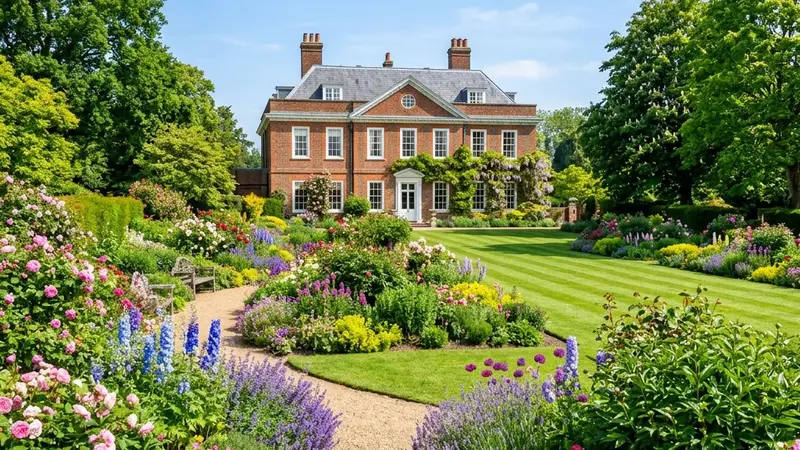
Capel Manor Gardens sits on a 30-acre estate in Enfield, north London, where more than 60 themed gardens surround a Georgian manor house and Victorian stables. The land has been in use since the 13th century and takes its name from Sir William Capel, twice Lord Mayor of London, who acquired the estate in 1486. Since 1968 it has served as the grounds of Capel Manor College, a specialist horticultural and animal care institution, with the gardens and zoo open to the public year-round.
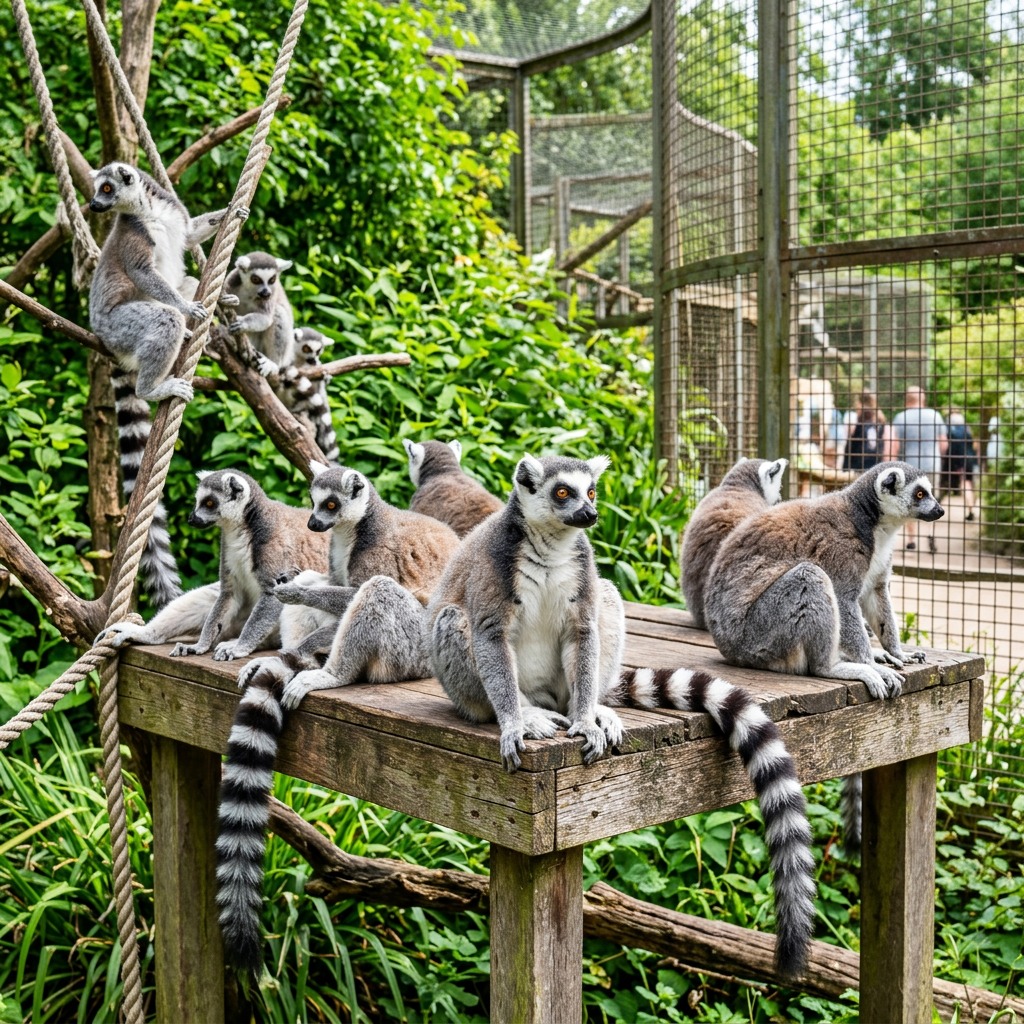
Beyond the ornamental displays, the estate is home to a zoo housing over 75 species including meerkats, ring-tailed lemurs, wallabies, Scottish wildcats and barn owls. A Japanese stroll garden, an Italianate holly maze, Chelsea Flower Show gold medal-winning designs and a series of concept gardens along Sunflower Street make this one of the most varied garden attractions within reach of central London.
Capel Manor's story begins in 1275, when records show the land belonged to Ellis of Honeyland. The estate takes its present name from Sir William Capel, a wealthy merchant and twice Lord Mayor of London, who purchased it in 1486. Over the centuries the property passed through several notable families — Queen Elizabeth I held ownership for a period — before Robert Jacomb demolished the earlier house in 1745 and built the Georgian manor that stands today. The Warren family later added Victorian embellishments, commissioning richly panelled rooms and wallpaper from the William Morris Company.
In 1968, at the suggestion of the horticulturist Frances Perry, Enfield Council acquired the estate and established it as an agricultural college. Capel Manor College now specialises in horticulture, arboriculture, animal care and garden design, and the 30-acre grounds serve as both a working campus and a public garden. The combination means the displays are maintained to a professional standard by students and staff, and the range of styles on show is far broader than most single-owner gardens can offer.
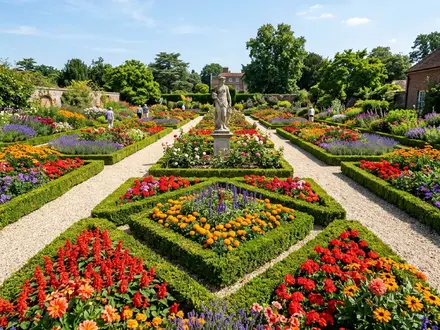
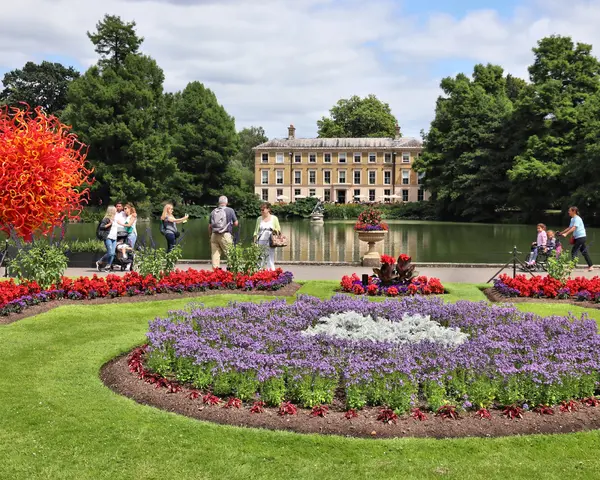
The gardens are the main draw and the variety is remarkable. More than 60 themed displays cover everything from a formal 17th-century parterre with seasonal bedding to a walled kitchen garden growing fruit and vegetables for the manor house. A sensory garden invites visitors to touch, smell and listen, while the cottage garden borders and Mediterranean plantings demonstrate different approaches to colour and texture. Four classical statues representing earth, water, air and fire preside over the period gardens.
Sunflower Street is a row of concept gardens designed by former students and visiting designers, including the Family Friendly Garden that won Gold at the 2010 Chelsea Flower Show and the Australian Garden, a 2011 Gold Medal winner. These demonstrate practical ideas that visitors can adapt for their own outdoor spaces, from low-maintenance modern layouts to wildlife-friendly rustic designs.
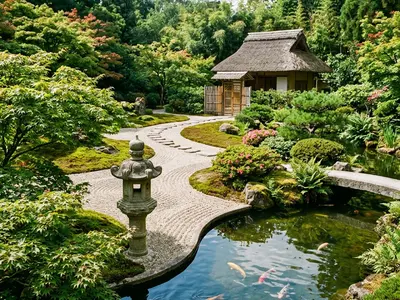
The Japanese Stroll Garden is one of the estate's most peaceful areas. It combines a Paradise Garden with water and islands, a Zen Buddhist dry garden of raked gravel and stone, and a Tea Garden entered through a traditional thatched gate. The design balances in and yo — the Japanese equivalent of yin and yang — through careful placement of evergreens, Japanese maples and mosses. A koi pond adds gentle movement to the scene.
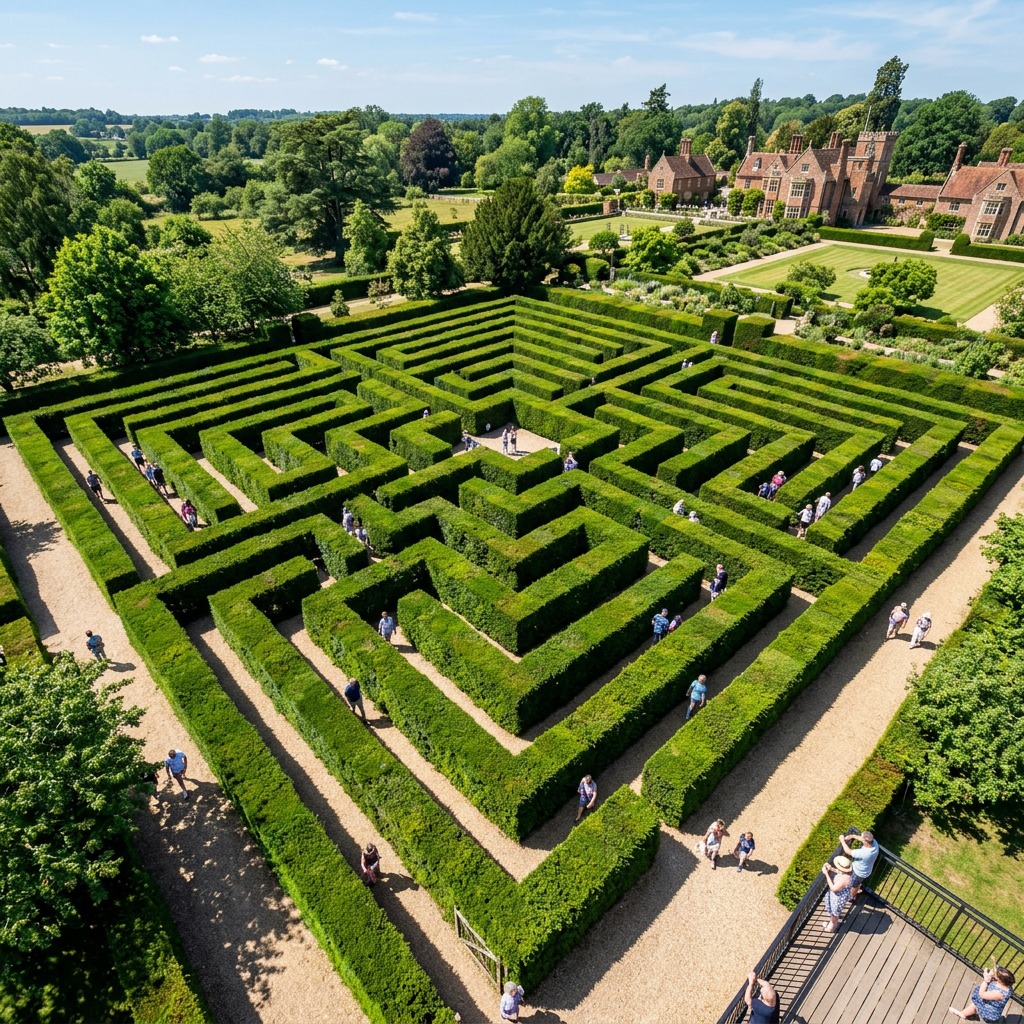
The Italianate Maze, designed by Adrian Fisher, is built from holly hedging and challenges visitors to find their way to a central tower. Those who reach the middle can climb to the viewing platform for a bird's-eye perspective over the maze pattern and the wider estate. Fisher is the world's most prolific maze designer, responsible for over 700 mazes globally.
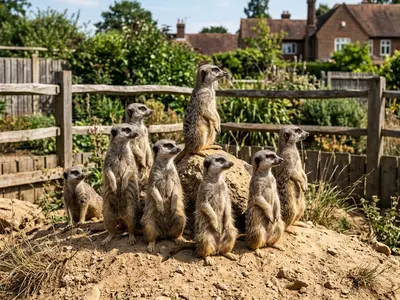
The zoo adds an unexpected dimension to a garden visit. Over 75 species are cared for on site, including meerkats, ring-tailed lemurs, wallabies, Scottish wildcats, lionhead rabbits, barn owls and guinea pigs. Animals are looked after by the college's animal management students under professional supervision. Daily keeper talks run throughout the day, and bookable animal encounter experiences allow closer interaction with selected species.
Capel Manor Gardens is open daily from 10am to 5:30pm with last entry at 4pm, though hours can vary seasonally so it is worth checking the website before travelling. The gardens are at their most colourful from late spring through early autumn, but winter interest is provided by the evergreen maze, the Japanese Garden and the structural planting throughout the estate.
The nearest station is Turkey Street, a 15-minute walk along Bullsmoor Lane. Greater Anglia trains from Liverpool Street via Tottenham Hale reach Turkey Street in around 30 minutes. Buses 217 and 317 both stop nearby. By car, free parking is available on site and the location is outside the ULEZ boundary, accessible from the A10 via Bullsmoor Lane.
The on-site cafe serves hot and cold food from 10am to 4pm daily, with indoor and outdoor seating. Paths across the estate are largely accessible, though some garden areas have uneven surfaces. Dogs are not permitted in the gardens or zoo areas. The estate is fully accessible for wheelchair users on the main paths, and accessible toilets are available near the entrance.
Entry covers access to all gardens, the zoo, the maze and the grounds. Under-threes enter free. The on-site cafe is open daily from 10am to 4pm serving hot and cold meals. Special events and animal encounter experiences may carry an additional charge. Check the website for seasonal pricing updates
The gardens are quietest before midday on weekdays. Weekend afternoons draw the largest crowds, especially during spring and summer when the themed gardens are in full bloom.
The animal paddocks and zoo area take at least 45 minutes to explore properly. Check the daily keeper talk schedule at the entrance so you can time your visit around the talks.
The estate covers 30 acres and some garden paths are on natural ground. Flat shoes or trainers are recommended, especially after rain when grass areas can be soft.
The Japanese Stroll Garden is one of the most photogenic spots on the estate. Morning light filtering through the maples and reflections in the koi pond make for excellent photographs.
The gardens host plant fairs, open days and themed events throughout the year. Check the website before visiting as some events offer extended access or special activities.

London Travel Writer · 12+ years covering UK attractions and tourism
Last reviewed: March 10, 2026