Ashridge Estate
A 5,000-acre National Trust woodland estate in the Chiltern Hills — ancient beeches, fallow deer and a climbable monument
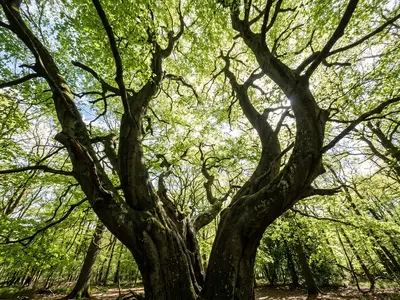
A 5,000-acre National Trust woodland estate in the Chiltern Hills — ancient beeches, fallow deer and a climbable monument
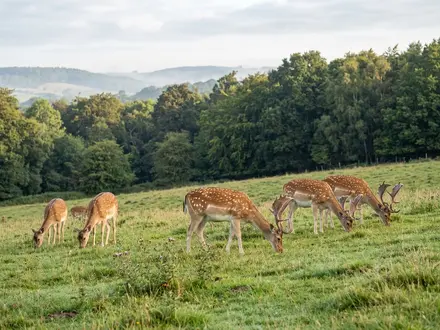
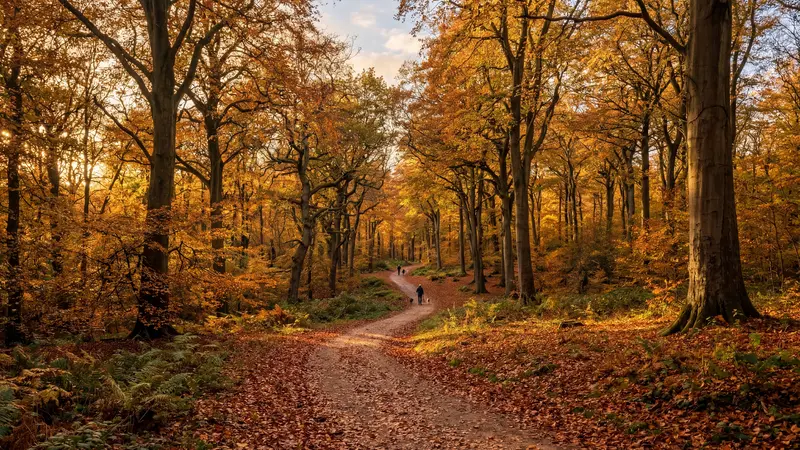
Ashridge Estate covers 5,000 acres of ancient woodland, chalk downland and commons across the Chiltern Hills. Its beech and oak woodlands contain 3,600 recorded ancient and veteran trees — more than any other National Trust property in England — and a herd of fallow deer whose ancestors have roamed here since the 13th century.
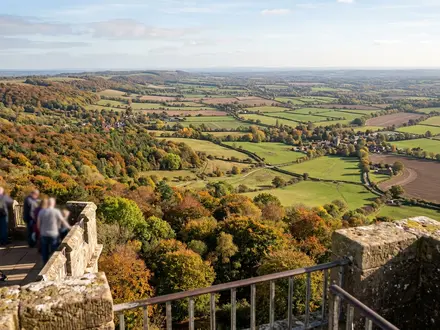
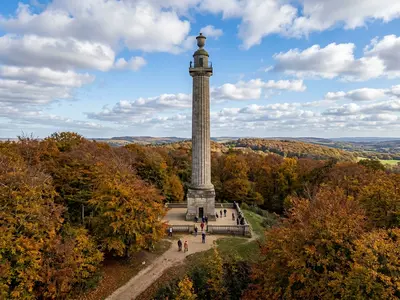
Visitors can climb the 172 steps of the Bridgewater Monument for views across the Chilterns, walk through cathedral-like beech canopies, and follow waymarked trails through some of the finest chalk grassland in the Home Counties. Entry to the estate is free.
Ashridge has been a significant landscape since the 13th century, when Edmund, 2nd Earl of Cornwall, founded a priory of Bonhommes monks here in 1283 and established the deer park that still defines the estate's character. The priory housed a relic believed to be a phial of Christ's blood, drawing pilgrims until Henry VIII dissolved the monastery in 1539 and converted it into a royal residence for his children.
The estate passed to Sir Thomas Egerton in 1604 and remained with the Egerton family for over three centuries. The 7th Earl of Bridgewater demolished the medieval priory and built the present Ashridge House between 1808 and 1814 in Gothic Revival style, designed by James Wyatt and his nephew Jeffry Wyatville. In 1921, the land was donated to the National Trust, while the house became a management college — now Hult Ashridge, part of Hult International Business School.
The estate offers a network of waymarked trails through ancient woodland, open commons and chalk downland. The most popular walk follows Monument Drive from the Visitor Centre to the Bridgewater Monument, a 33-metre column that visitors can climb on weekends and bank holidays from April to October for views across the Chiltern Hills. On clear days, the skyline of London is visible to the south-east.
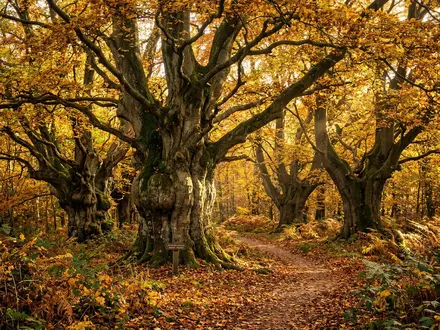
The woodland walks are the heart of the estate. The Boundary Trail covers 16 miles around the full perimeter, but shorter circular routes of two to five miles pass through some of the finest ancient beech woodland in southern England. Frithsden Beeches, a group of ancient pollards on the western edge, is particularly photogenic. The estate is also a habitat for muntjac and fallow deer, badgers, all three species of British woodpecker, and over 30 species of butterfly.
Ashridge sits about 30 miles north-west of central London. The nearest station is Tring, served by London Northwestern Railway from Euston in around 35 minutes. From Tring, the walk through Aldbury village to the Visitor Centre takes roughly 50 minutes along quiet lanes and footpaths. By car, the estate is a short drive from junction 20 of the M25 via the A41 and B4506.
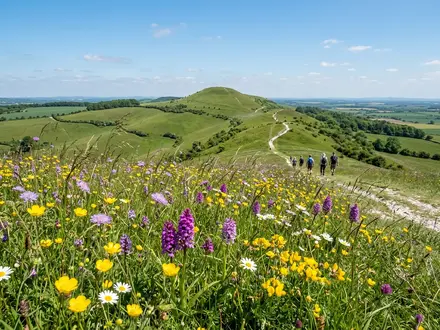
The Monument Cafe near the Visitor Centre serves hot and cold drinks, sandwiches and cakes, with outdoor seating only. Dogs are welcome across the estate but should be kept under control near the deer. The Visitor Centre stocks maps, trail guides and local produce. For longer walks, the Ridgeway National Trail passes through the northern edge of the estate, connecting Ashridge to Ivinghoe Beacon.
National Trust members climb the Bridgewater Monument free of charge. Parking is currently free but charges may be introduced in future.
The Visitor Centre on Monument Drive is the best starting point. Pick up a free trail map inside and follow the waymarked paths into the woodland. Parking is directly outside.
The beech woodlands reach peak autumn colour in late October to early November. Frithsden Beeches on the western edge is the most spectacular spot, with ancient pollards in full copper and gold.
The Bridgewater Monument opens weekends and bank holidays from April to October, 2pm to 4.30pm. Arrive early as queues build on sunny afternoons. The 172 steps are narrow and steep.
Many trails are unsurfaced and become muddy after rain, even in summer. Walking boots are strongly recommended. The Monument Drive path is firmer and suitable for pushchairs in dry weather.
Fallow deer are most active and visible in early morning and late afternoon. The open grassland near Frithsden and the commons around Aldbury are reliable spots. Keep a respectful distance.

London Travel Writer · 12+ years covering UK attractions and tourism
Last reviewed: June 2, 2026