Ashdown Forest
A 6,500-acre ancient heathland in East Sussex — the real Hundred Acre Wood that inspired A. A. Milne's Winnie-the-Pooh

A 6,500-acre ancient heathland in East Sussex — the real Hundred Acre Wood that inspired A. A. Milne's Winnie-the-Pooh
Ashdown Forest is the ancient heathland in the East Sussex High Weald that became the setting for A. A. Milne's Winnie-the-Pooh stories. Covering 6,500 acres of open heath, woodland and river valleys, it is the largest free public open space in south-east England and one of the most important lowland heath habitats in Europe.
Visitors can walk to the real Pooh Sticks Bridge, stand at the Enchanted Place among the hilltop pines, and explore miles of trails through a landscape that has changed remarkably little since Milne wrote here in the 1920s. Entry to the forest and its visitor centre is completely free.
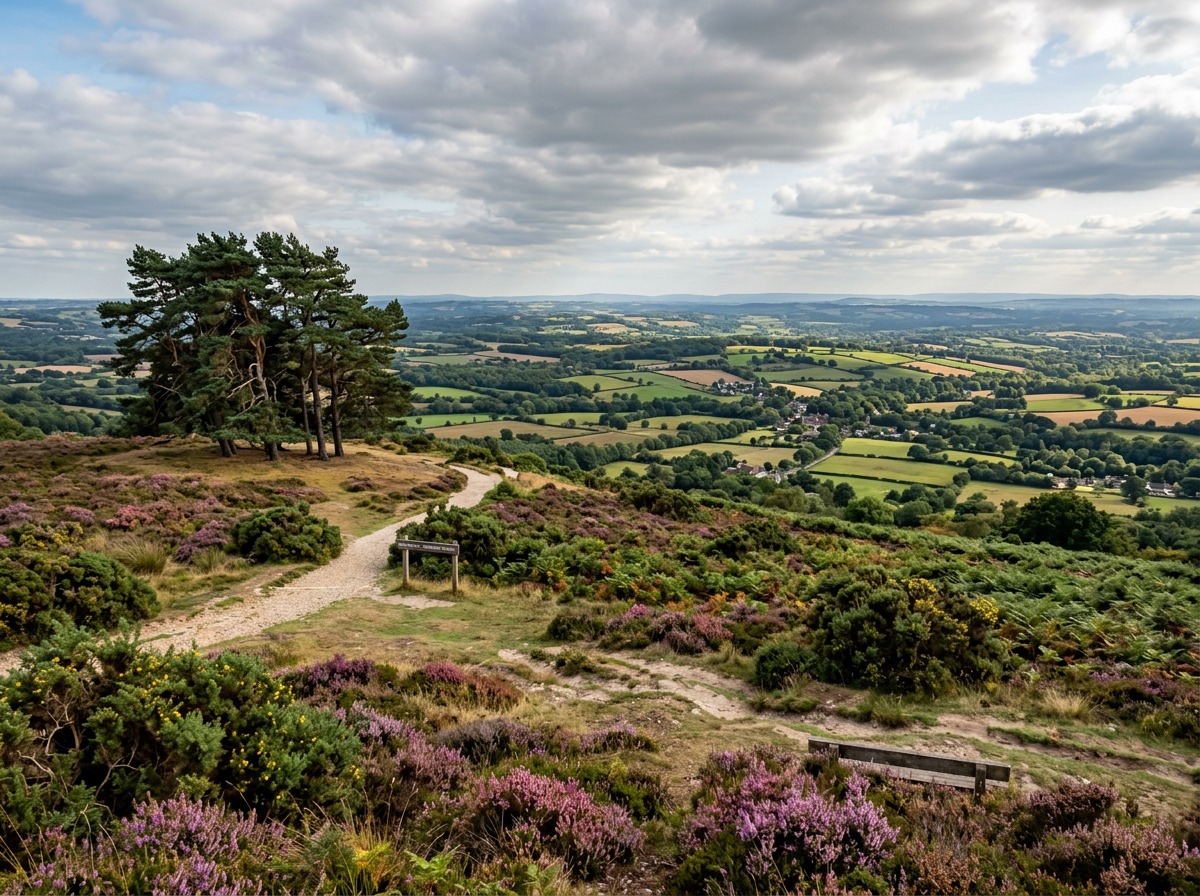
Ashdown Forest sits at the heart of the High Weald Area of Outstanding Natural Beauty in East Sussex, a rolling landscape of open heath, ancient woodland and sandstone ridges that has been common land since at least the Norman Conquest. The forest takes its name from the Old English word for ash trees, though the dominant vegetation today is heather, gorse and bracken across the open heathland, with oak, birch and beech in the sheltered valleys.
The forest's fame rests largely on its connection to A. A. Milne, who bought Cotchford Farm at Hartfield in 1925. His son Christopher Robin played daily in the surrounding woodland, and the landscape became the setting for Winnie-the-Pooh (1926) and The House at Pooh Corner (1928). The illustrator E. H. Shepard sketched directly from the forest, and many of his drawings are recognisable from specific viewpoints that visitors can still find today. The clump of pine trees at Gills Lap became Galleon's Lap, the sandy hollow near Pooh Car Park became Roo's Sandy Pit, and Posingford Bridge became the site of the very first game of Poohsticks.
The forest offers a network of footpaths, bridleways and permissive paths covering dozens of miles across open heath and through woodland. Two waymarked Pooh walks start from the Pooh Car Park at Chuck Hatch — a short route of around 0.6 miles visiting the Enchanted Place and Sandy Pit, and a longer 2-mile circuit descending to the North Pole and Eeyore's Sad and Gloomy Place before reaching Pooh Sticks Bridge. Both are well marked and manageable for families with children.
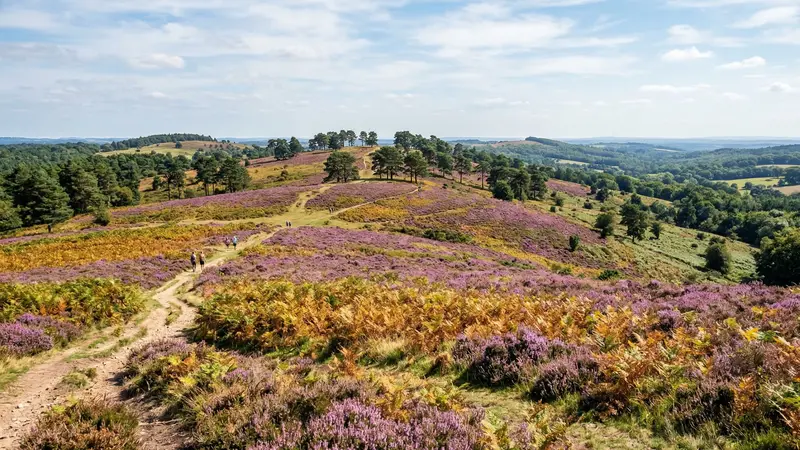
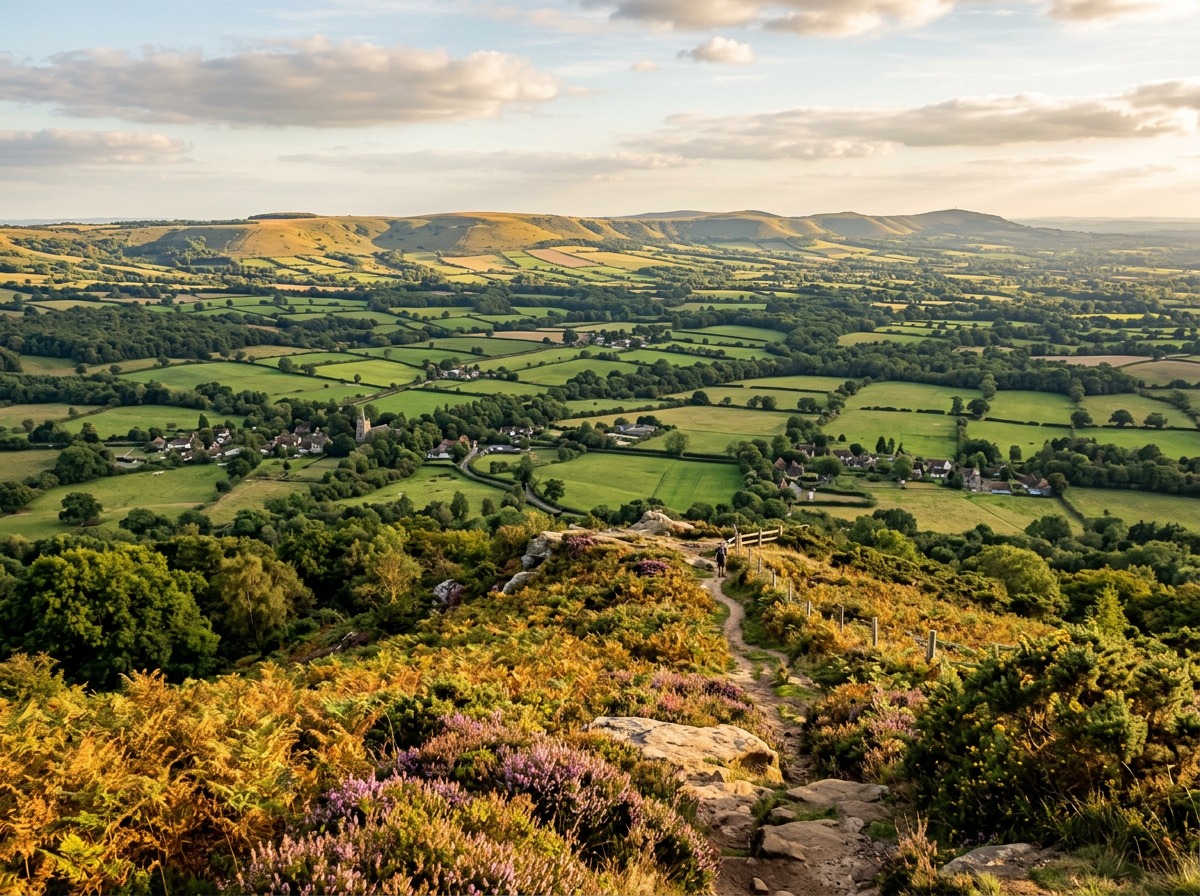
Beyond the literary trail, the forest is one of the most ecologically important sites in south-east England. Its 3,700 acres of lowland heathland support all six native British reptile species — adder, grass snake, smooth snake, common lizard, sand lizard and slow worm. Dartford warblers, nightjars and woodlarks breed on the open heath, while the woodland valleys are home to fallow deer, badgers and dormice. In late summer, the heathland turns purple with flowering heather, and the autumn bracken creates a golden-brown tapestry visible for miles from the forest's higher ridges.
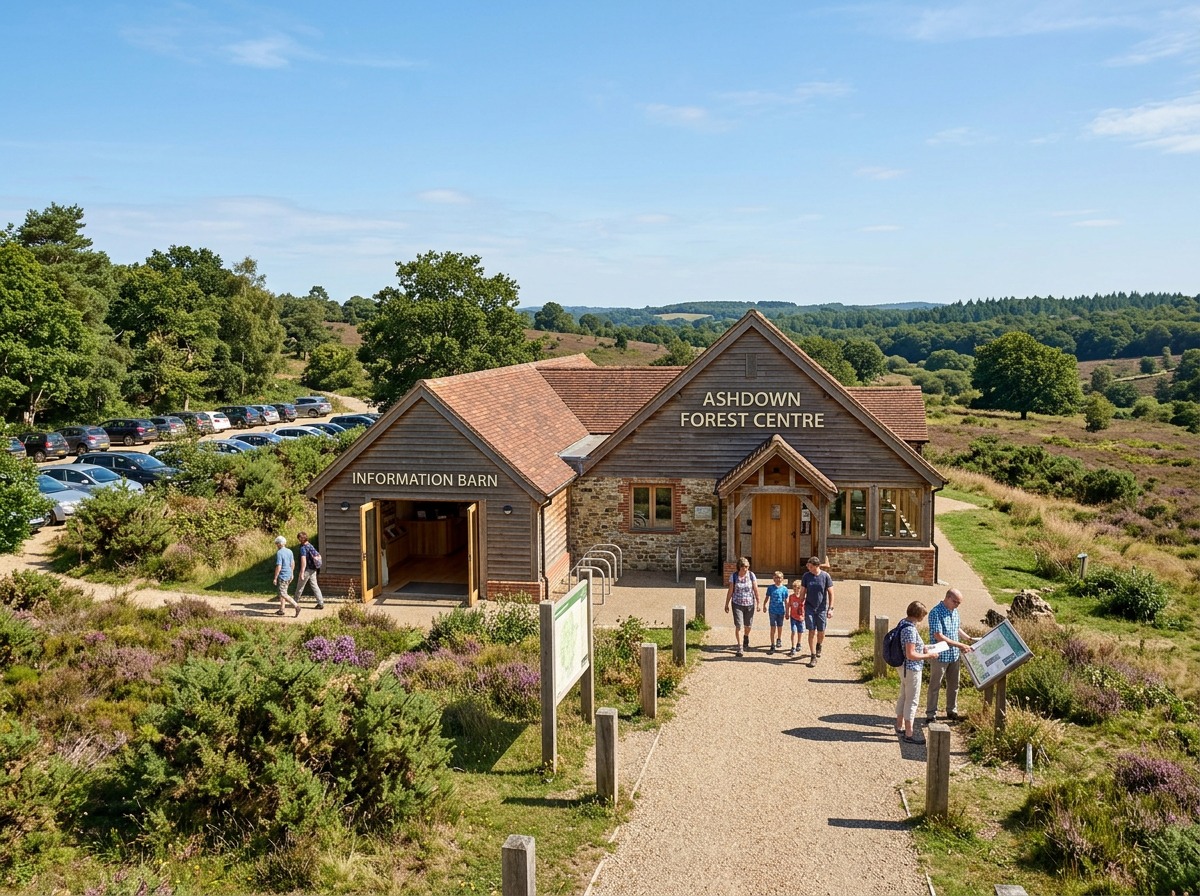
The Ashdown Forest Centre at Wych Cross is the best starting point for a first visit. The Information Barn provides free maps and walking leaflets, and the on-site cafe serves hot drinks and light refreshments. The centre also has toilets including a Changing Places facility. From here, several trails lead directly into the forest.
For the Pooh connection, most visitors head to the Pooh Car Park at Chuck Hatch Lane (postcode TN7 4DN), from which Pooh Sticks Bridge is a 15-minute walk along a wide path suitable for pushchairs. The nearby village of Hartfield has Pooh Corner, a charming shop and cafe in a 1703 cottage selling Pooh memorabilia and cream teas. The village also has a pub, the Anchor Inn, for lunch. Gills Lap car park, further into the forest, is the starting point for walks to the Enchanted Place and the memorial plaque to A. A. Milne and E. H. Shepard installed in 1979. The forest is roughly an hour's drive from London and makes an excellent day trip, particularly for families with young children who know the stories.
Ashdown Forest is completely free to enter and all car parks are free. The Forest Centre, Information Barn and toilets are also free. Pooh Corner in Hartfield village is a privately run shop and cafe with free entry.
The Ashdown Forest Centre at Wych Cross has free maps, a cafe and toilets. Staff and volunteers can recommend routes based on your interests and fitness level. It is well signposted from the A22.
Forest paths are largely unsurfaced and become muddy after rain, especially through the woodland valleys. Walking boots or wellies are advisable from October to April. The path to Pooh Sticks Bridge is wider but still muddy.
Park at Chuck Hatch Lane (TN7 4DN) for the shortest walk to Pooh Sticks Bridge. Arrive early on weekends and school holidays as the car park fills quickly. Bring sticks for a game of Poohsticks.
The car park at Gills Lap gives access to the hilltop pine clump that inspired Galleon's Lap in the books. The panoramic views across the Weald from here are among the finest in Sussex and the walk is short and level.
The Pooh Corner shop and cafe in Hartfield village is a five-minute drive from the forest. It occupies a cottage from 1703 and serves cream teas alongside a large selection of Pooh gifts and a small museum about A. A. Milne.

London Travel Writer · 12+ years covering UK attractions and tourism
Last reviewed: March 10, 2026