Abberton Reservoir Nature Reserve
Essex Wildlife Trust reserve around a vast reservoir — internationally important for wintering wildfowl and one of Europe's finest freshwater birdwatching sites

Essex Wildlife Trust reserve around a vast reservoir — internationally important for wintering wildfowl and one of Europe's finest freshwater birdwatching sites
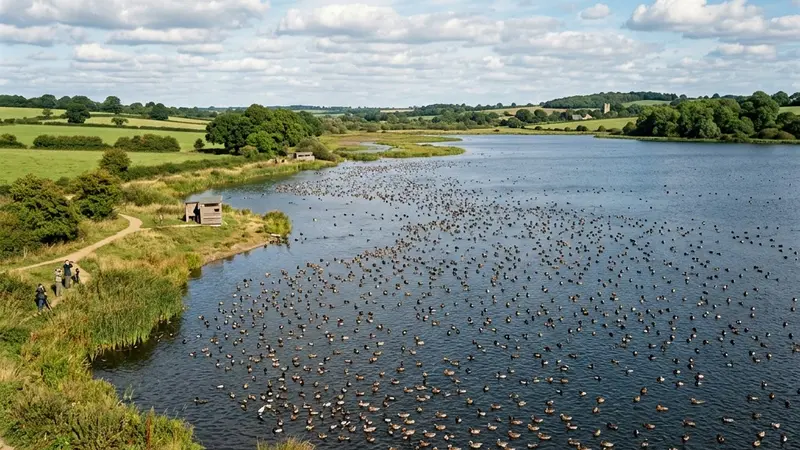
Abberton Reservoir lies six miles south-west of Colchester in the Essex countryside, a 1,200-acre body of water surrounded by wetland, grassland and woodland. Managed by Essex Wildlife Trust in partnership with Essex and Suffolk Water, it holds Ramsar, Special Protection Area and Site of Special Scientific Interest designations, recognising its exceptional importance for migratory and wintering birds.
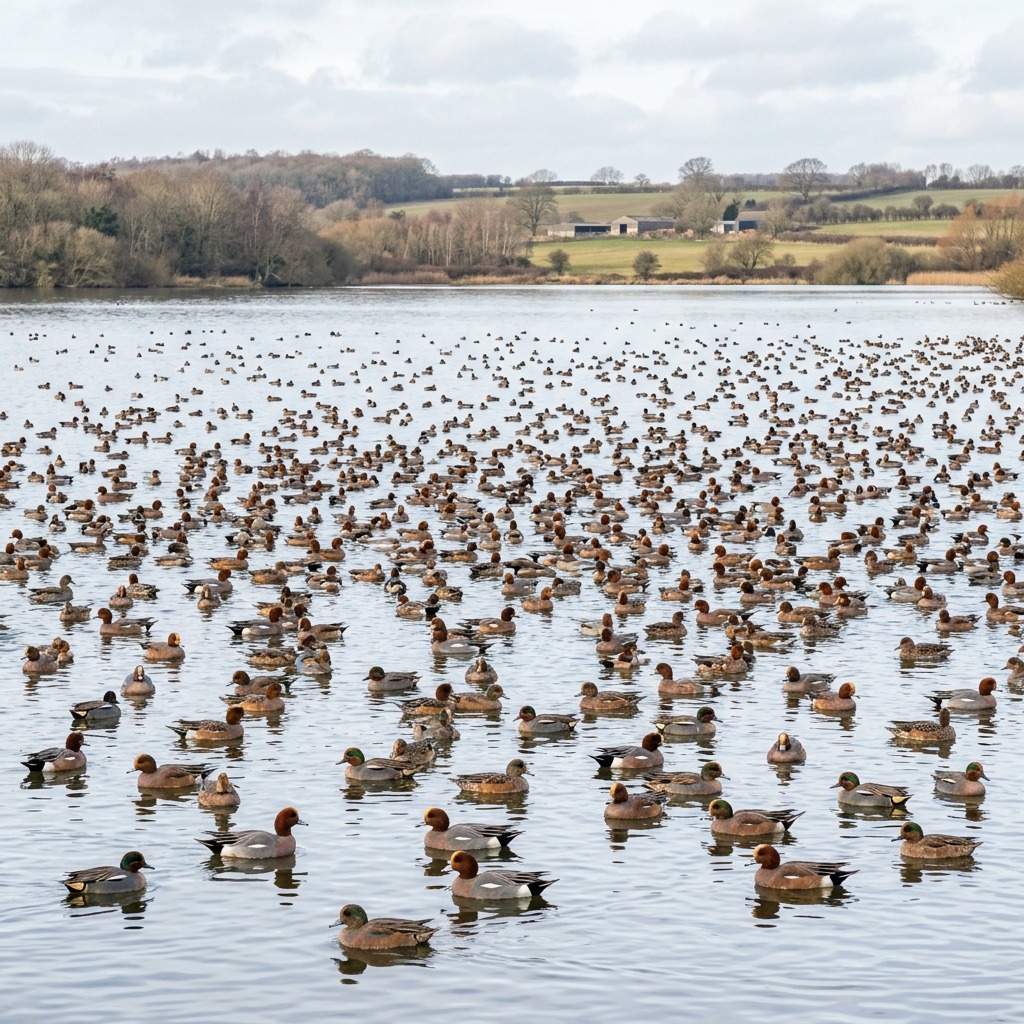
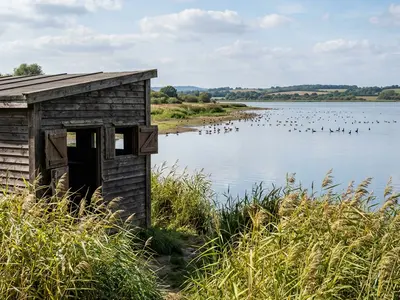
Up to 40,000 wildfowl gather here each winter, making Abberton one of the most significant freshwater sites in Europe for ducks, geese and wading birds. Three bird hides give panoramic views across the water, and the Nature Discovery Centre provides a cafe, gift shop and interactive exhibits. A network of trails leads through the reserve, offering close encounters with a birdlife list that runs to well over 250 species.
Abberton Reservoir was constructed between 1935 and 1939 to supply drinking water to the growing towns of south Essex. Built by damming the valley of the River Layer, the reservoir originally covered around 1,200 acres and quickly became one of the largest bodies of freshwater in eastern England. Essex and Suffolk Water, now part of Northumbrian Water Group, continues to operate it as a working water supply.
Almost from the moment it filled, the reservoir began attracting vast numbers of wildfowl. By the late 1940s it was already recognised as one of the most important sites for wintering ducks in Britain. It gained SSSI status in 1955, Ramsar designation in 1981 and Special Protection Area status under European legislation. Between 2010 and 2014, a £150 million engineering project raised the reservoir banks and increased capacity by 58 per cent. Sir David Attenborough opened the enlarged reservoir and the new Essex Wildlife Trust Nature Discovery Centre in June 2015.
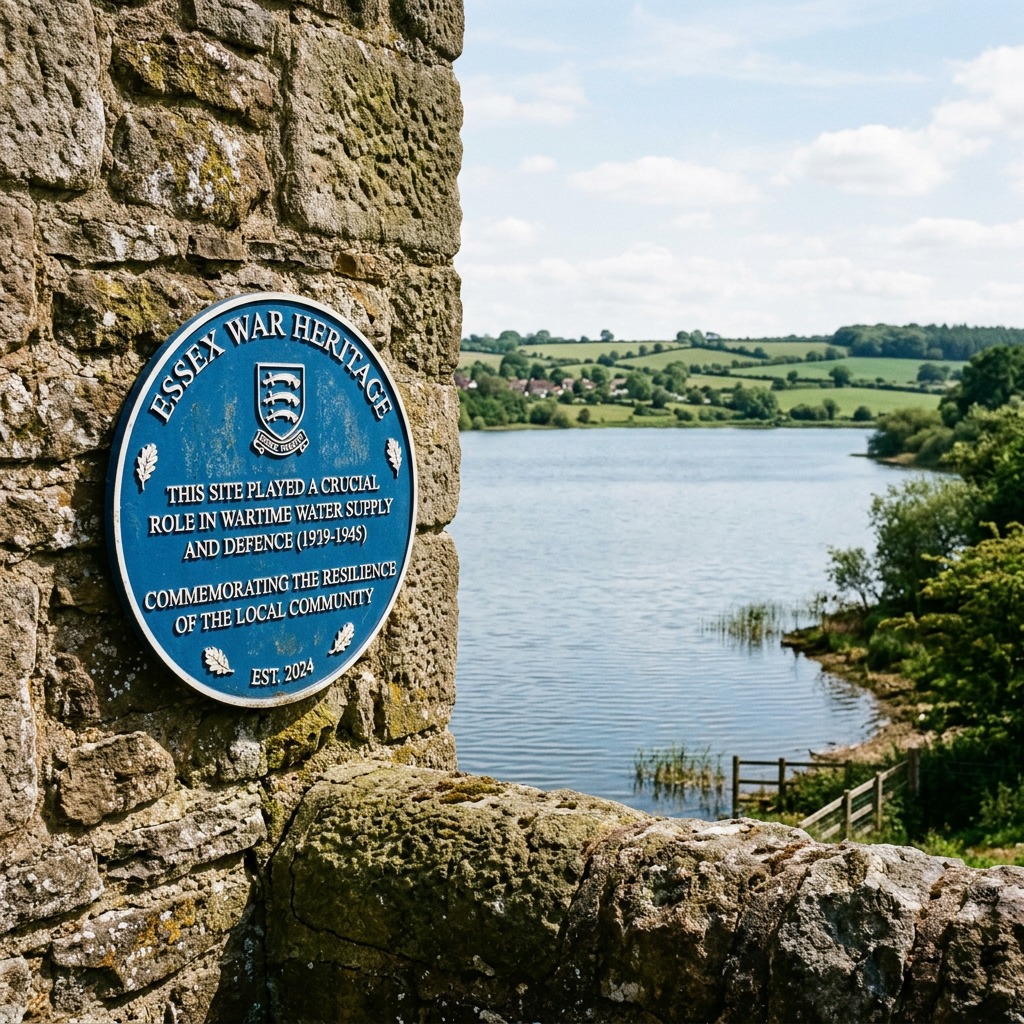
The reservoir also played a quiet but significant role in the Second World War. In May 1943, Lancaster bombers of 617 Squadron — the Dam Busters — used Abberton for their final night-time dress rehearsal before Operation Chastise, the famous raid on the Ruhr dams in Germany. The reservoir's shape was considered similar to the Eder Dam, and crews practised low-level approaches at 60 feet above the water surface. A blue plaque at the site marks this wartime connection.
Winter is the headline season at Abberton. From October onwards, enormous flocks of wigeon, teal, shoveler, pochard and tufted duck arrive from breeding grounds across northern Europe and Scandinavia. Peak counts regularly exceed 40,000 individual birds, with wigeon alone numbering in the tens of thousands. Goldeneye, smew and goosander are regular winter visitors, and hard weather further north can push numbers even higher. Cormorants roost in the trees along the causeways, and grey herons stand motionless along the margins.
Spring transforms the reserve as summer migrants arrive. Sedge warblers, reed warblers and whitethroats fill the scrub with song, while common terns set up breeding colonies on specially built rafts. Hobby appears from late April, hunting dragonflies over the water. Passage waders including greenshank, dunlin and green sandpiper pause at Abberton on their northward journey. In recent years, ospreys have been spotted fishing at the reservoir during both spring and autumn migration.
Summer brings breeding birds to the surrounding grassland and hedgerows, with skylarks, yellowhammers and corn buntings among the farmland species present. Autumn passage sees the return of wading birds and the first teal and wigeon of the new winter season. Rarities turn up regularly — Abberton's long birdwatching history has produced records of species including red-necked phalarope, pectoral sandpiper and ferruginous duck.
The Nature Discovery Centre makes a natural starting point. Staff can advise on recent sightings and point you towards the most productive hides and trails for the time of year. The cafe serves a full menu with views across the reservoir, and the gift shop stocks optics, field guides and local produce. Three bird hides are accessible from the centre via well-surfaced paths, with the main circular walk taking around ninety minutes at a comfortable pace. Some trails are wheelchair-friendly, and a wheelchair and electric buggy can be borrowed from the centre.
Binoculars are essential, and a telescope on a tripod is a real advantage given the size of the water. The reservoir covers a vast area, and many ducks loaf on the far side of the open water. Early mornings offer the best light and the quietest hides. Dogs are permitted on leads on some trails but not in the hides or the Nature Discovery Centre. Check the Essex Wildlife Trust website before visiting for seasonal opening hours and any special events.
Abberton is roughly 60 miles from central London and easily reached via the A12. Colchester station, served by regular trains from Liverpool Street, is six miles away. There is no direct bus service to the reserve, so a taxi or car is needed for the final stretch. Parking at the Nature Discovery Centre is free.
Entry to the Nature Discovery Centre and reserve trails is free for Essex Wildlife Trust members. Non-member admission covers access to the centre, hides and all walking trails. Car parking is free for all visitors. Annual Essex Wildlife Trust membership starts from around £4 per month and gives free access to over 80 reserves across the county
Staff update the daily sightings board at the Nature Discovery Centre each morning. This tells you which hides are producing the best views and what species have been seen, saving you time on the trails.
The reservoir is very large and many birds sit far from the hides. A telescope on a tripod makes a real difference to what you can identify. If you only have binoculars, the hides still offer good views of closer species.
Weekday mornings between November and February offer the largest wildfowl flocks and the quietest hides. Arrive when the centre opens at 10am and head straight to the hides for the best chance of undisturbed viewing.
The reservoir sits in open Essex countryside and wind chill can be sharp, especially from the hides overlooking the water. Layers, a windproof jacket and warm gloves are essential in winter months.
The Nature Discovery Centre cafe has panoramic views across the reservoir and serves proper meals as well as tea and cake. On a clear day, the window seats offer some of the best birdwatching on the reserve.

London Travel Writer · 12+ years covering UK attractions and tourism
Last reviewed: March 10, 2026