Original Underground Carriages
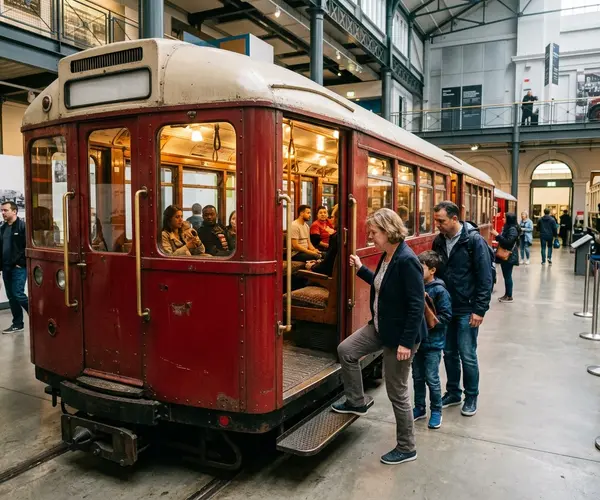
Some of the most compelling exhibits at the London Transport Museum are the original Underground carriages that trace the evolution of tube travel from the Victorian era to the modern day. You can step inside carriages from different decades and immediately feel how the passenger experience has changed.
The earliest carriages are essentially adapted railway coaches, with upholstered seats and gas lighting. Later examples show the shift to electric lighting, sprung seating and the distinctive rounded tunnel profile that defines the tube. The contrast between a cramped Victorian carriage and a relatively spacious 1938 stock train tells the story of a century of engineering development.
The Metropolitan Railway Locomotive
The Metropolitan Railway was the world's first underground railway, opening in 1863. The museum's steam locomotive from this era is one of the most historically significant objects in the collection. It represents the moment when London decided to solve its congestion problem by putting railways underground, an idea that seemed radical at the time.
The locomotive is displayed alongside explanations of the engineering challenges involved in running steam trains through tunnels. Ventilation was a persistent problem, and the early underground stations were notoriously smoky and hot. The transition to electric traction in the early 20th century solved these issues and made the modern tube network possible.
Harry Beck's Tube Map
Harry Beck was a junior draughtsman at London Underground who proposed, in 1931, a radical new way of representing the network. Instead of mapping stations geographically, he straightened the lines, equalised the spacing between stations and used only horizontal, vertical and 45-degree diagonal lines. The result was a diagram rather than a map, and it transformed the way passengers understood the system.
The museum holds Beck's original sketches and early printed versions of the diagram. Seeing the progression from rough pencil drawings to the polished design that would become one of the most recognised diagrams in the world is fascinating. Beck's approach has since been adopted by metro systems in cities around the globe.
Vintage Red Buses
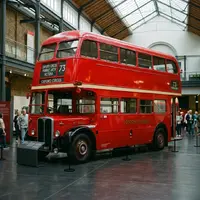
The bus collection includes several iconic vehicles, the most famous being the original Routemaster. Introduced in 1956, the Routemaster became a symbol of London with its open rear platform, distinctive rounded body and red livery. The museum has beautifully preserved examples that you can board and explore.
Earlier vehicles in the collection include horse-drawn omnibuses from the 19th century, the B-type motor bus that served during the First World War and the RT-type that preceded the Routemaster. The progression from horse power to petrol to diesel to electric is laid out in the vehicles themselves.
The Design Collection
London Transport was a pioneer of corporate design. Under the leadership of Frank Pick in the early 20th century, the organisation commissioned leading artists and designers to create posters, typefaces, wayfinding systems and architectural features that set a global standard.
The museum's poster collection includes works by Edward McKnight Kauffer, Man Ray, Graham Sutherland and many others. The Johnston typeface, designed by Edward Johnston in 1916, is still used across the transport network today and is displayed alongside original drawings and printing blocks. The roundel symbol, the red circle and blue bar that identifies every tube station, is traced from its earliest versions to its current form.
The Crossrail Display
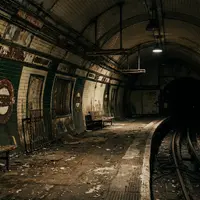
More recent additions to the museum cover the construction of the Elizabeth line, one of the largest infrastructure projects in European history. Models, photographs and engineering artefacts explain how 42 kilometres of new tunnels were built beneath central London. This section connects the museum's historical narrative to the present day and demonstrates that the story of London transport is still being written. For those who want to go even deeper, the museum's Hidden London tours take visitors into disused stations and abandoned tunnels beneath the city.