The Gallery's Home
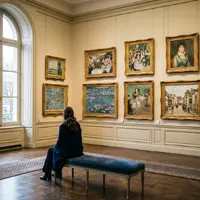
The Courtauld Gallery is located in the North Wing of Somerset House, one of London's grandest 18th-century buildings. The entrance is through the main courtyard, up a sweeping staircase that sets the tone for what follows. The gallery spaces are a series of elegant rooms with high ceilings, ornate plasterwork and large windows that fill the galleries with natural light.
The relationship between the art and the architecture is one of the Courtauld's great strengths. Impressionist and Post-Impressionist paintings hang in rooms that were designed for displaying art, and the scale feels right. Our guide to Courtauld Gallery admission and concessions covers who can visit free and whether it is worth paying for. You are never overwhelmed by the size of the space or the number of works on show. The building enhances the viewing experience in a way that more modern gallery spaces sometimes struggle to match.
Somerset House Itself
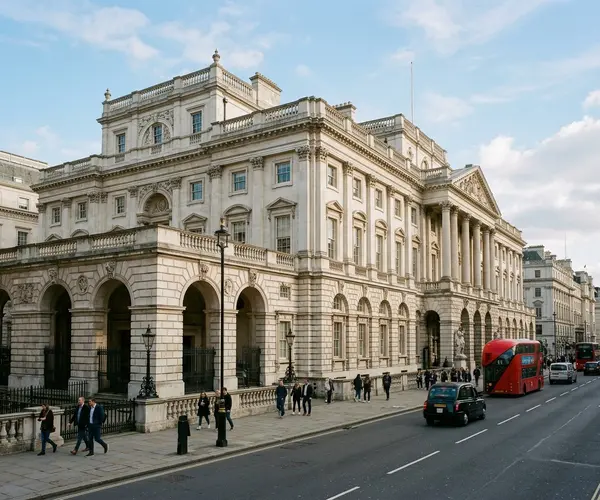
Somerset House is a monumental neoclassical building designed by Sir William Chambers, with construction beginning in 1776. It occupies a prime riverside site on the Strand, between Waterloo Bridge and the Temple. The building was one of the first purpose-built government office blocks and originally housed the Navy Board, the Tax Office and various learned societies including the Royal Academy of Arts.
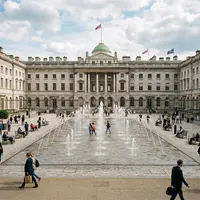
The building is arranged around a large central courtyard, which is one of the most recognisable public spaces in London. In summer, 55 choreographed fountains dance in the courtyard, and children are encouraged to run between them. In winter, the courtyard is transformed into a popular ice rink. These seasonal attractions draw large crowds and make Somerset House a destination beyond the Courtauld Gallery.
The Terrace and River Views
The south side of Somerset House features the Great Arch and the Embankment Terrace, which offers views across the Thames to the South Bank. The terrace is often quieter than the main courtyard and provides a peaceful place to sit. The building's riverside facade, visible from Waterloo Bridge, is one of the most impressive architectural views in London.
A Brief History of the Site
Before the current building, a Tudor palace stood on this site, built for the Duke of Somerset in 1547. Elizabeth I lived here before becoming queen, and the palace later served as a royal residence and a place for lying-in-state ceremonies. The Tudor building was demolished in the 1770s to make way for Chambers' new structure.
Throughout the 19th and early 20th centuries, Somerset House served various government functions. The General Register Office, responsible for births, marriages and deaths, was based here for many years. The Inland Revenue occupied the building until relatively recently. The transformation into a cultural centre began in the late 1990s, when government departments moved out and arts organisations moved in.
The 2021 Refurbishment
The Courtauld Gallery closed for a major refurbishment project that was completed in 2021. The work restored the gallery spaces to their original proportions, improved climate control for the protection of the paintings and created new display areas on the ground floor. The project also improved accessibility, with a new lift providing step-free access to all gallery levels.
The result is a gallery that feels both historic and contemporary. The architectural details of Chambers' building have been revealed and celebrated, while the display of the collection has been modernised and improved. New lighting systems allow the paintings to be seen in conditions that are closer to the natural light in which they were originally created and viewed.
Combining Gallery and Building
A visit to the Courtauld Gallery works well as part of a broader exploration of Somerset House. The courtyard, terrace and various cafes and restaurants within the complex provide places to pause before or after seeing the art. The building regularly hosts exhibitions, events, fashion shows and performances, making it one of the most active cultural venues in London.
The location is also ideal for combining with other nearby attractions. The Strand connects to Covent Garden, Trafalgar Square and the Embankment, putting the Courtauld at the centre of a rich cluster of things to see and do.