Samuel Courtauld's Vision
The Courtauld Gallery owes its exceptional Impressionist collection to one man's determination. Samuel Courtauld was a textile industrialist who became passionate about French Impressionism in the 1920s, at a time when many British collectors and institutions were sceptical or actively hostile toward the movement.
Courtauld believed that Impressionist and Post-Impressionist art represented some of the most important painting in history, and he set about acquiring the finest examples he could find. Between 1923 and the mid-1930s, he built a collection that ranks among the best of its kind anywhere in the world. His purchases included Manet's A Bar at the Folies-Bergere, Renoir's La Loge, Cezanne's Montagne Sainte-Victoire and Van Gogh's Self-Portrait with Bandaged Ear — all of which feature in our guide to the best paintings at the Courtauld Gallery.
Why Britain Needed His Help
In the early 20th century, Britain's national galleries were slow to collect Impressionist art. The National Gallery had relatively few works by the major Impressionists, and there was a prevailing institutional conservatism that viewed the movement with suspicion. French painting of this period was better represented in American collections than in British ones.
Courtauld was frustrated by this situation. In 1923, he gave the Tate Gallery (now Tate Britain) a fund of 50,000 pounds specifically to purchase Impressionist and Post-Impressionist works. This fund enabled the acquisition of paintings by Seurat, Degas, Renoir and others that the gallery would not otherwise have been able to afford. Several of the most important French paintings in the Tate's collection were bought with Courtauld's money.
A Dual Strategy
Courtauld pursued two parallel strategies. Through the fund, he improved the nation's public collections. Privately, he continued to buy the very best works he could find for his own collection, with the intention of eventually making them publicly accessible. Both approaches reflected his conviction that great art should be seen by as many people as possible.
The Courtauld Institute
In 1932, Courtauld co-founded the Courtauld Institute of Art, one of the world's leading centres for the study of art history. He donated his private collection to the institute, ensuring that students and the public could study these masterpieces at close quarters. The institute and gallery have been intertwined ever since, with the gallery serving as both a public museum and a teaching resource.
The combination of a world-class collection with an active academic institution gives the Courtauld a character that distinguishes it from purely public galleries. The scholarship that surrounds the collection informs the way it is displayed and interpreted, and the gallery regularly presents new research about its holdings.
What Makes the Collection Special
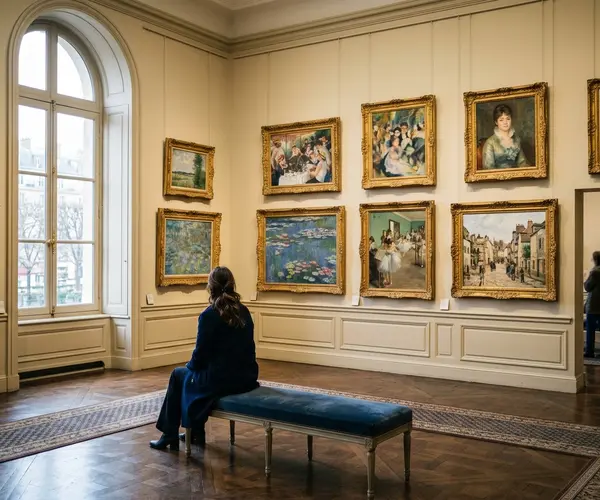
The quality of the Courtauld's Impressionist holdings is remarkable given the modest size of the overall collection. With around 530 paintings in total, the gallery is far smaller than the National Gallery or the Tate. But the concentration of Impressionist and Post-Impressionist masterpieces is extraordinary.
Cezanne is particularly well represented, with landscapes, still lifes and figure paintings that trace his development from early works influenced by the Impressionists to the structural compositions that paved the way for Cubism. The depth of the Cezanne holdings alone would make the Courtauld significant.
Manet, who is often described as the father of modern art, is represented by A Bar at the Folies-Bergere and several other major works. Renoir, Degas, Monet, Pissarro and Sisley all feature prominently. The Post-Impressionist section includes Van Gogh, Gauguin, Toulouse-Lautrec and Seurat.
A Legacy of Generosity
Samuel Courtauld died in 1947, but his legacy continues to shape the gallery and the wider British art world. Without his intervention, many of the paintings now in public collections would have been lost to private buyers or to American institutions. His combination of personal passion, financial resources and public-mindedness created something that benefits everyone who visits the gallery today.
The Courtauld's Impressionist collection is not the largest in the world, but it is one of the most carefully chosen. Every painting was selected by someone who understood what he was looking at and wanted others to see it too.