Shakespeare Is the Core
As you would expect, Shakespeare's plays form the backbone of the programme at Shakespeare's Globe. The most frequently performed works include the crowd-pleasers that audiences know best. A Midsummer Night's Dream, Romeo and Juliet, Hamlet, Much Ado About Nothing, Twelfth Night, The Tempest, Macbeth and Othello all appear regularly across seasons.
The theatre typically programmes a mix of comedies, tragedies and histories each season, so there is usually something to suit different tastes. The comedies tend to be the most accessible for audiences who are new to Shakespeare, partly because the Globe's open-air setting and the proximity of the groundlings encourage a playful, interactive style of performance that brings out the humour.
Beyond Shakespeare
The Globe does not restrict itself exclusively to Shakespeare. The programme regularly includes plays by his contemporaries, including Christopher Marlowe, Ben Jonson, John Webster, Thomas Middleton and other Elizabethan and Jacobean playwrights. These works are less well known than Shakespeare's but come alive in the Globe's authentic setting.
The theatre also commissions new writing. Contemporary playwrights have created works specifically for the Globe's stage, sometimes responding to Shakespeare's themes or using the unique relationship between performers and groundlings in ways that a conventional theatre could not.
The Outdoor Season
The main Globe theatre is an open-air venue, and its performance season runs from approximately April to October. The specific dates vary each year depending on the weather and the programme. During this period, performances take place in the afternoon and evening, with natural daylight playing a role in the early shows and artificial light supplementing the later ones.
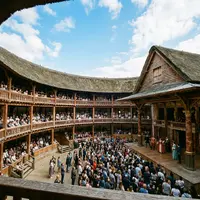
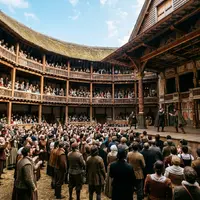
The outdoor setting is central to the experience. The audience and the actors share the same light and the same weather. Rain does not stop performances, and a sudden downpour during a storm scene in King Lear or The Tempest can create a theatrical moment that no indoor venue could match.
The Sam Wanamaker Playhouse
In 2014, the Globe opened the Sam Wanamaker Playhouse, an indoor Jacobean-style theatre built alongside the main Globe. This intimate, candlelit space seats around 340 people and operates year-round, extending the Globe's programme through the winter months when the outdoor theatre is closed.
The Playhouse hosts a mix of Shakespeare, early modern drama, opera, concerts and new work. Its atmospheric candlelit performances offer a very different experience from the open-air Globe, and the two venues complement each other within the same site.
How Productions Are Staged
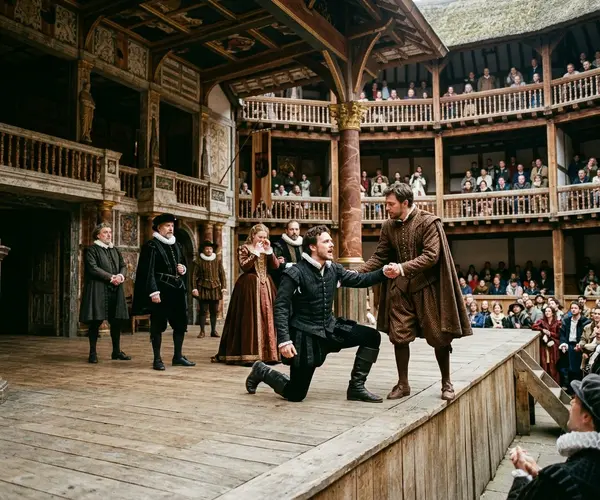
Globe productions are characterised by minimal sets, period-inspired costumes and a strong emphasis on the text and the actor-audience relationship. The thrust stage extends into the yard, meaning the actors are surrounded by the audience on three sides. There is no proscenium arch, no curtain and very limited use of amplification.
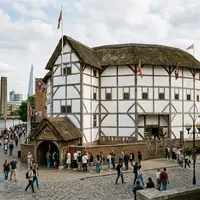
This approach strips away the technology that modern audiences are used to and puts the focus back on the language, the performers and the communal experience of live theatre. The theatre itself is a faithful 1997 reconstruction built using traditional materials, so the staging feels authentically connected to the Elizabethan original. It is a style that divides opinion. Some find it revelatory, others find it spartan. But it is undeniably closer to how these plays were originally performed than any West End production could achieve.