The Original Sketch
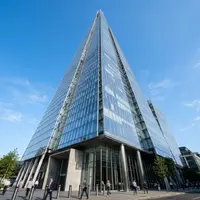
The story of The Shard's name begins with a rough drawing on the back of a menu. In 2000, Renzo Piano met with Irvine Sellar, the property developer behind the project, at a restaurant in Berlin. During the meal, Piano sketched his initial concept for a tower at London Bridge. The drawing showed a tapering, irregular form that looked like a shard or splinter of glass thrust upward from the ground.
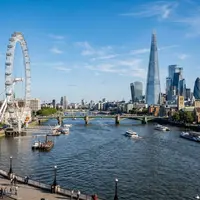
Piano's inspiration came partly from the spires of London's churches, which he had studied during visits to the city, and partly from the masts of sailing ships depicted in 18th-century paintings of the Thames by Canaletto. He wanted a building that would feel like a natural extension of London's skyline rather than a blunt interruption of it. The jagged, fragmentary quality of his sketch was deliberate, intended to create a form that dissolved into the sky rather than ending in a hard, defined edge.
The Critics Step In
The building's original working title was "London Bridge Tower," a functional name that described its location without suggesting anything about its appearance. That changed during the planning process, when the proposal met strong opposition from heritage organisations.
English Heritage, the body responsible for protecting England's historic environment, objected to the tower on the grounds that it would dominate views of historic landmarks including the Tower of London and St Paul's Cathedral. In their formal objection, they described the proposed building as a "shard of glass" that would damage the character of the London skyline.
The phrase was intended as criticism, a way of emphasising the alien, disruptive quality that the opponents saw in Piano's design. But Piano took a different view. Rather than being offended by the description, he recognised that "shard of glass" captured something essential about what he was trying to create. The name stuck.
Why Piano Liked It
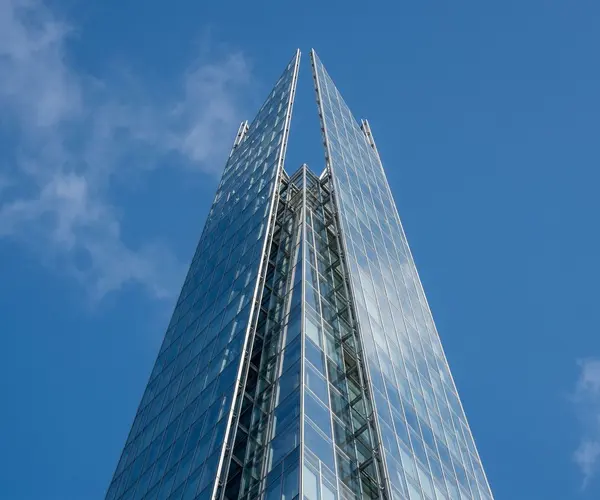
Piano has spoken in interviews about why the critical label appealed to him. He was deliberately designing a building that looked like a fragment rather than a monolith. The tapering shape, the irregular glass cladding, and the open spire at the top were all intended to create a sense of lightness and impermanence that would contrast with the heavy, solid forms of traditional skyscrapers.
"Shard" suggested something sharp, crystalline and delicate. It implied a connection to the natural world, where shards of ice, rock and glass are common forms. Piano wanted the building to respond to light and weather in the way a piece of glass does, changing its appearance throughout the day rather than presenting a single, fixed image.
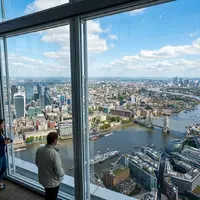
The glass panels on the exterior were specifically chosen to support this effect. There are 11,000 of them, angled at slightly different planes so that they catch light individually rather than reflecting it as a uniform surface. This effect is most dramatic from the partially open-air Skydeck; our guide to which floor the viewing platform is on covers what each level offers. On overcast days, the building can appear to vanish into the grey sky. At sunrise and sunset, individual panels glow in warm colours while others remain dark. The name "The Shard" acknowledges and celebrates this fragmentary, light-responsive quality.
From Insult to Identity
The transformation of a hostile description into a beloved name is one of the more satisfying stories in London architecture. "London Bridge Tower" would have been forgettable. "The Shard" is distinctive, memorable and descriptive. It tells you something about the building before you even see it.
The name has become so firmly established that most Londoners would struggle to recall the original working title. It appears on maps, transport signage and tourist guides without any need for explanation. The building is simply The Shard, and the critical origin of that name has been largely forgotten or, when remembered, is treated as an amusing historical footnote rather than a lingering insult.
Piano himself has suggested that the best names are often the ones that emerge organically rather than being imposed by marketing teams. In this case, a moment of opposition produced a name that captured the building's character more accurately than anything its creators had come up with. The fact that it was coined by people who wanted the building stopped only adds to the story.