A Vertical City
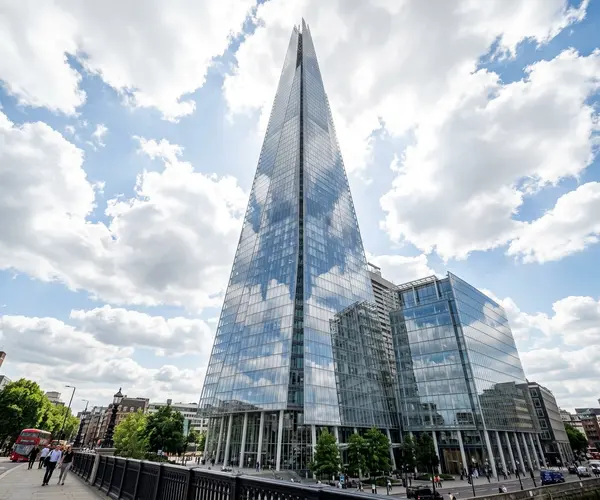
The Shard was designed by Renzo Piano as a mixed-use building rather than a single-purpose tower. Its 95 floors, rising to a height of 310 metres, are divided into distinct zones, each serving a different function. This layered approach was central to Piano's vision of a "vertical city" where people could work, eat, sleep and socialise without leaving the building.
The concept was partly practical and partly philosophical. Piano argued that mixing uses would keep the building alive throughout the day and evening, avoiding the dead-zone effect that single-use office towers often create after business hours. Whether you are arriving for work at 8am, checking into a hotel at 3pm, or watching the sunset from the viewing platform at 7pm, The Shard has something active happening on its various levels.
Floor by Floor
Floors 1 to 2: Ground Level and Entrance
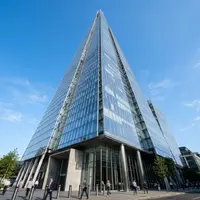
The base of The Shard contains the main entrance lobbies, retail space and access points for the different sections of the building. The entrance for The View from The Shard (the public viewing platform) is on Joiner Street, separate from the office and hotel entrances.
Floors 3 to 28: Offices
The largest single section of The Shard is dedicated to office space. These 26 floors provide approximately 26,000 square metres of workspace and are occupied by a range of tenants including media companies, transport organisations and professional services firms. The office floors have the widest floor plates in the building, as the tapering shape means lower floors offer more usable area.
Floors 31 to 33: Restaurants and Bars
Three floors are dedicated to dining. Several restaurants and bars operate in this section, offering views across London from a height of approximately 170 metres. The restaurants occupy a transition zone between the office floors below and the hotel above.
Floors 34 to 52: Shangri-La Hotel
The Shangri-La at The Shard is one of London's highest hotels, occupying 19 floors in the middle section of the building. It contains 202 rooms and suites, along with a sky pool and gym facilities. The hotel's position means that every room has views across the city, and the higher floors look out well beyond central London.
Floors 53 to 65: Residential Apartments
Thirteen floors of private residences sit above the hotel. These apartments are among the most exclusive in London, with some spanning entire floors. The residential section was one of the most controversial aspects of The Shard's development, with critics questioning whether luxury flats in the sky represented an appropriate use of such a prominent building.
Floors 68 to 72: The View from The Shard
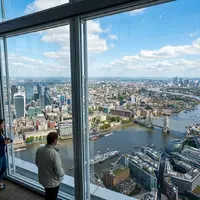
The public viewing platform occupies five floors near the top of the building. Floor 69 is the main indoor viewing gallery, while floor 72 is the partially open-air Skydeck at 244 metres. These floors are the highest publicly accessible point in the UK.
Floors 73 to 95: The Spire
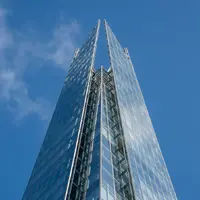
The upper 23 floors form the distinctive spire that gives The Shard its shape. This section is not occupied or accessible. It contains mechanical plant, services and structural steelwork, all clad in the irregular glass panels that create the building's shimmering apex. The spire is deliberately left as an open framework rather than a sealed structure, allowing wind to pass through and light to filter between the glass shards.
The Gaps
Observant visitors will notice that the floor numbering skips certain levels. Floors 29 and 30 are transfer floors containing lift machinery and building services. Floors 66 and 67 serve a similar purpose between the residential apartments and the viewing platform. These service floors are an essential part of any supertall building, housing the mechanical systems that keep a structure of this height functioning.