The Numbers
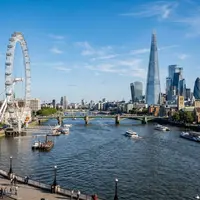
The Shard reaches 310 metres from ground level to the tip of its spire, equivalent to 1,016 feet. To put that in context, it is roughly three times the height of the London Eye, more than twice the height of the BT Tower, and taller than the Eiffel Tower's main structure (not including its antenna). It has 95 floors, though not all of them are publicly accessible.
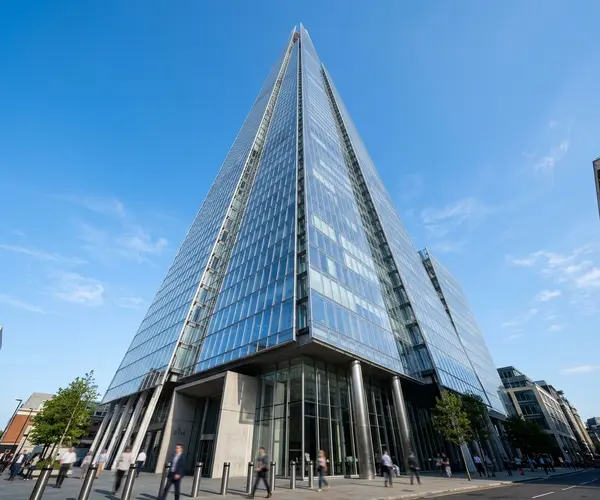
The building's footprint at ground level is relatively compact for a structure of its height. The tapering shape means the upper floors are significantly narrower than the base, which gives The Shard its distinctive silhouette and reduces the visual impact of its mass when seen from street level.
How It Compares
Within the UK, nothing comes close to The Shard's height. The next tallest buildings in London are 22 Bishopsgate at 278 metres and One Canada Square in Canary Wharf at 235 metres. Outside London, the tallest building in the UK is Beetham Tower in Manchester at 169 metres, barely more than half The Shard's height.
In a European context, The Shard held the title of tallest building on the continent when it was completed in 2012. It has since been surpassed by the Lakhta Center in St Petersburg, Russia, which reaches 462 metres. Among Western European buildings, The Shard remains the tallest.
Globally, The Shard would not rank among the top 50. The Burj Khalifa in Dubai stands at 828 metres, more than two and a half times taller. But The Shard was never designed to compete with supertall skyscrapers in the Middle East or Asia. Its significance is architectural and urban rather than record-breaking.
The Design
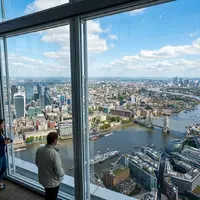
Renzo Piano conceived The Shard as a "vertical city," with multiple uses stacked on top of each other. The building contains offices, restaurants, a hotel, residential apartments and a public viewing platform, all within a single tapered glass form. Piano has described the shape as being inspired by the spires of London churches and the masts of ships depicted in 18th-century paintings of the Thames. The building's distinctive name has an equally distinctive origin; learn why it is called The Shard.
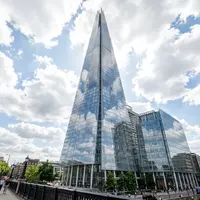
The exterior is covered in 11,000 glass panels, angled to reflect the sky and surrounding buildings. The effect changes dramatically throughout the day. At sunrise and sunset, The Shard can appear to glow orange or pink. On overcast days, it almost disappears into the grey sky. The glass was deliberately chosen to be transparent rather than reflective, so that the building responds to weather and light conditions rather than dominating them.
The Spire
The top of The Shard is not a solid point. Above the highest occupied floor (floor 72, the open-air viewing deck), the building continues upward as an open framework of steel beams clad in glass shards. These irregular glass panels do not form a sealed enclosure. Wind passes through the upper structure, and the glass fragments catch light at varying angles, creating a shimmering effect that changes with the weather.
This open top was a deliberate design choice by Piano, who wanted the building to feel unfinished, as though it were dissolving into the sky rather than coming to a hard stop. The effect is most visible on clear days when the upper spire appears to fragment against the blue sky.
Visibility
The Shard's height means it can be seen from remarkable distances. On clear days, it is visible from the North Downs in Surrey, from parts of Essex and from elevated points in north London more than 15 miles away. Within central London, it has become a wayfinding landmark, visible from almost every bridge over the Thames and from countless streets. Whether you find this visual presence impressive or intrusive depends largely on your feelings about tall buildings in a historically low-rise city.