The Viewing Levels
The public viewing experience at The Shard is called "The View from The Shard" and spans five floors near the top of the building. Visitors arrive at floor 68 via high-speed lifts that travel from ground level in approximately 30 seconds. From floor 68, you can move between the different viewing levels to explore the panorama from various heights and angles.
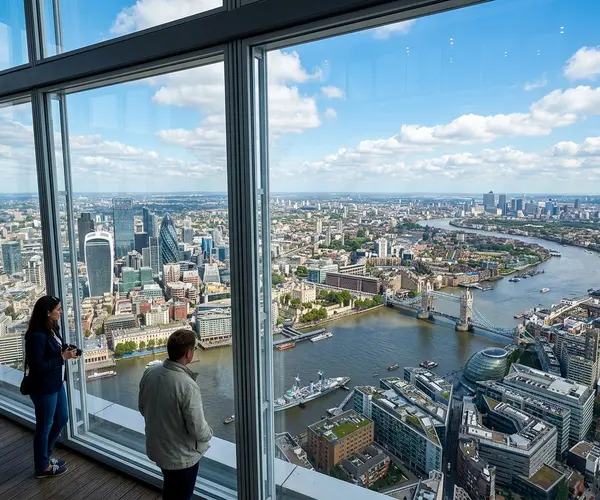
Floor 69 serves as the main indoor viewing gallery. It features floor-to-ceiling windows and interactive telescopes that overlay information about the landmarks visible below. The telescopes identify buildings, bridges and neighbourhoods, and some offer a time-lapse function showing how the view has changed over the centuries.
The Skydeck
Floor 72 is the highest point accessible to the public and is known as the Skydeck. Unlike the fully enclosed floors below, floor 72 is partially open to the elements. There is no glass between you and the sky at certain points, which means you can feel the wind and hear the sounds of the city far below.
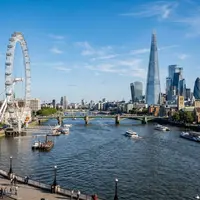
The open-air aspect of the Skydeck is one of the features that distinguishes The Shard from other London viewing experiences. Our detailed Shard vs London Eye comparison breaks down how the two options differ in height, atmosphere and what you can see. The London Eye, by comparison, is fully enclosed in glass capsules. Standing on the Skydeck with nothing but a safety barrier between you and a 244-metre drop creates a visceral sense of height that an enclosed space cannot replicate.
The Skydeck is accessible in most weather conditions, though it may occasionally be closed during severe storms or dangerously high winds. On rainy days, the open sections mean you will get wet, but many visitors consider the experience of being at that height in the rain to be memorable in its own right.
What You Can See
At 244 metres, the viewing platform is high enough to see well beyond central London. On clear days, the views extend approximately 40 miles in every direction. To the south, you can see the green belt and the North Downs. To the east, the Thames curves past Canary Wharf toward the Thames Estuary. To the north, the city stretches out toward Hampstead Heath and the hills beyond.
The most recognisable landmarks are all visible. Tower Bridge and the Tower of London sit almost directly below on the eastern side. Looking west, you can pick out St Paul's Cathedral, the London Eye, the Houses of Parliament and Big Ben. The distinctive shapes of the Gherkin, the Walkie Talkie and the Cheesegrater are all visible in the City of London cluster.
Above and Below the Viewing Platform
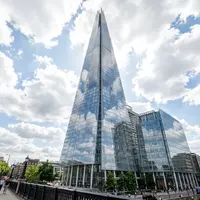
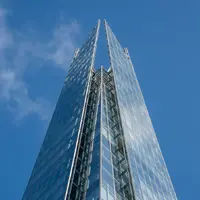
The floors above 72 are not open to the public. Floors 73 to 95 form the spire of the building, an open steel and glass structure that tapers to a point. This section contains mechanical plant and services but no usable space.
Below the viewing platform, floors 53 to 65 are occupied by exclusive residential apartments. The Shangri-La hotel occupies floors 34 to 52, and floors 31 to 33 house restaurants and bars. Offices fill the lower third of the building from floors 3 to 28. This layered arrangement means that by the time you reach the viewing floors, you have passed through an entire vertical neighbourhood of work, hospitality and living space.
Getting There
The lifts that carry visitors to the viewing platform are among the fastest in Europe. The journey from the entrance on Joiner Street to floor 68 takes around 30 seconds, during which the lift accelerates smoothly to a speed that causes a noticeable sensation of pressure in the ears. A second, smaller lift connects floor 68 to the upper viewing levels and the Skydeck. The whole ascent is quick and efficient, designed to maximise the time visitors spend enjoying the views rather than waiting to reach them.