West End Theatres
London's world-famous theatre district with over 40 venues staging musicals, plays and comedies nightly
London's world-famous theatre district with over 40 venues staging musicals, plays and comedies nightly
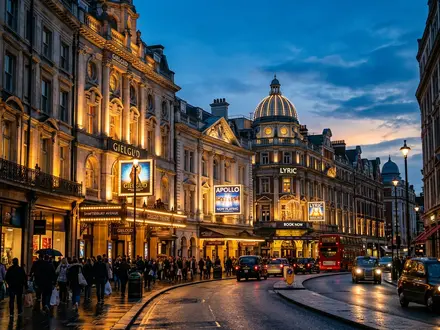
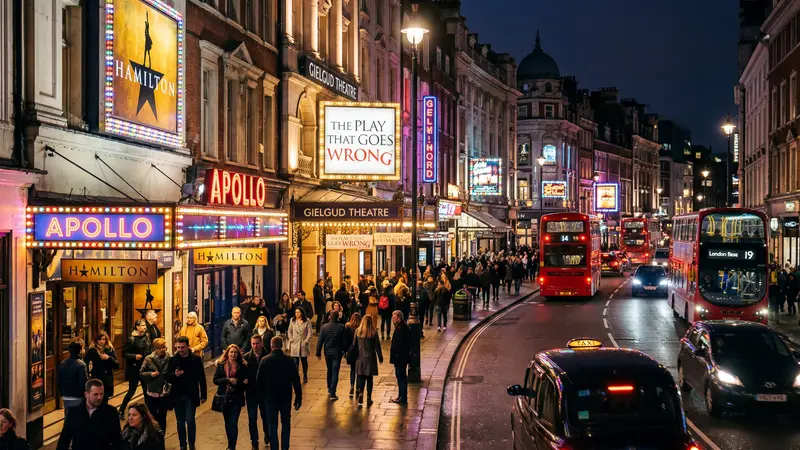
London's West End contains more than 40 theatres packed into a square mile around Shaftesbury Avenue, the Strand and Covent Garden, making it the largest concentration of playhouses anywhere in the world. On any given night, audiences can choose from long-running musicals, new plays, revivals and stand-up comedy within a few minutes' walk of one another.
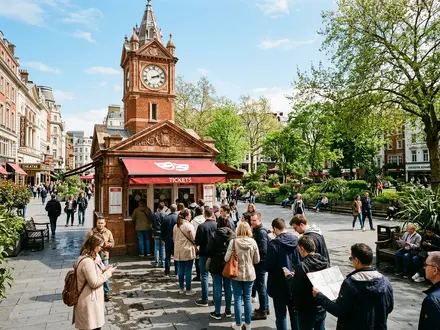
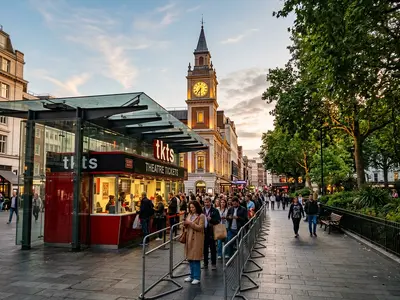
The TKTS booth in Leicester Square, run by the Society of London Theatre, sells discounted same-day and advance tickets for a rotating selection of shows. It is the best starting point for anyone visiting the West End without a booking.
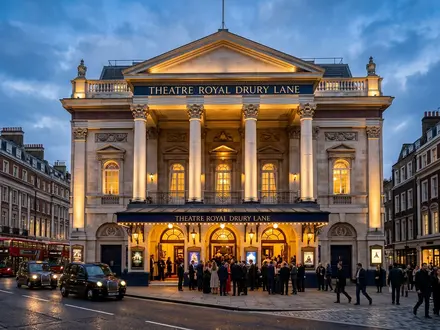
London's theatrical tradition stretches back to the Elizabethan playhouses on Bankside, but the West End as a theatre district took shape in the 19th century. The building boom of the 1880s and 1890s lined Shaftesbury Avenue with purpose-built theatres, while older venues like the Theatre Royal Drury Lane and the Lyceum anchored the surrounding streets. By 1900, Theatreland was firmly established as the centre of English-language drama.
The district survived wartime bombing, the rise of cinema and the arrival of television. Today it generates over £2 billion annually and employs thousands of actors, musicians, stagehands and front-of-house staff. More than 15 million tickets are sold each year, drawing audiences from across the world.
The range is enormous. Long-running musicals such as Les Miserables, The Phantom of the Opera's successors and Hamilton share the district with new plays premiering at the Harold Pinter Theatre or the Noel Coward. The Donmar Warehouse and the Almeida transfer critically acclaimed productions into larger West End houses each season. Stand-up comedy, immersive theatre experiences and one-person shows fill smaller venues like the Criterion and the Ambassadors.
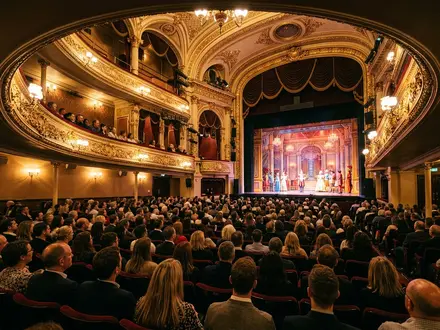
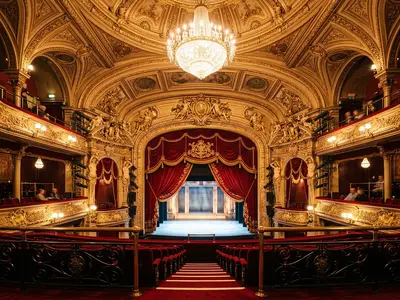
Theatre architecture is itself a draw. The London Palladium seats over 2,200 beneath a towering proscenium arch. The Savoy Theatre was the first public building in the world lit entirely by electricity, in 1881. The Old Vic, south of the river, has hosted performances for over 200 years and served as the first home of the National Theatre.
For the best value, visit the TKTS booth in Leicester Square, which sells discounted tickets for same-day performances and up to a week ahead. Most shows also run digital lotteries and rush ticket schemes offering front-row seats from as little as £10. Weeknight performances are typically cheaper and less crowded than weekends.
Pre-theatre dining is a West End tradition, with restaurants across Soho, Covent Garden and St Martin's Lane offering fixed-price menus timed to finish before curtain-up. Arrive at the theatre 15 to 20 minutes early to settle in and explore the building.
Ticket prices vary widely by show, seat and booking time. The TKTS booth in Leicester Square and show-specific lotteries offer the best value on the day.
The official ticket booth in Leicester Square sells discounted tickets from 10:30am (11am Sundays). Go early for the widest selection. It is the only booth endorsed by the Society of London Theatre, so avoid unofficial sellers nearby.
Many popular musicals run digital lotteries offering premium seats for £10 to £25. Enter through each show's official app or website on the morning of the performance. Winners are drawn a few hours before curtain-up.
Tuesday and Wednesday evening shows are typically the least crowded and often have the widest availability. Ticket prices on weeknights can be significantly lower than Friday or Saturday.
Restaurants in Soho and Covent Garden offer set menus designed to fit before a 7:30pm curtain. Book a table for 5:30pm or 6pm to eat without rushing. Many are within a few minutes' walk of the major theatres.
Seats marked as restricted view are often heavily discounted but may only miss a small corner of the stage. Read reviews on theatre forums to find which restricted seats are genuinely good value at each venue.

London Travel Writer · 12+ years covering UK attractions and tourism
Last reviewed: March 5, 2026