Size and Scale
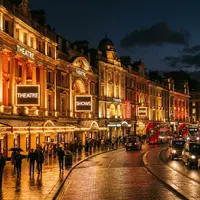
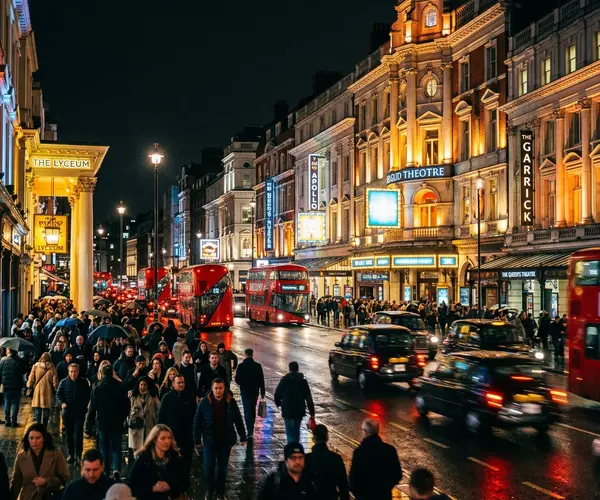
The two districts are remarkably similar in size. Broadway has 41 officially designated theatres, defined as venues with 500 or more seats in the area around Times Square. The West End has 39 theatres, clustered around Shaftesbury Avenue, the Strand and Covent Garden. Both districts draw approximately 15 million audience members per year.
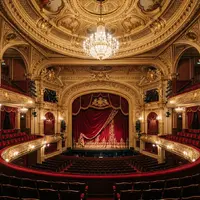
Broadway theatres tend to be slightly larger on average, with several venues seating over 1,500 people. West End theatres are generally more compact, with many dating from the Victorian and Edwardian eras when smaller, more ornate auditoriums were the norm. For a closer look at the London side of this comparison, see our guide to West End theatres.
History and Origins
The West End has the older pedigree. Theatre Royal Drury Lane received its royal patent in 1663, making it the oldest continuously used theatre site in London. The West End's theatrical tradition grew through the Restoration period, the Georgian era and the great Victorian building boom that created most of today's theatres.
Broadway's theatrical history begins in the mid-18th century, but the district as we know it took shape in the early 20th century when theatres moved north from Union Square to the Times Square area. Broadway's golden age came in the 1940s and 1950s with the musicals of Rodgers and Hammerstein.
What Each Does Best
Broadway is widely regarded as the global capital of musical theatre. The sheer scale of Broadway musicals, both in production values and marketing budgets, is difficult to match. Shows like Hamilton, The Lion King and Wicked have become cultural phenomena that define modern musical theatre.
The West End has traditionally been stronger in drama, new writing and experimental work. London's subsidised theatre sector, including the National Theatre and the Royal Court, feeds new productions into the commercial West End in a way that has no direct equivalent on Broadway. The result is a broader range of programming.
Show Transfers
Many successful shows play in both districts. A hit West End musical will often open a Broadway production and vice versa. Hamilton moved from Broadway to the West End, while Matilda went the other direction. These transfers are a regular feature of the relationship between the two theatre worlds.
The Experience
The physical experience of attending theatre differs between the two districts. West End theatres are generally older buildings with more character, ornate plasterwork and a sense of history. Broadway theatres, while some are historic, are often more functional spaces that prioritise sightlines and comfort over architectural detail.
London theatre culture places a higher value on subsidised and experimental work alongside commercial productions. Broadway is more commercially driven, with higher production costs and correspondingly higher audience expectations for spectacle.
Audience and Culture
West End audiences tend to skew more local, with Londoners making up a significant proportion of theatregoers alongside tourists. Broadway audiences include a higher percentage of tourists and out-of-towners, particularly for the big-name musicals.
Both districts face similar challenges around accessibility and diversity, and both have made significant progress in recent years. The Tony Awards and the Olivier Awards serve as each district's annual celebration, and winning either carries significant prestige.
The rivalry between the two is largely friendly. Most theatre professionals work in both cities at various points in their careers, and the flow of talent and productions between London and New York is constant and mutually beneficial.