Two Companies, One Stage
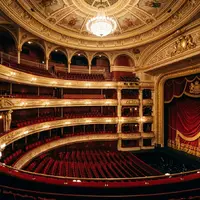
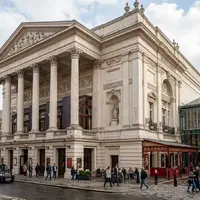
The Royal Opera House is unusual among the world's great performing arts venues in being the permanent home of two distinct companies of the highest international standing. The Royal Opera and the Royal Ballet are separate organisations with their own artistic directors, dancers, singers, musicians and creative teams, but they share the main stage of the opera house and alternate their seasons throughout the year. For a broader introduction to this world-class venue and its history, see our overview.
This arrangement means that on any given week during the season, the Royal Opera House might be presenting a grand opera one evening and a classical ballet the next. The variety is one of the building's great strengths, offering audiences an extraordinary range of performing arts within a single venue.
The Royal Opera
The Royal Opera presents a season of approximately 15 to 20 productions each year, ranging from core repertoire works by Mozart, Verdi, Puccini and Wagner to new commissions and rarely performed pieces. The company employs its own orchestra, the Orchestra of the Royal Opera House, and draws on an international roster of leading singers, conductors and directors.
Productions range from traditional stagings that respect the period and conventions of the original work to bold contemporary interpretations that reimagine familiar operas in new settings. The company's artistic ambition means that even well-known operas like La Traviata or The Marriage of Figaro can feel fresh and surprising in a new Royal Opera production.
The Royal Ballet
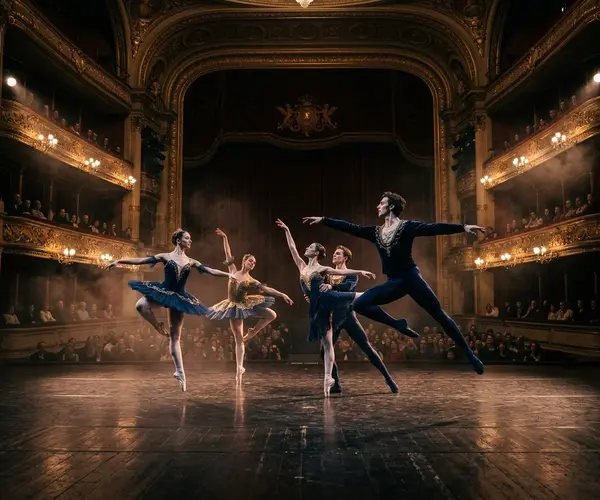
The Royal Ballet was founded in 1931 by Dame Ninette de Valois and has grown into one of the world's foremost ballet companies. The company of approximately 100 dancers performs classical ballet, 20th-century masterworks and new contemporary pieces. The classical repertoire includes productions of Swan Lake, The Nutcracker, Giselle, Romeo and Juliet and The Sleeping Beauty that have been refined over decades and are considered benchmark productions of these works.
The Nutcracker at Christmas has become one of London's great seasonal traditions, and performances regularly sell out months in advance. Beyond the classical repertoire, the company commissions new works from leading choreographers, pushing the boundaries of what ballet can express while maintaining the technical excellence for which it is renowned.
How the Season Works
The Royal Opera and Royal Ballet share the main stage through a carefully planned schedule that alternates their seasons. A typical pattern might see the ballet performing for several weeks, followed by a run of opera productions, with the cycle repeating throughout the year. This means the stage crew must frequently rebuild the sets and technical requirements for completely different productions, a logistical challenge that the opera house manages with remarkable efficiency.
Some periods of the year are more strongly associated with one company than the other. The ballet's Nutcracker dominates the Christmas period, while the autumn season often features major new opera productions. However, both companies perform throughout most of the year, and there are periods when opera and ballet performances alternate on consecutive nights.
Beyond Opera and Ballet
The Royal Opera House also presents work by visiting contemporary dance companies, concerts and special events. The Linbury Theatre, a smaller 406-seat venue within the building, hosts chamber operas, new works and experimental performances that complement the main stage programme. This smaller space allows the opera house to present more intimate and adventurous work alongside the large-scale productions on the main stage.
Live cinema screenings broadcast performances from the Royal Opera House to cinemas around the world, allowing audiences who cannot attend in person to experience the productions. These screenings have significantly expanded the reach of both companies and introduced opera and ballet to new audiences.