Twickenham World Rugby Museum and Stadium
Home of English rugby since 1909 — explore 82,000 seats of history and the world's finest rugby memorabilia collection


Home of English rugby since 1909 — explore 82,000 seats of history and the world's finest rugby memorabilia collection
Twickenham has been the home of English rugby since 1909, when the RFU bought a former cabbage patch in south-west London and built a ground that now holds 82,000 spectators. The World Rugby Museum in the South Stand houses over 41,000 objects tracing the sport from its origins to the present day.
Guided stadium tours take you through the England changing room, players' tunnel and pitch-side areas, while the museum's interactive zone lets you test your scrummaging, lineout jumping and goal-kicking skills against real match data.
Twickenham has been the headquarters of English rugby union since 1907, when William Williams of the Rugby Football Union purchased a 10-acre plot of land in south-west London for just over four thousand pounds. The first match — Harlequins against Richmond — was played on 2 October 1909, and the first international followed in January 1910 when England hosted Wales. At that time the ground held 20,000 spectators. A century of redevelopment has transformed it into a modern 82,000-seat venue, the largest stadium in the world dedicated solely to rugby union.
The most recent major rebuild was completed in 2006, adding the South Stand which now houses the World Rugby Museum, a performing arts centre, a Marriott hotel and conference facilities. The stadium is officially known as Allianz Stadium under a naming rights deal, though most fans and commentators still call it Twickenham.
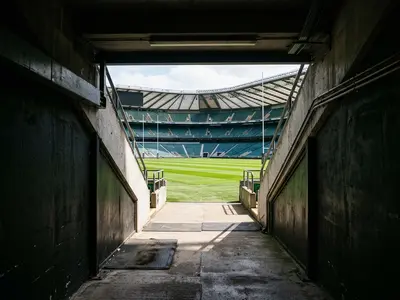
The guided stadium tour lasts approximately 75 minutes and covers areas normally off-limits to the public. You will walk through the England changing room, where numbered shirts hang above personalised seats, then follow the route players take through the tunnel and out onto the pitch. The tour also includes the royal box, the medical room and a pitch-side view of the 82,000 empty seats — a sight that gives real scale to match-day atmosphere.
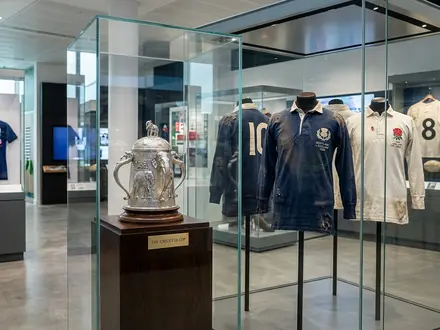
Inside the World Rugby Museum, the collection spans the entire global history of the sport. Star exhibits include the Calcutta Cup, the 2003 Rugby World Cup trophy, an 1871 England jersey from the very first international, and the ball from the 2003 World Cup final in Sydney. The Play Rugby interactive zone lets visitors test their scrummaging power, lineout jumping height and kicking accuracy against data from professional players.
Tours depart at fixed times — Tuesday to Friday at 10:30, 12:30 and 14:30, with additional slots on weekends. The museum can be visited independently without joining a tour. Last entry to the museum is at 16:00. Tours may be restricted on match days and major event days, so check the website before visiting.
The stadium is a 13-minute walk from Twickenham station, which has regular South Western Railway services from London Waterloo taking around 30 minutes. Free parking is available for visitors. The nearby town centre has a good selection of pubs, cafes and restaurants along Church Street and King Street, many with a strong rugby heritage of their own.
Children under 5 enter free, and student or senior discounts apply with valid ID
Tours have limited capacity and popular time slots sell out quickly, especially during school holidays. Book online through the museum website to guarantee your place.
The stadium tour and museum close on international match days and some major event days. Always check the website calendar before making the journey.
The tour lasts 75 minutes but the museum is self-guided and deserves at least another hour. Budget two to three hours for the full experience.
The Play Rugby zone is not just for children. The scrum machine and kicking challenge are great fun for adults too, and you can compare your scores with the pros.
South Western Railway runs from London Waterloo to Twickenham every 15 minutes. The journey takes about 30 minutes and the walk to the stadium is signposted.

London Travel Writer · 12+ years covering UK attractions and tourism
Last reviewed: March 9, 2026