London's best attractions at the best prices

London Underground

The world's first underground railway — 11 lines, 272 stations and 160+ years of history beneath one of the most visited cities on Earth
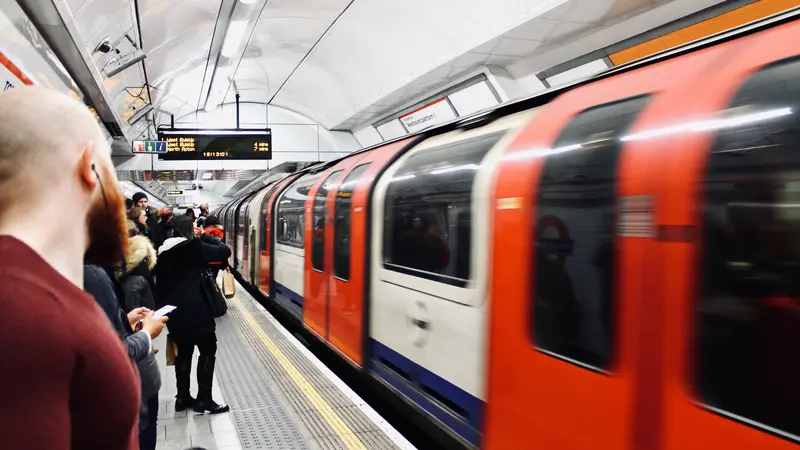
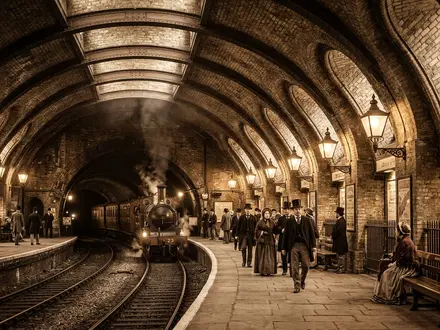
The London Underground is the oldest metro on the planet, carrying its first passengers between Paddington and Farringdon on 10 January 1863. Today 11 colour-coded lines link 272 stations across 400 kilometres of track, moving five million people a day.

The Tube is more than transport — from the iconic roundel and Harry Beck's map to Victorian tilework and the Jubilee line's sweeping curves, it is a designed experience. Riding it is a London experience in itself, and knowing its history transforms every journey.

Area Central London (citywide)
Price £
Duration Variable (single journey 5–60 minutes)
Best Time Off-peak weekdays

Highlights

160+ Years of History

160+ Years of History

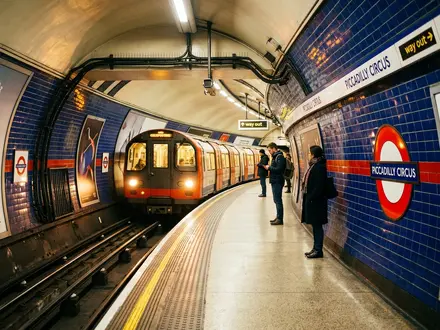
Opened in 1863, the Metropolitan Railway was the world's first underground passenger railway. The network expanded rapidly through the Victorian and Edwardian eras, creating the system that still shapes how London works today.

Harry Beck's Map

Harry Beck's Map

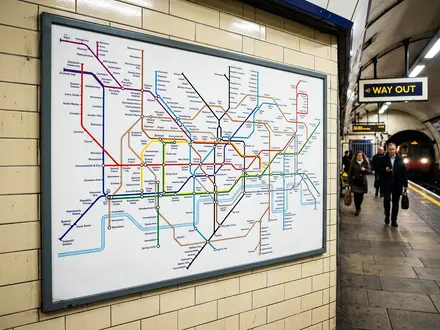
The iconic diagrammatic Tube map, designed by electrical draughtsman Harry Beck in 1931, replaced geographical accuracy with clarity. It is one of the most influential pieces of information design ever created.

The Architecture

The Architecture

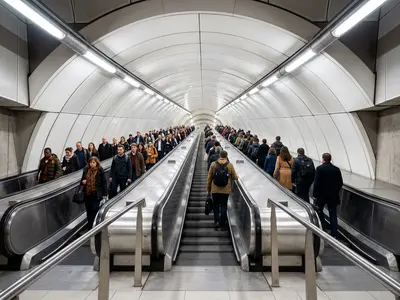
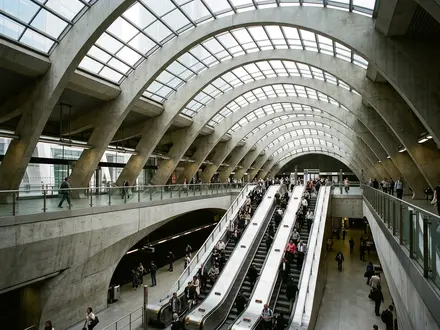
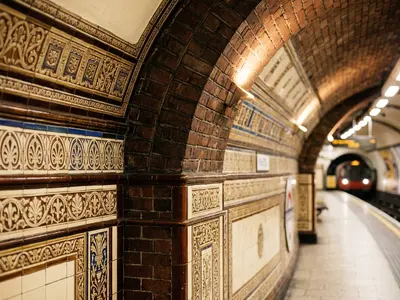
From the ornate Victorian tilework of Baker Street and Gloucester Road to the cavernous escalator halls of the Jubilee line at Canary Wharf, the Tube contains some of London's most striking architecture above and below ground.

Night Tube

Night Tube

On Friday and Saturday nights, the Central, Jubilee, Northern, Piccadilly and Victoria lines run 24-hour services, keeping the city moving through the early hours without the need for Night Buses or taxis.

A Brief History of the Underground

The Metropolitan Railway opened on 10 January 1863 between Paddington and Farringdon, carrying 38,000 passengers on its first day in steam-hauled carriages lit by gas lamps. Deeper tube lines followed from the 1890s, bored through London clay using tunnelling shields; the City & South London Railway of 1890 was the world's first deep-level electric underground.

By the early 1900s the separate companies were merging under common branding — the iconic roundel appeared around 1908. The system survived the Blitz, when stations served as air-raid shelters, and most recently gained the Elizabeth line in 2022. It now carries nearly 1.5 billion journeys a year.

Architecture & Design Worth Seeking Out

The Tube is an accidental museum of British architecture spanning 160 years. At Baker Street you can still see arched brick bays and tilework from 1863. Leslie Green's early-1900s stations — identifiable by ox-blood glazed terracotta facades — survive at Covent Garden, Russell Square and over a dozen other locations. Charles Holden's 1930s Piccadilly line stations at Southgate, Arnos Grove and Cockfosters feature Portland stone facades, cylindrical ticket halls and pioneering natural light, earning Grade II listings.

The Jubilee line extension brought dramatic late-1990s engineering at Canary Wharf (Norman Foster), Westminster (Michael Hopkins) and North Greenwich (Alsop Architects). The Art on the Underground programme continues to commission contemporary works across the network.

Riding the Tube Like a Local

Tap your Oyster or contactless card on the yellow reader to enter and tap out at your destination. The daily cap means you never pay more than a set amount — once you reach it, additional journeys are covered at no extra cost, making Oyster or contactless dramatically cheaper than paper tickets.

Peak fares apply weekdays between 6:30am and 9:30am; avoid those hours if you can, as the Central, Northern and Jubilee lines are crushingly busy. The Night Tube runs Friday and Saturday on the Central, Jubilee, Northern, Piccadilly and Victoria lines for late evenings out. Stand on the right on escalators and let passengers off before boarding — these are deeply felt London norms.

Did You Know?

  • The phrase "Mind the Gap" was first recorded in 1969 for use at Embankment station — the voice belonged to sound engineer Peter Lodge, and a version of his recording was used for decades
  • The Tube map is not geographically accurate — Harry Beck's 1931 design deliberately distorted distances and compressed the outer zones, which is why places that seem far apart on the map can be a short walk above ground
  • Baker Street station, one of the original seven stations from 1863, still has sections of Victorian tilework and arched brickwork visible on the platforms
  • The deepest station on the network is Hampstead on the Northern line, with platforms 58.5 metres below street level — the equivalent of a 15-storey building underground

Pricing

  • Zone 1 single (off-peak, Oyster/contactless) £2.80
  • Zone 1 single (peak, Oyster/contactless) £2.80
  • Zone 1–2 daily cap (Oyster/contactless) £8.90
  • Child (11–15, with Zip Oyster) Half adult fare

Always use Oyster or contactless — a paper single ticket costs £7.00 for the same Zone 1 journey that is £2.80 with Oyster. Daily capping means you never pay more than a set amount.

Getting There

Transport for London, 5 Endeavour Square, London E20 1JN

Tube stations: There are 272 stations across Greater London — use the TfL Go app, Journey Planner or any Tube map to find the nearest station to your location

Walking: In central London, you are rarely more than a 5-minute walk from a Tube station. Look for the iconic red, white and blue roundel signs marking every entrance

Bus: Almost every Tube station has bus stops directly outside, making it easy to combine bus and Tube journeys under the same Oyster or contactless daily cap

Visitor Tips

Use contactless or Oyster, never paper tickets

A Zone 1 paper single costs £7.00. The same journey on Oyster or contactless is £2.80. Daily capping means you never overpay. There is no reason to buy a paper ticket.

Stand on the right on escalators

This is the single most important rule of Tube etiquette. Stand on the right side of the escalator and leave the left side clear for people who want to walk. Londoners feel very strongly about this.

Avoid the Central and Northern lines at rush hour

Between 8am and 9:30am the busiest lines are packed to capacity. If you are sightseeing, start your day after 9:30am or use buses and walking for the first leg of your morning.

Visit Baker Street for the oldest station

Baker Street is one of the original 1863 stations and still has Victorian brickwork and tilework visible on the Metropolitan line platforms. It is a free living museum of railway history.

Use the Night Tube on Friday and Saturday

The Central, Jubilee, Northern, Piccadilly and Victoria lines run all night on Friday and Saturday. It is the safest and cheapest way to get home after a late night out — far better than surge-priced taxis.

Common Questions About London Underground

Use a contactless bank card or Oyster card. Fares are less than half the price of a paper ticket, and daily capping means you never pay more than a set amount regardless of how many journeys you make.

Not on most nights. Standard services run from approximately 5am to 12:30am. On Friday and Saturday nights, the Night Tube runs all night on the Central, Jubilee, Northern, Piccadilly and Victoria lines.

Step-free access is available at approximately 94 stations (about 34% of the network). The TfL website has a step-free Tube map showing which stations have lift or ramp access from street to platform.

It is a recorded warning played at stations where there is a gap between the train door and the curved platform edge. It has become one of London's most famous phrases and is printed on countless souvenirs.
James Whitfield

James Whitfield

EDITORIAL REVIEW

London Travel Writer · 12+ years covering UK attractions and tourism

Last reviewed: March 5, 2026
Visit

  • Transport for London, 5 Endeavour Square, London E20 1JN
  • +44 343 222 1234
  • Mon–Thu 05:00–00:30
    Fri, Sat 05:00–00:30 (Night Tube all night on select lines)
    Sun 06:30–23:30
  • tfl.gov.uk

Discover More

Discover more attractions and things to do in London.

Browse All Attractions

Getting Around

More Getting Around

All Getting Around
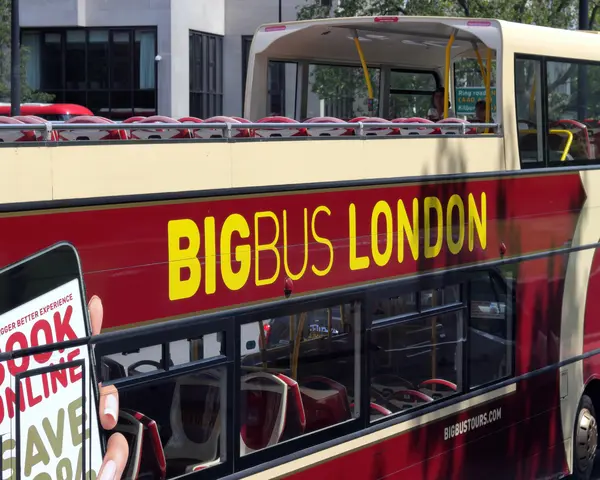
Big Bus Tours Save 50%

Big Bus Tours

Open-top hop-on hop-off sightseeing bus tours of London with live guides, three routes, 40+ stops and an included Thames river cruise

££ Mayfair / Green Park