London Eye River Cruise
A 40-minute circular Thames cruise departing from the London Eye Pier — live commentary, iconic landmarks and no stops en route


A 40-minute circular Thames cruise departing from the London Eye Pier — live commentary, iconic landmarks and no stops en route
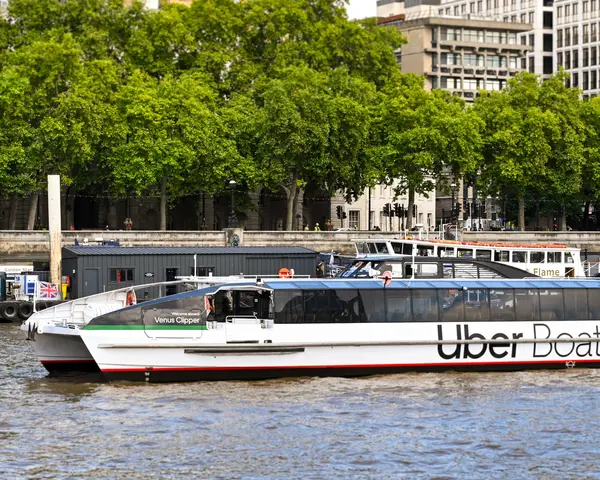
The London Eye River Cruise is a 40-minute circular sightseeing voyage that departs from the pier directly beneath the London Eye. Unlike hop-on hop-off services, the boat makes no intermediate stops — passengers travel downstream past the Houses of Parliament, St Paul's Cathedral and Tower Bridge before looping back to the same pier.
Live commentary from an expert guide runs throughout the sailing, with audio guides available in ten languages. The route covers both banks of the Thames, passing Shakespeare's Globe, the Tate Modern and the City of London skyline at close range.
The London Eye River Cruise departs from Waterloo Millennium Pier, built in 1999 as part of the South Bank millennium developments that also produced the London Eye itself. The pier sits directly beneath the wheel on the Queen's Walk, between Westminster Bridge and Hungerford Bridge. It was purpose-designed for sightseeing cruises rather than commuter traffic, with a wide boarding platform and step-free access from the riverside path.
The cruise follows a circular route downstream along the Thames, passing the Houses of Parliament and continuing east past the South Bank Centre, Blackfriars Bridge, St Paul's Cathedral and the City of London before reaching Tower Bridge. The boat then turns and retraces the route back to the pier, giving passengers views of both riverbanks in each direction.
From the pier, the first landmark visible is the Palace of Westminster — the boat passes within metres of the terrace, giving a river-level perspective of the Gothic Revival facade and the Elizabeth Tower housing Big Ben. Continuing downstream, the route passes the National Theatre, Oxo Tower and the Tate Modern before the dome of St Paul's Cathedral comes into view above Millennium Bridge.
The stretch between Blackfriars and Tower Bridge is particularly impressive. Shakespeare's Globe and the Golden Hinde sit on the south bank, while the north bank presents the College of Arms, the Monument to the Great Fire and the Custom House. The cruise reaches its easternmost point at Tower Bridge, where the guide identifies the Tower of London's key features — the White Tower, Traitors' Gate and the riverside wharf — before the boat turns back upstream.
Tickets are available through the London Eye website, and online prices are consistently lower than walk-up fares at the pier. The combination ticket bundles the cruise with a standard London Eye rotation and offers a saving over buying each separately. Passengers should arrive at Boarding Point 2 on the pier at least fifteen minutes before their scheduled departure, as a £10 rebooking fee applies for missed time slots.
Cruises depart at forty-five minutes past every hour, with the first sailing at 10:45 and the last varying seasonally — typically 17:45 on weekdays and 19:45 at weekends. The boat has an open upper deck for fine weather and an enclosed lower saloon with large windows. Wheelchair access is available via step-free boarding from the pier.
Children under 3 go free but require a ticket, and online booking is cheaper than walk-up pier prices
Walk-up tickets at the pier cost more than online bookings. Reserve through the London Eye website at least a day ahead to secure the lowest available fare.
For the best views of the Houses of Parliament and Tower of London, sit on the right-hand side of the boat as it heads downstream. Switch to the left for the return leg.
The combo ticket saves money over separate bookings. Do the cruise first to see landmarks from the water, then ride the Eye to see them from above — allow fifteen minutes between the two.
Boarding starts fifteen minutes before departure. Arriving early secures a good seat on the open upper deck. A £10 rebooking fee applies if you miss your slot.
The open upper deck has the best views but no cover. On wet days, the enclosed lower saloon has large windows on both sides. Bring a light layer even in summer.

London Travel Writer · 12+ years covering UK attractions and tourism
Last reviewed: March 9, 2026