The Capacity of Centre Court
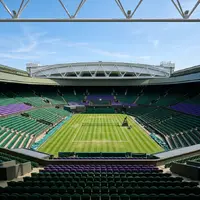
Wimbledon's Centre Court seats exactly 14,979 spectators. This figure has changed over the years as the court has been renovated and modernised, but the current capacity has been in place since the major redevelopment completed in 2009.
The seating is arranged in a steep bowl that wraps around all four sides of the playing surface. This design means that every seat has a clear and relatively close view of the action, something that is not always the case at larger sporting venues. The intimate atmosphere this creates is one of the things that makes Centre Court feel special.
The Retractable Roof
The most significant change to Centre Court in its modern history was the addition of a retractable roof in 2009. Before this, rain delays were a regular feature of the Championships. Matches would be suspended, covers rolled onto the court, and spectators left waiting under umbrellas for play to resume.
The retractable roof solved this problem entirely for Centre Court. The roof can be closed in approximately 10 minutes, and once air conditioning has brought the conditions inside to an acceptable level (which takes around 20 to 30 minutes), play can resume. The roof has transformed the scheduling of the Championships, allowing the most important matches to be completed regardless of the famously unpredictable British weather.
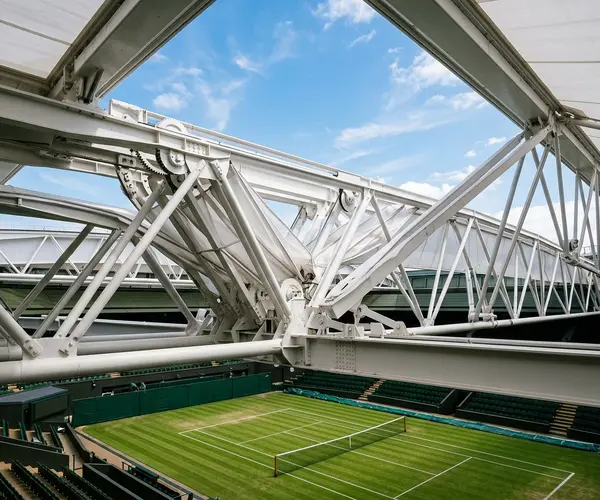
The engineering behind the roof is impressive. It consists of a fabric membrane supported by a steel truss structure that folds concertina-style when retracted. Despite its enormous size, the mechanism operates quietly enough not to disturb play on adjacent courts.
Why Centre Court Is Special
There are bigger tennis courts in the world, and there are certainly newer ones. But Centre Court holds a status in tennis that no other venue can match. This is the court where the Wimbledon finals have been played since 1922, and where virtually every great player in the sport's history has competed.
The traditions surrounding Centre Court add to its mystique. Players bow or curtsey to the Royal Box upon entering. The court is used exclusively during the Championships, with only a handful of practice sessions allowed on it beforehand to preserve the grass surface. The reason Wimbledon is played on grass is rooted in the sport's Victorian origins. The green and purple colour scheme, the ivy-covered walls and the hushed respect from spectators all contribute to an atmosphere unlike any other in professional sport.
The Royal Box
Situated on the south side of Centre Court, the Royal Box contains 74 seats reserved for guests of the All England Club. Members of the Royal Family, dignitaries, former champions and other invited guests sit here during the Championships. The box has been part of Centre Court since 1922 and remains one of the most prestigious seats in world sport.
A Court Steeped in History
Centre Court has witnessed some of the greatest moments in tennis history. From Bjorn Borg's five consecutive titles in the late 1970s to Roger Federer's record eight men's singles victories, the court has been the stage for moments that define the sport. The surface, the setting and the expectation of the crowd all combine to create a venue where the biggest matches feel truly monumental.