A Building Like No Other
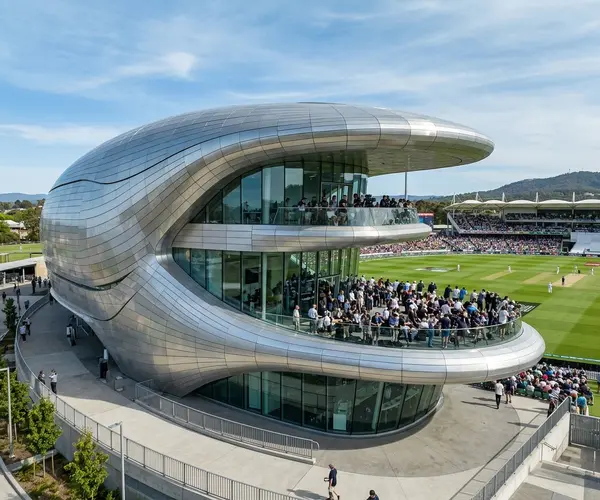
The Media Centre at Lord's Cricket Ground is one of the most recognisable structures in British sport. Raised above the Nursery End of the ground on concrete legs, the smooth white aluminium pod looks entirely out of place against the Victorian pavilion at the opposite end. And yet it works. The contrast between old and new has come to define the visual identity of Lord's itself.
The building was designed by the architecture practice Future Systems, led by the Czech-born architect Jan Kaplicky. It won the prestigious RIBA Stirling Prize for architecture in 1999, the year it opened, beating entries from some of the biggest names in the profession.
How It Was Built
The Media Centre was the first all-aluminium semi-monocoque building ever constructed. Semi-monocoque construction is a technique borrowed from the aerospace industry, where the outer skin of the structure carries the structural loads rather than an internal frame. This is the same principle used to build aircraft fuselages and boat hulls.
The aluminium panels were fabricated in a boatyard in Cornwall and transported to London for assembly. Each panel was shaped to fit the building's curves, and the whole structure was lifted into position above the seating tier. The result is a building with no internal columns, giving everyone inside an unobstructed view of the pitch.
The construction method is what gives the Media Centre its smooth, organic shape. There are no flat surfaces or sharp angles. The entire form is a continuous curve, which is why it looks more like something from science fiction than a traditional press box.
What It Is Used For
The Media Centre is a working press facility. On match days, it seats around 100 journalists and broadcasters who cover the cricket from behind banks of desks facing the pitch through a continuous window. The interior is functional rather than luxurious, with workspaces, power outlets and connectivity for live reporting.
Television and radio commentary positions are housed in separate areas of the ground, but the print and digital media work primarily from the Media Centre. The panoramic window provides an elevated, straight-on view of the pitch that is ideal for watching and analysing play.
Grade II Listed Status
In 2018, the Media Centre was awarded Grade II listed status by Historic England, making it one of the youngest buildings in the country to receive the designation. The listing recognises the building's architectural innovation and its significance as a pioneering example of semi-monocoque construction applied to architecture.
The listing means the exterior cannot be significantly altered without consent, protecting the building's distinctive appearance for future generations.
Seeing It for Yourself
The Media Centre is visible from most seats at Lord's during a match, and it dominates the Nursery End skyline. On Lord's cricket ground tours, guides explain the building's design and construction history, and depending on the tour route, visitors may be able to enter the Centre itself.
Even from the outside, the building is worth pausing to appreciate. In a sport that values tradition above almost everything else, the decision to commission something this radical at the Home of Cricket was a bold move. Two decades later, it remains one of the finest examples of modern architecture in London and a reminder that Lord's has always been willing to innovate.