Origins of the Lake
The Serpentine is one of the defining features of Hyde Park and owes its existence to Queen Caroline, wife of George II. In 1730, she commissioned the damming of the River Westbourne, a natural stream that flowed through the park, to create a single large body of water. The project cost around 20,000 pounds at the time, a substantial sum that was controversial even then.
The result was a lake that curved gently through the landscape, giving it a natural, serpentine appearance rather than the rigid geometric shapes favoured in formal gardens of the era. This was a deliberate design choice that reflected the growing fashion for naturalistic landscape gardening in 18th-century England.
The Westbourne itself still flows beneath London, now enclosed in a pipe. It can be seen passing through Sloane Square Underground station, where it runs through a large iron conduit above the platforms.
Swimming in the Serpentine
The Serpentine Lido, on the southern shore of the lake, has been a public bathing spot for well over a century. The designated swimming area is roped off from the rest of the lake and is open during the summer months, typically from June to mid-September.
The water temperature varies considerably. In midsummer it may reach 20 degrees Celsius, while earlier and later in the season it can be significantly cooler. The Serpentine Swimming Club, founded in 1864, holds a famous Christmas Day race every year, with members plunging into near-freezing water in a tradition that draws spectators and media attention.
Open-water swimming here feels genuinely different from any pool. The water is natural, the setting is parkland, and the backdrop is the London skyline. It is one of the few places in central London where you can swim outdoors in a setting that feels removed from the city.
Boating on the Lake
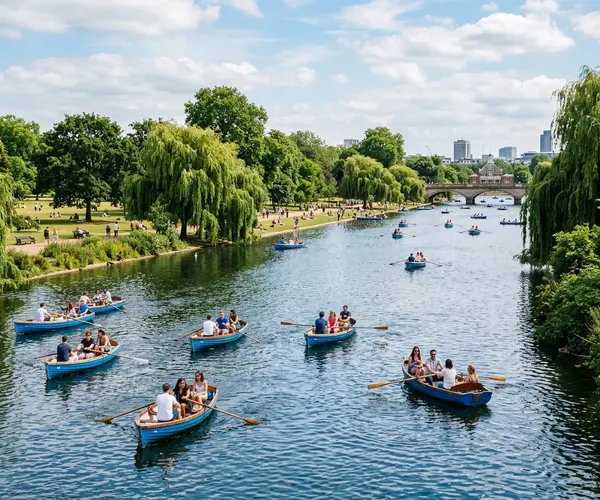
Pedalo and rowing boat hire is available from the boathouse on the northern shore during the warmer months. A half-hour on the water gives a different perspective on the park and is popular with families and visitors. The lake is calm and shallow enough to feel safe, even for those without boating experience.
The boating area extends across most of the lake, though swimmers' areas are clearly marked and separated. Wildlife is abundant on the water. Moorhens, coots, great crested grebes, and various duck species are all resident, and grey herons are a regular sight standing motionless on the banks.
The Serpentine Gallery
On the southern edge of the lake, just inside Kensington Gardens, the Serpentine Gallery has been one of London's leading contemporary art spaces since 1970. It occupies a former tea pavilion and hosts rotating exhibitions of international contemporary art.
Each summer, the gallery commissions a leading architect who has not previously built in the UK to design a temporary pavilion on its lawn. Past architects have included Zaha Hadid, Frank Gehry, Oscar Niemeyer, and Bjarke Ingels. The pavilions are free to visit and typically remain in place from June to October.
A second space, the Serpentine North Gallery (formerly the Magazine), opened in 2013 in a building renovated by Zaha Hadid across the bridge in Kensington Gardens. Both galleries are free to enter.
The Lake Through the Seasons
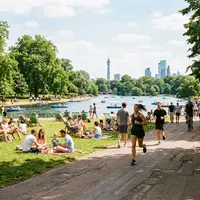
The Serpentine changes character throughout the year. Summer brings swimmers, boats, and sunbathers on the surrounding lawns. Autumn turns the lakeside trees to copper and gold, making it one of the best spots in London for seasonal colour. Winter draws hardy swimmers and joggers, while spring brings nesting birds and wildflowers along the banks.
At any time of year, the walk along the north shore of the Serpentine, from the Italian Gardens to the Lido, is one of the most pleasant routes in London. It is just one of many things to do across the park's 350 acres.