Two Rooms of Reproductions
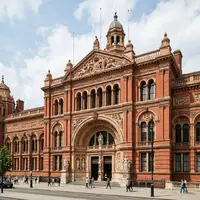
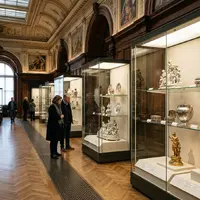
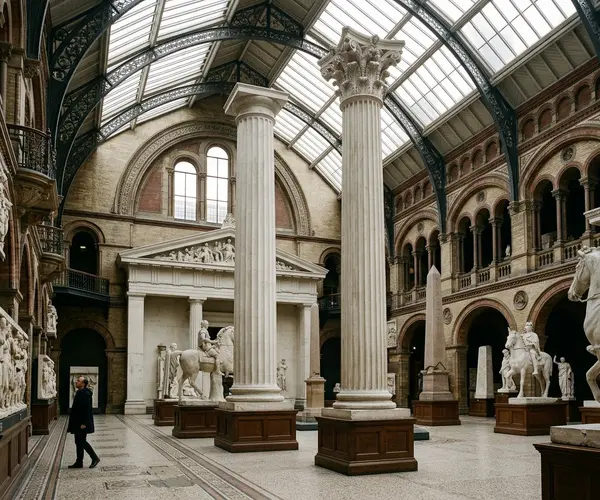
The Cast Courts at the V&A are two adjacent galleries (Rooms 46a and 46b) filled with plaster casts, electrotype copies and reproductions of famous European sculptures, architectural details and monuments. Walking into these rooms for the first time is a genuinely startling experience. The scale of the objects, the height of the ceilings and the sheer density of the displays create one of the most visually dramatic spaces in any London museum.
The casts were made in the 1860s and 1870s, when the museum arranged exchanges with other European institutions. The idea was simple but ambitious. If art students in London could not travel to Rome, Florence, Santiago de Compostela or Hildesheim, the museum would bring reproductions of those cities' masterpieces to them.
Trajan's Column
The most imposing object in the Cast Courts is the full-size reproduction of Trajan's Column, the 2nd-century Roman triumphal column that stands in Trajan's Forum in Rome. The original is nearly 30 metres tall, far too tall for the gallery ceiling. The V&A's solution was to cut the cast in two and display the lower half in one court and the upper half in the other.
The column is covered in a continuous spiral frieze depicting Emperor Trajan's military campaigns in Dacia. The level of detail in the cast is remarkable. You can study individual soldiers, horses, fortifications and battle scenes at close range in a way that is impossible with the original, which stands high above street level in Rome.
Michelangelo's David
A full-size plaster cast of Michelangelo's David stands in the West Court. At over five metres tall, it dominates the room. The cast was made from moulds taken directly from the original in Florence, so it reproduces every detail of the surface, from the veins on the hands to the texture of the hair.
Queen Victoria reportedly found the figure's nudity so shocking that a plaster fig leaf was commissioned and kept in readiness to be hung on the statue when she visited. The fig leaf is now on display in a separate case nearby.
Other Highlights
Beyond the two headline objects, the courts are packed with reproductions that reward close exploration. There are casts of Romanesque and Gothic church doorways from France, Spain and Germany. Tomb effigies, pulpits, baptismal fonts, column capitals and sections of cathedral facades line the walls and fill the floor space.
The Portico de la Gloria from Santiago de Compostela Cathedral, the doors of the Baptistery of Florence and the carved column from Hildesheim Cathedral are all represented at full scale. Each cast preserves details from the original that may have since been worn away by weather, pollution or restoration.
Why They Still Matter
When the casts were made, photography was in its infancy and international travel was expensive and difficult. These reproductions were a genuine educational tool, giving students and the public access to masterpieces they would otherwise never see.
Today, when high-resolution images of almost anything are available online, the casts serve a different purpose. They offer a physical, three-dimensional encounter with objects that most visitors will never see in their original locations. Standing next to a full-size Trajan's Column or Michelangelo's David, even in plaster, gives a sense of scale and presence that no photograph can convey. Like all of the V&A's permanent galleries, the Cast Courts are free to visit.