The Raphael Cartoons
The Raphael Cartoons are seven enormous designs painted by Raphael in 1515-16 as templates for tapestries to hang in the Sistine Chapel. Each cartoon is over three metres tall and depicts scenes from the Acts of the Apostles. They have been on loan to the V&A from the Royal Collection since 1865 and are displayed in a purpose-built gallery (Room 48a) with natural light.
These are among the most important Renaissance artworks outside Italy. Standing in front of them, you can see Raphael's brushwork at full scale and understand why these designs were considered masterpieces in their own right, not merely preparatory works.
The Cast Courts
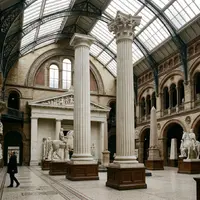
The Cast Courts (Rooms 46a and 46b) are two soaring galleries filled with plaster casts of famous sculptures and architectural features from across Europe. The most dramatic object is a full-size copy of Trajan's Column from Rome, so tall that it had to be split in two and displayed in separate halves. A full-size cast of Michelangelo's David stands nearby, along with reproductions of Romanesque church doorways, Gothic tombs and Renaissance pulpits.
The courts were created in the Victorian era so that British art students could study European masterpieces without travelling abroad. Today they function as one of the most visually overwhelming spaces in any London museum.
The Fashion Gallery
The V&A's Fashion Gallery (Room 40) holds one of the world's finest collections of clothing and fashion accessories, spanning from the 17th century to the present day. The displays are rotated regularly to protect the fragile textiles, so the specific garments on show change over time.
You might see 18th-century court dresses alongside 1960s Mary Quant miniskirts and contemporary haute couture. The gallery traces how clothing has reflected social change, technology and artistic expression across four centuries.
The Jewellery Gallery
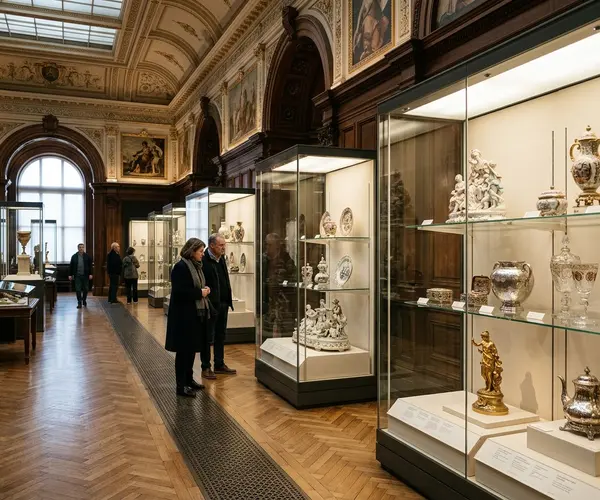
The William and Judith Bollinger Jewellery Gallery (Rooms 91 to 93) holds over 3,500 pieces spanning 3,000 years. The collection runs from ancient Egyptian amulets through medieval reliquaries to Art Nouveau brooches and modern designer pieces. The gallery itself is beautifully designed, with dramatic lighting and glass cases that let you examine each piece in detail.
Tipu's Tiger
Tipu's Tiger (Room 41) is a carved wooden automaton from the 1790s depicting a tiger mauling a European soldier. When a handle is turned, the soldier's arm moves and a pipe organ inside produces sounds imitating the groans of the victim and the growls of the tiger. It was made for Tipu Sultan of Mysore and captured by the British East India Company in 1799. It has been one of the V&A's most popular objects since the museum opened.
The Building Itself
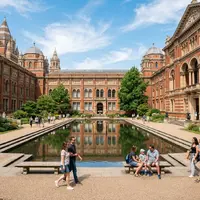
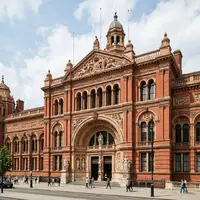
The V&A building is a work of art in its own right. The original structure, designed by Captain Francis Fowke and later extended by Aston Webb, is a masterpiece of Victorian architecture. The Ceramic Staircase, the Minton tiled refreshment rooms, the Morris, Gamble and Poynter rooms (which formed the museum's original restaurant) and the John Madejski Garden courtyard are all worth seeking out.