Turner's The Fighting Temeraire
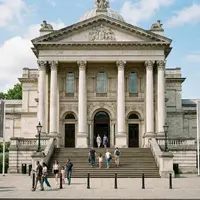
No visit to Tate Britain is complete without seeing the works of JMW Turner, and The Fighting Temeraire is among the most celebrated paintings in British art. It shows the old warship HMS Temeraire, a veteran of the Battle of Trafalgar, being towed by a steam tugboat to the breaker's yard. The painting captures a moment of transition between the age of sail and the industrial era, rendered in Turner's characteristic blaze of sunset colour.
The painting was voted the greatest painting in Britain in a 2005 public poll, and its emotional power is immediately apparent. The ghostly white form of the sailing ship, dwarfed by the dark, smoking tug, tells a story about the passing of an era that resonates far beyond its maritime subject matter.
Millais' Ophelia
John Everett Millais painted Ophelia in 1851-1852, and it has become one of the most recognisable images in Western art. The painting depicts the moment from Shakespeare's Hamlet when Ophelia, driven mad by grief, drowns in a stream surrounded by wildflowers. Millais painted the natural setting from life, spending months on the bank of the Hogsmill River in Surrey, and the botanical detail is extraordinary.
The model for Ophelia was Elizabeth Siddal, who posed in a bathtub filled with water heated by lamps beneath it. The lamps went out during one session and Siddal developed a severe cold, reportedly leading her father to threaten Millais with legal action. The painting's combination of beauty, tragedy and obsessive detail makes it a work that rewards close examination.
Constable's Flatford Mill
John Constable's scenes of the Suffolk countryside are among the most beloved landscape paintings in English art. Flatford Mill, depicting the area around his father's watermill on the River Stour, captures the working landscape of early 19th-century rural England with a freshness and honesty that was revolutionary at the time. Constable painted from direct observation of nature, a practice that was far less common than it might seem.
The painting's green palette, naturalistic cloud studies and attention to the specific character of a particular place make it a landmark in the development of landscape painting. Constable's influence can be traced through to the Impressionists and beyond.
Hockney's A Bigger Splash
David Hockney's A Bigger Splash (1967) is a striking contrast to the pastoral landscapes elsewhere in the collection. The painting shows a California swimming pool at the moment after someone has dived in, with a white splash erupting from the flat blue water. The geometric lines of the pool, diving board and modernist architecture are rendered in flat, bright acrylic colour, while the splash itself is painted with careful, almost obsessive detail.
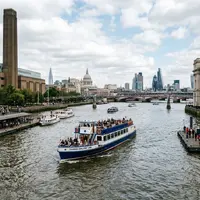
The painting captures something essential about 1960s California and about Hockney's own experience as a young British artist who had moved to Los Angeles. Its bold simplicity and pop-art clarity make it instantly memorable, and it has become one of the most reproduced British paintings of the 20th century. To see works at both Tate galleries in one day, consider taking the Tate Boat along the Thames between Tate Britain and Tate Modern.
Bacon's Triptychs
Francis Bacon's large-format triptychs are among the most powerful and disturbing works in the Tate Britain collection. Bacon's distorted, anguished figures, often caged within geometric structures or set against flat fields of colour, explore themes of isolation, suffering and the human body with an intensity that remains shocking decades after they were painted.
Works such as Three Studies for Figures at the Base of a Crucifixion and Triptych August 1972 demonstrate Bacon's ability to create images of extraordinary visceral impact. His influence on subsequent generations of figurative painters has been immense, and the Tate Britain holdings provide one of the best opportunities anywhere to engage with his work at length.
Beyond the Highlights
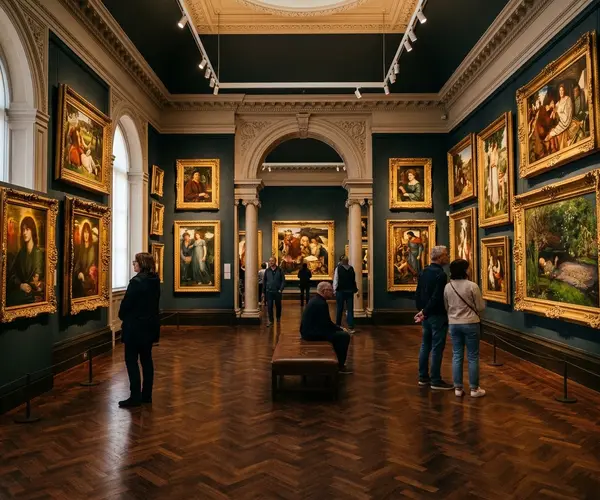
While these five artists represent the most famous works in the collection, Tate Britain holds thousands of paintings spanning every period of British art. William Hogarth's satirical narratives, Thomas Gainsborough's elegant portraits, the visionary works of William Blake, Stanley Spencer's eccentric religious scenes and Bridget Riley's optical abstractions are all part of the collection and all worth seeking out.