Temple Church
A rare 12th-century round church built by the Knights Templar in 1185, with marble effigies and a Da Vinci Code connection
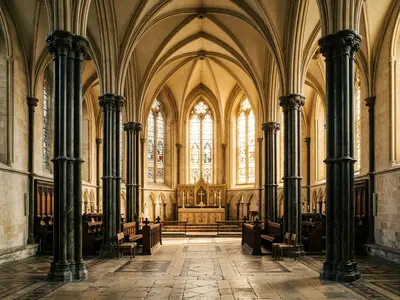
A rare 12th-century round church built by the Knights Templar in 1185, with marble effigies and a Da Vinci Code connection
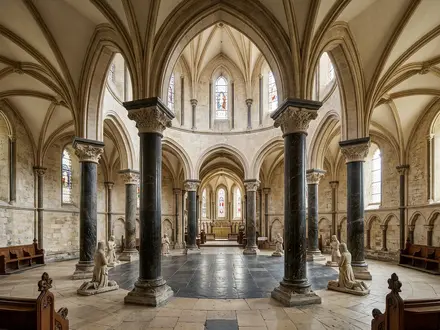
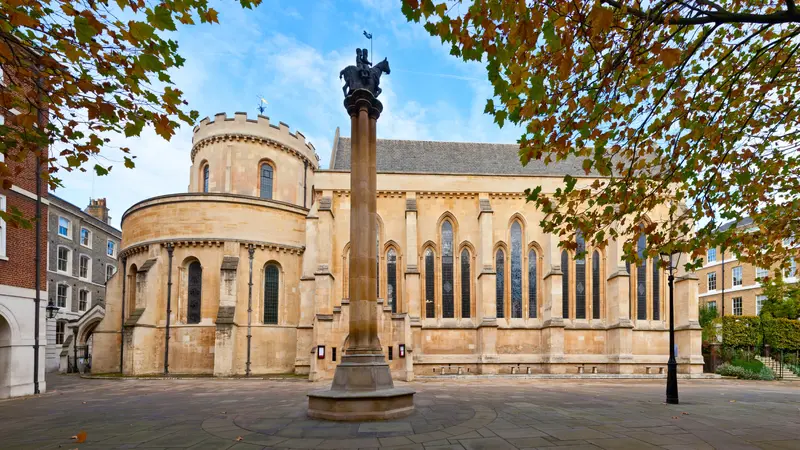
Temple Church is a round church built by the Knights Templar in 1185, hidden in the courtyards of the Inns of Court steps from Fleet Street. Its circular nave, modelled on Jerusalem's Holy Sepulchre, is one of only four medieval round churches still standing in England.
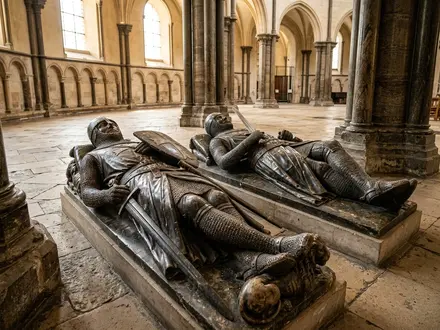
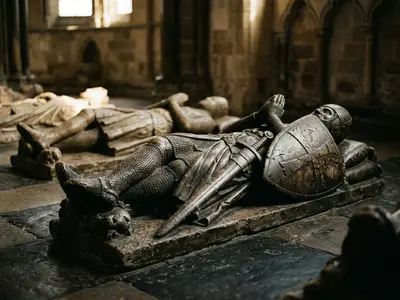
Nine marble knight effigies lie on the floor, crossed legs and drawn swords frozen for eight centuries. The real history — Templar rituals, English common law and near-destruction in the Blitz — outstrips its Da Vinci Code fame.
The Knights Templar arrived in London around 1128, initially settling in Holborn before moving to this Thames-side site in 1160. They built their church in the round, echoing the Church of the Holy Sepulchre in Jerusalem. The Round Church was consecrated in 1185 by Heraclius, Patriarch of Jerusalem, in a ceremony attended by King Henry II.
For over a century Temple Church served as the English headquarters of the Templar order — a place of worship, initiation and, some say, the safekeeping of treasure. When the Templars were suppressed in 1312, the church passed to the Knights Hospitaller and eventually to the lawyers of the Inner Temple and Middle Temple, who have occupied the site ever since.
The Round Church is the oldest part of the building, its ring of six Purbeck marble columns supporting a triforium arcade and rib-vaulted ceiling. Nine marble effigies dating from the 13th century lie on the floor, representing knights and associates of the Temple. Their identities are debated, but several are believed to include William Marshal, 1st Earl of Pembroke, regarded as the greatest knight of the medieval age.
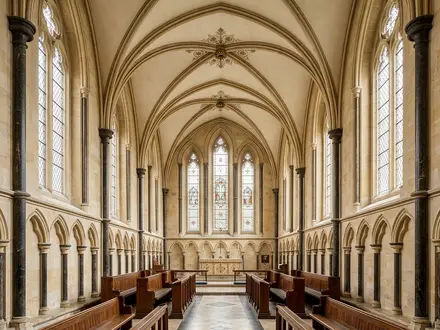
The rectangular chancel, added in 1240 by Henry III, is a masterpiece of Early English Gothic. Slender Purbeck marble columns contrast with pale Caen stone walls, and tall lancet windows flood the space with light — a sharp contrast to the fortress-like Romanesque of the Round Church.
On 10 May 1941, incendiary bombs struck Temple Church during the Blitz. The roof collapsed, the marble columns cracked in the heat, and the knight effigies were badly damaged. Restoration took 17 years, with the church reconsecrated in 1958 under architect Walter Godfrey.
The effigies were painstakingly repaired, though heat damage remains visible on several figures. A new Harrison & Harrison organ was installed in 2013, and the church continues to serve as an active place of worship for the two Inns of Court. Weekly services, choral evensong and concerts maintain a musical tradition stretching back to the Templars.
Entry is free if you attend a church service — regular services are held on Sundays and some weekdays
Temple Church keeps irregular hours and closes for private events, legal ceremonies and choir rehearsals. Always check the website or phone ahead to confirm the church is open on the day you plan to visit.
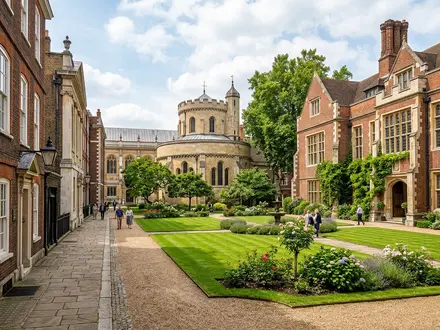
The church is hidden inside the Temple complex. Enter from Fleet Street through the narrow archway beside No.17, or from the Embankment via Tudor Street. Follow signs through the courtyards.
Regular services, including choral evensong, are open to all and free of charge. It is one of the best ways to experience the church's acoustics and atmosphere without paying admission.
In the south wall of the Round Church, a tiny stone recess is said to have been a punishment cell for disobedient Templars. It is easy to miss — ask the steward to point it out.
The Inner Temple Garden, stretching down to the Embankment, is one of the most peaceful green spaces in central London. It is open to the public on weekday lunchtimes from May to September.

London Travel Writer · 12+ years covering UK attractions and tourism
Last reviewed: March 5, 2026