A Hidden Masterpiece
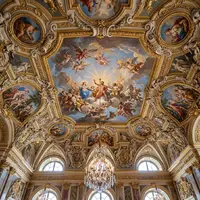
The Chapel of St Peter and St Paul sits in the Queen Mary Building of the Old Royal Naval College, directly opposite the Painted Hall. While the Painted Hall draws the larger crowds, the chapel is in many ways equally remarkable. Its cool neoclassical elegance provides a striking contrast to Thornhill's exuberant Baroque ceiling across the courtyard.
The chapel is free to enter and is often quieter than you might expect given its quality. Visitors who come to Greenwich primarily for the Painted Hall sometimes overlook it entirely, which is a shame, because the interior is one of the most beautiful church spaces in London.
The Fire and Rebuild
The original chapel was destroyed by fire in 1779. The blaze caused significant damage to the interior, and the hospital authorities decided to commission a complete redesign rather than a restoration. They chose James Stuart, known as 'Athenian' Stuart because of his pioneering studies of ancient Greek architecture.
Stuart's design was revolutionary for its time. He drew directly on Greek models rather than the Roman-influenced classicism that had dominated English architecture for decades. The result was a lighter, more refined interior than anything the Baroque architects of the original hospital had produced. Stuart died in 1788, a year before the chapel was completed, and the final details were overseen by William Newton.
The Interior
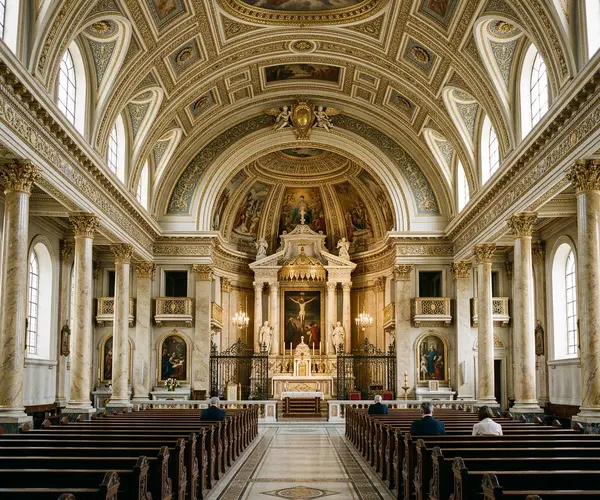
The chapel interior is dominated by a palette of soft blues, pinks and whites, with gilded highlights. The ceiling is a series of delicate plaster panels incorporating classical motifs. The overall effect is airy and graceful, a world away from the dense, muscular painting of the Painted Hall.
The altarpiece is a painting of the Shipwreck of St Paul by Benjamin West, an American-born artist who became president of the Royal Academy. The painting shows the apostle Paul surviving a shipwreck on Malta, an appropriate subject for a chapel that served naval pensioners who had faced the dangers of the sea throughout their careers.
The Pulpit and Lectern
The carved wooden pulpit and lectern are original features from Stuart's design. They are finely detailed, with classical columns and acanthus leaf carving. The font is made of marble, and the overall quality of craftsmanship throughout the chapel is exceptionally high.
How It Was Used
The chapel served as the place of worship for the naval pensioners who lived at the Royal Hospital for Seamen from the 1690s until 1869. After the hospital closed, it continued to serve the Royal Naval College that occupied the buildings from 1873 to 1998. Regular services are still held today, and the chapel is used for concerts and other events.
The acoustic properties of the space are excellent, and musical performances here benefit from the hard plaster surfaces and the rectangular proportions of the room. If you have the opportunity to attend a concert or recital in the chapel, it is well worth doing.
Visiting the Chapel
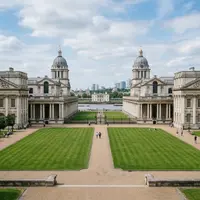
The chapel is open daily and free to enter. It is located in the Queen Mary Building on the east side of the college grounds, directly opposite the King William Building that houses the Painted Hall. The two buildings are mirror images of each other externally, with matching domes, but their interiors could hardly be more different.
Allow around 20 minutes to see the chapel properly. The combination of the chapel and the Painted Hall, two contrasting approaches to decorating grand public spaces, makes for one of the most rewarding architectural experiences in London. Together, they demonstrate the shift in taste from the Baroque to the neoclassical that transformed British architecture in the 18th century.