Medieval Merchant's House
A restored 1290 merchant's townhouse on French Street — one of the finest surviving medieval dwellings in England
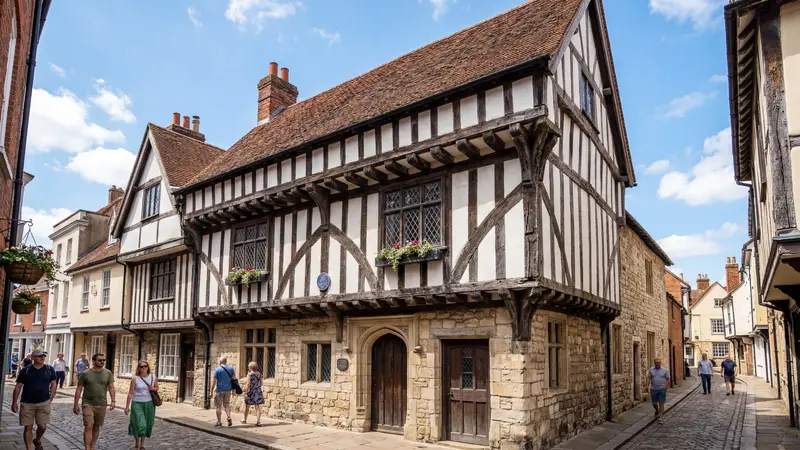

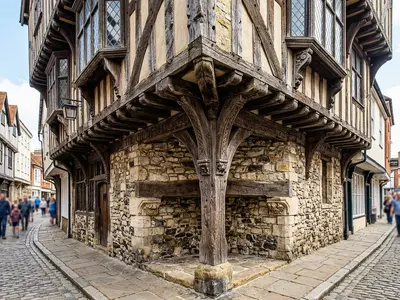
A restored 1290 merchant's townhouse on French Street — one of the finest surviving medieval dwellings in England
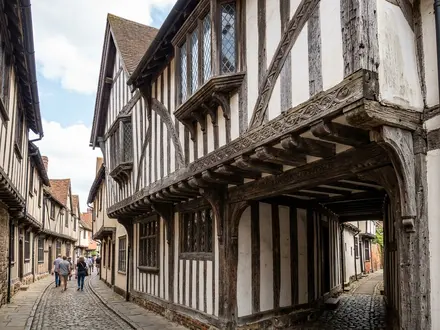
Built around 1290 for wine merchant John Fortin, the Medieval Merchant's House on French Street is the only surviving English townhouse of its type to remain substantially as first built. Its stone walls, vaulted undercroft and jetted upper floor have stood for over 730 years in what was once one of England's busiest trading ports.
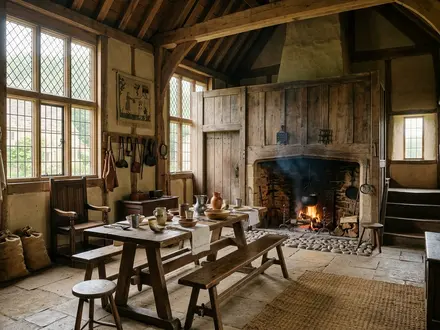
Visitors step into a faithfully restored 14th-century interior complete with replica furnishings, a central hearth and a shop front that once opened directly onto the street. The house reveals how a prosperous medieval trader lived, worked and stored his Gascon wine beneath his own floorboards.
The Medieval Merchant's House was built around 1290 for John Fortin, a prosperous wine merchant who traded with Bordeaux. Southampton was then one of England's wealthiest ports, grown rich from commerce with the continent following Henry II's marriage to Eleanor of Aquitaine, which opened access to the vineyards of Gascony. By 1300, the town handled more wine imports than any English port except London.
Fortin built his house in stone — unusual for a domestic property of this period — with a timber-fronted shop at street level and living quarters above. The design was typical of successful medieval merchants: business on the ground floor, private life upstairs, and valuable stock stored in a vaulted cellar below. In 1338, a French raid devastated much of Southampton, and the house shows evidence of structural repairs from that period.
Over the following centuries the building was divided into cottages, housed travelling actors, and served time as the Bull's Head public house. German bombing in 1940 stripped away later modifications and revealed the medieval structure beneath. English Heritage undertook a careful restoration in the 1980s, returning the interior to its probable mid-14th-century appearance using archaeological evidence and documentary records.
The ground floor preserves the layout of the original shop, where Fortin would have conducted business directly with customers through an open street-front counter. Behind the shop lies a private chamber with a decorated ceiling, separated from the commercial space by a timber partition. A central hearth provided warmth before a chimney was added later in the 14th century.
Below ground, the vaulted stone undercroft is the most atmospheric space in the building. Designed to maintain a constant cool temperature for storing wine barrels, it demonstrates the practical ingenuity of medieval construction. The brick floor is an 18th-century addition, but the stone vaulting above is original.
Upstairs, the east bedchamber juts out over French Street on timber supports — a jetted construction technique that added valuable floor space. The gallery linking the upper rooms and the original builder's marks visible on the timbers are details that reward close inspection.
The Medieval Merchant's House sits within Southampton's Old Town, surrounded by historic sites. The Tudor House and Garden is just 100 metres away on Bugle Street, offering another window into the town's domestic history. Sections of the medieval town walls, among the best preserved in England, are accessible on foot within minutes.
Westgate, one of the original entry points to the walled town, stands at the top of the street. The SeaCity Museum on Havelock Road tells the story of Southampton's maritime heritage, including the Titanic connection. For a longer excursion, Netley Abbey — a ruined 13th-century Cistercian monastery — lies three miles east along Southampton Water and is also managed by English Heritage.
English Heritage members enter free. Children under 5 admitted free of charge.
The house opens only on selected weekends between May and October. Always check the English Heritage website for confirmed dates before making the journey to Southampton.
The Tudor House and Garden on Bugle Street is a two-minute walk away. Together the two houses offer a fascinating contrast between medieval and Tudor domestic life.
Southampton's medieval town walls are among England's most complete. A signposted walk runs from Westgate past the Arcades and along the western shore in about 30 minutes.
The vaulted wine cellar beneath the house is the most atmospheric space. Take a few minutes to appreciate the original 13th-century stonework and imagine barrels of Gascon wine stored here.
The house is compact and best enjoyed without crowds. Earlier opening weekends in May and June tend to be quieter than the peak summer months of July and August.

London Travel Writer · 12+ years covering UK attractions and tourism
Last reviewed: June 2, 2026