Diana's Home at the Palace
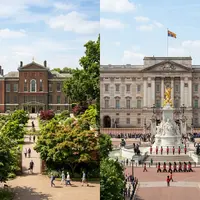
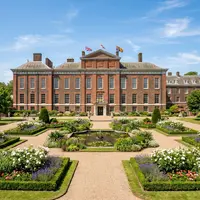
Kensington Palace became Princess Diana's home following her marriage to Prince Charles in July 1981. The couple moved into Apartments 8 and 9, a large interconnected residence on the western side of the palace complex. These apartments had previously been used as office and storage space and required substantial renovation before becoming fit for a royal household.
The work took around two years, during which the couple lived at Buckingham Palace. By 1983, Kensington Palace was ready, and it became the primary London residence where Diana would spend the next 14 years. It was here that she raised Prince William, born in 1982, and Prince Harry, born in 1984.
Life at Kensington Palace
During her years at Kensington Palace, Diana transformed her apartments into a family home that balanced royal formality with a warmer, more personal atmosphere. She was known for making the space feel less institutional than other royal residences, filling rooms with personal photographs and creating comfortable spaces for her sons.
The palace also served as the base for Diana's charitable work. She hosted meetings, welcomed guests and planned her extensive programme of public engagements from her private offices within the apartments. The location gave her easy access to central London while maintaining a degree of privacy within the palace grounds and Kensington Gardens.
After her separation from Prince Charles in 1992, Diana retained Apartments 8 and 9 as her official residence. She continued to live there as an independent member of the Royal Family, and the palace became closely associated with her public identity during the final years of her life.
The Gates and Public Mourning
When Princess Diana died in a car accident in Paris on 31 August 1997, Kensington Palace became the centre of an extraordinary outpouring of public grief. Thousands of people gathered at the palace gates, leaving flowers, cards, candles and personal tributes that eventually stretched across vast areas of the surrounding gardens.
The sea of flowers at the Kensington Palace gates became one of the defining images of that period. Estimates suggest that around a million bouquets were left at the palace in the days following her death. The spontaneous memorial demonstrated the depth of public feeling for Diana and cemented Kensington Palace's association with her memory.
The Sunken Garden Memorial
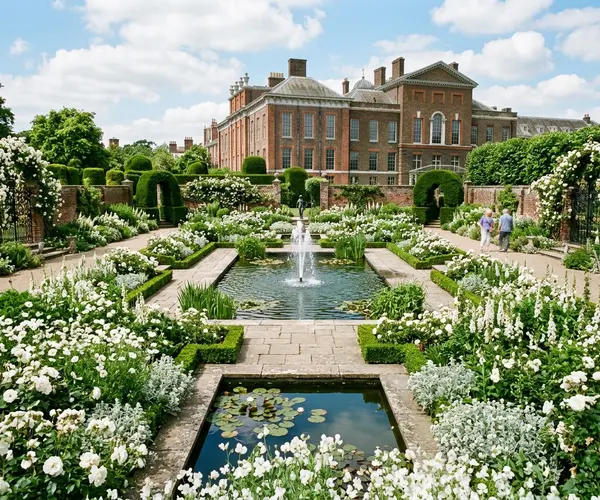
The Sunken Garden at Kensington Palace has become the most significant permanent tribute to Diana on the palace grounds. Originally created in 1908 in the style of a formal English garden, it was one of Diana's favourite spots. She was often seen walking past the garden during her years at the palace. The palace itself dates back over 400 years, having served as a royal residence since William III purchased it in 1689.
In 2017, to mark the 20th anniversary of her death, the garden was temporarily replanted with white flowers and foliage inspired by Diana's style and the tributes left at the palace gates in 1997. This redesign proved so popular that elements of the white garden planting have been maintained.
On 1 July 2021, which would have been Diana's 60th birthday, Princes William and Harry unveiled a statue of their mother in the Sunken Garden. The bronze statue depicts Diana surrounded by three children, representing the breadth of her charitable work and her connection to young people. The statue now serves as a permanent memorial within the palace grounds.
Visiting Today
Visitors to Kensington Palace can walk through the Sunken Garden and view the Diana statue as part of their visit to the palace grounds. While Apartments 8 and 9 remain private and are not open to the public, the areas of the palace and gardens associated with Diana are accessible and clearly marked for those wishing to pay their respects.