From Jacobean Mansion to Royal Palace
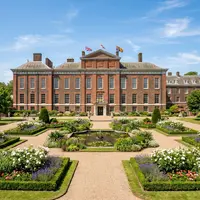
The building that stands today as Kensington Palace began life in 1605 as a relatively modest Jacobean mansion. It was known as Nottingham House, named after the Earl of Nottingham who built it. The house occupied a rural position on the western outskirts of London, surrounded by open land and market gardens rather than the dense urban landscape that exists today.
The transformation from private house to royal palace came in 1689 when King William III and Queen Mary II were looking for a new London residence. William suffered from asthma and found the damp, smoky air around Whitehall Palace intolerable. The cleaner air of Kensington, well away from the Thames and the city's pollution, made Nottingham House an appealing alternative.
Christopher Wren's Redesign
William III purchased the house and immediately commissioned Sir Christopher Wren, the architect behind St Paul's Cathedral, to enlarge and improve it. Wren added the King's and Queen's State Apartments, the Clock Court and the entrance from the south. His approach was practical rather than grandiose. He kept the existing structure where possible and added wings and pavilions to create a palace that was comfortable and functional rather than imposing.
The work was carried out at remarkable speed. Wren had parts of the palace ready for occupation within months, though this haste led to some structural problems. A section of newly built walls collapsed during construction, and the speed of the work meant that some elements were not as refined as Wren's other projects.
The Georgian Additions
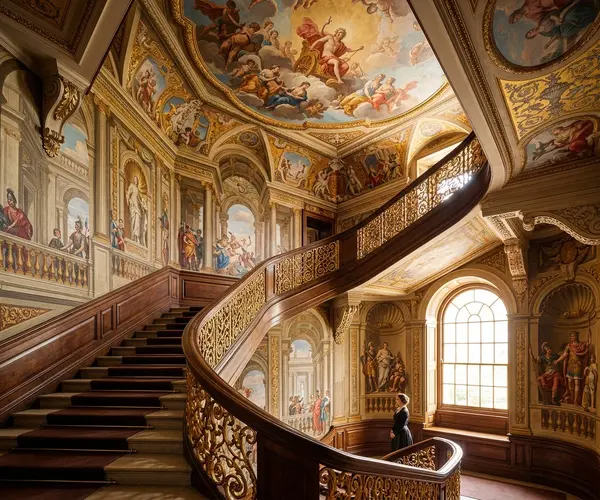
After William III's death in 1702, the palace continued to be a royal residence under Queen Anne, George I and George II. Each monarch made their own additions and modifications. George I commissioned the artist William Kent to decorate the King's Staircase and several of the State Rooms in an elaborate Italianate style that can still be seen today.
George II was the last reigning monarch to use Kensington Palace as his primary residence. After his death in 1760, the palace fell out of favour as a royal headquarters, though members of the extended Royal Family continued to live there.
Queen Victoria's Birthplace
One of the most significant moments in the palace's history came on 24 May 1819, when Princess Victoria was born in a ground-floor room. She spent her childhood at Kensington Palace under what she later described as the "Kensington System," a strict set of rules imposed by her mother and her mother's comptroller, Sir John Conroy.
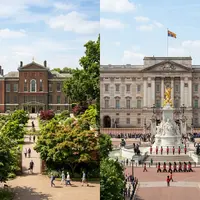
On 20 June 1837, the 18-year-old Victoria was woken at Kensington Palace with the news that she had become Queen following the death of William IV. One of her first acts as monarch was to request a room of her own, something she had never been allowed at Kensington. She moved to Buckingham Palace shortly afterwards and never returned to Kensington as a resident. The two palaces have served very different roles in royal life ever since.
The Modern Palace
Following Victoria's departure, parts of the palace fell into disrepair. By the late 19th century, Queen Victoria authorised the opening of the State Rooms to the public, beginning the palace's second life as a visitor attraction. Since then, it has been maintained by what is now Historic Royal Palaces.
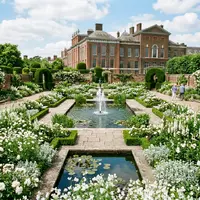
Today, Kensington Palace is both a working royal residence and one of London's most visited historic sites. The building that started as a modest Jacobean house over four centuries ago has been continuously adapted, extended and renovated, layering centuries of royal history into a single complex that visitors can walk through and residents still call home.