Guildhall
The ceremonial heart of the City of London for over 800 years — medieval Great Hall, Gog and Magog statues, art gallery and Roman amphitheatre remains
The ceremonial heart of the City of London for over 800 years — medieval Great Hall, Gog and Magog statues, art gallery and Roman amphitheatre remains
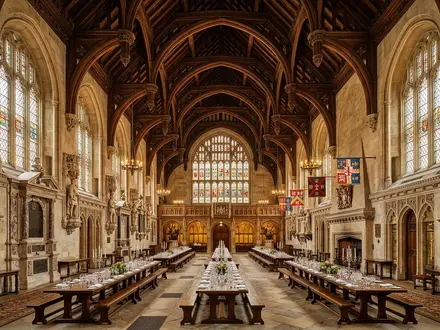
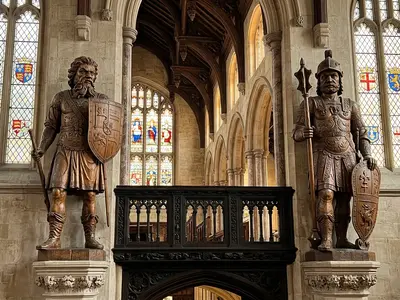
Guildhall has been the ceremonial heart of the City of London for over 800 years. Its medieval Great Hall — one of the largest in England — has hosted state banquets, treason trials and the Lord Mayor's Banquet, all watched over by the wooden giants Gog and Magog.
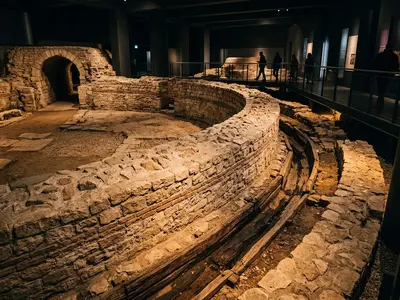
Excavation in 1988 uncovered London's Roman amphitheatre beneath the art gallery, dating to around AD 70. Today you can explore the Great Hall, the Pre-Raphaelite paintings and the amphitheatre ruins in a single visit.
The Great Hall is one of London's most impressive medieval interiors. Built between 1411 and 1440, it stretches 46 metres long and 15 metres wide — large enough for the lavish banquets and civic ceremonies that have defined City life for centuries. The Lord Mayor's Banquet, held every November, still fills the hall with hundreds of guests, including the Prime Minister.
The hall has been damaged and rebuilt twice. The Great Fire of 1666 gutted the interior but left the walls standing, and Sir Christopher Wren oversaw repairs. Incendiary bombs destroyed the roof again in December 1940. The current roof, by Sir Giles Gilbert Scott, was completed in 1954.
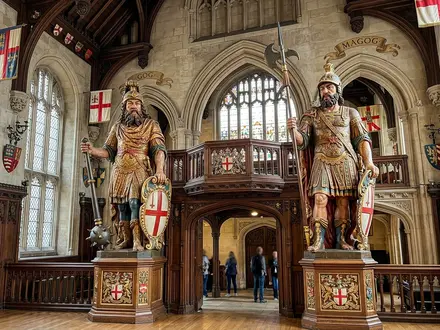
At the western end of the Great Hall stand Gog and Magog, wooden giants said to be mythical guardians of the City. Legend holds they were ancient Britons forced to serve as porters at the gates of a royal palace. Figures have stood here since the reign of Henry V, and replicas are carried through the streets during the Lord Mayor's Show each November.
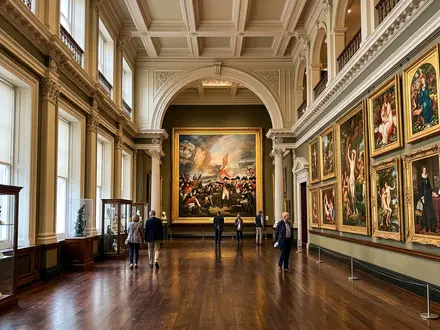
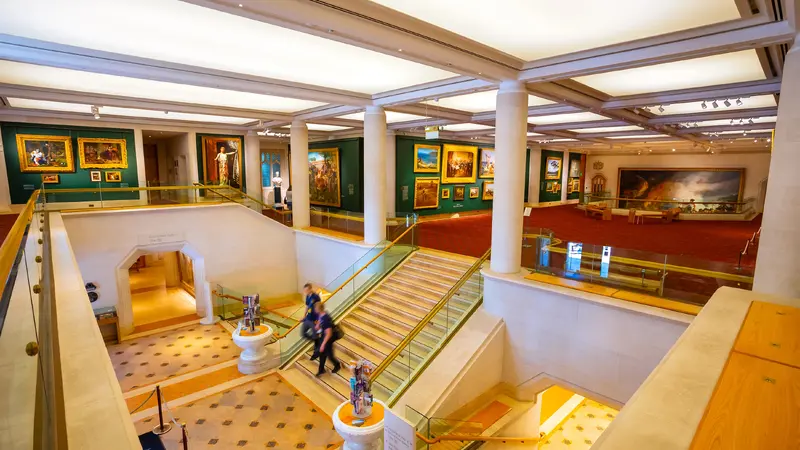
Adjacent, the Guildhall Art Gallery houses the Corporation of London's collection. The standout is John Singleton Copley's vast Defeat of the Floating Batteries at Gibraltar — so large it has its own room. The Pre-Raphaelite holdings are strong, with works by Rossetti, Holman Hunt and Millais.
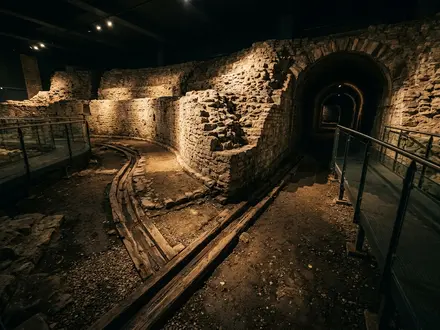
Beneath the art gallery, a darkened basement reveals one of London's most unexpected archaeological treasures. The remains of Londinium's amphitheatre were discovered in 1988 during gallery construction. Dating from around AD 70, the arena seated up to 6,000 spectators watching gladiatorial combat, animal hunts and public executions.
The excavated walls, drainage channels and entrance tunnel are displayed in situ, with atmospheric lighting and digital projections suggesting the original scale. A black circle in the paving of Guildhall Yard above marks the arena's outline — most visitors walk over it without realising what lies beneath.
All areas of the Guildhall open to the public are free to visit — no tickets or booking required
The Great Hall closes regularly for civic functions, banquets and City Corporation events. Always check the Guildhall website or phone ahead to confirm the hall is open on your planned date.
A black circle set into the paving stones of Guildhall Yard marks the outline of the Roman amphitheatre below. Most visitors walk straight over it — look down before you go inside.
The Guildhall Art Gallery is free and rarely crowded. The Pre-Raphaelite paintings and the enormous Copley canvas are well worth 30 minutes, and the Roman amphitheatre is accessed through the gallery.
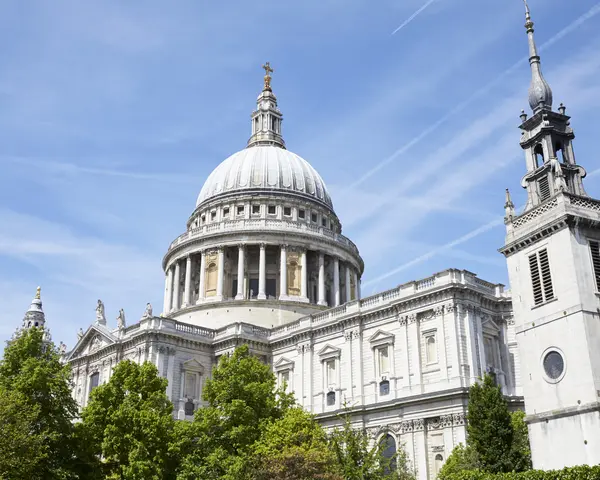
Guildhall is a short walk from the Bank of England, the Royal Exchange and St Paul's Cathedral. A morning loop taking in all four makes an excellent free half-day in the City.
The Guildhall area is busiest with City workers at lunchtime on weekdays. For the quietest experience, arrive in the morning or visit on a Saturday when the financial district empties out.

London Travel Writer · 12+ years covering UK attractions and tourism
Last reviewed: March 5, 2026