Canary Wharf Winter Lights
London's largest annual light art festival — free illuminated installations transforming Canary Wharf's towers and waterways each January
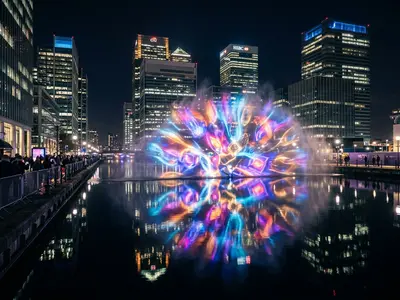
London's largest annual light art festival — free illuminated installations transforming Canary Wharf's towers and waterways each January
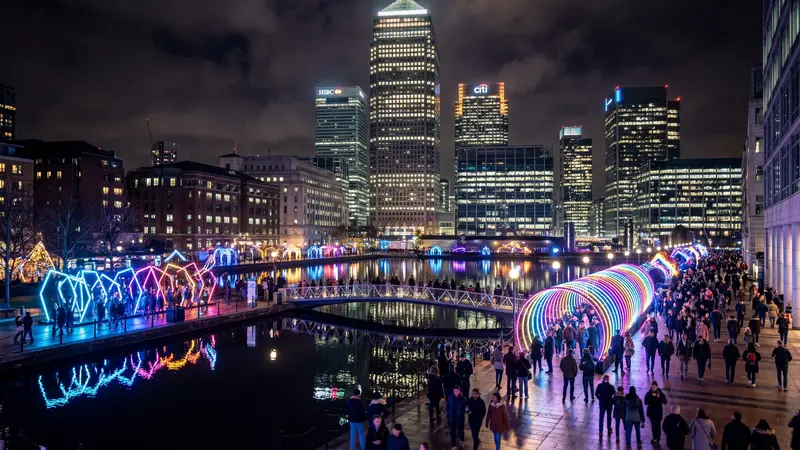
Every January, Canary Wharf's glass towers and dock basins become an open-air gallery of illuminated art. Winter Lights launched in 2017 with six small installations and has grown into one of the UK's most established light festivals, showcasing 16 works by international artists across its tenth edition in 2026.
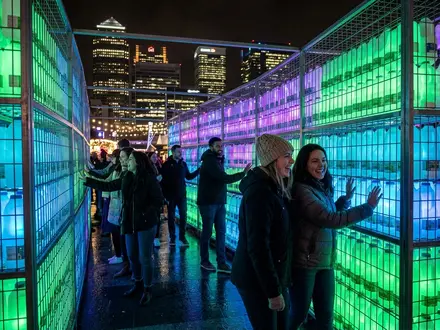
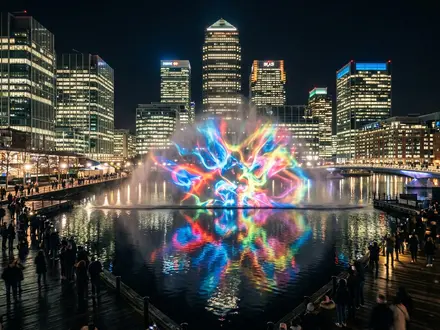
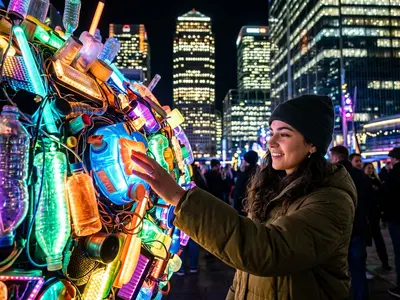
The trail winds through plazas, gardens and waterside walkways, with installations ranging from interactive sculptures made of recycled milk bottles to projections cast onto mist rising from the docks. Everything is free, no booking is required, and the route takes roughly two hours to complete at a comfortable pace.
Winter Lights began in 2017 as a modest experiment to brighten Canary Wharf's darkest month. That first edition featured six small installations scattered across the estate's plazas and walkways. The idea was simple: commission artists to create illuminated works that would draw visitors to the Docklands after office hours and give January evenings a reason to venture outdoors.
The festival grew rapidly. By its tenth edition in 2026, Winter Lights had showcased over 160 installations by artists from more than 20 countries. The event now attracts visitors from across London and beyond, with the trail winding through the estate's distinctive landscape of glass towers, dock basins and public gardens. Five works from previous festivals proved so popular that they were permanently installed on the estate.
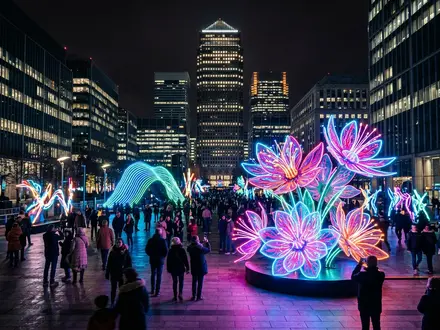
The trail typically features 15 to 20 installations spread across a walkable route that takes around two hours. Works range from towering interactive sculptures to intimate projections hidden in unexpected corners. The 2026 Dreamscape edition included Aerosculpture's FloWeR PoWeR at Westferry Circus, where hypnotic spirals of colour bloomed like digital flowers, and Liz West's Colour Rush, which bathed walkways in vivid shifting hues.
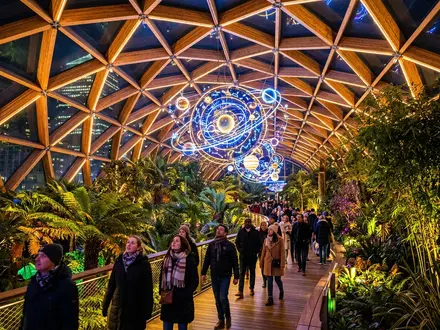
The waterside locations are particular highlights. Eden Dock becomes a stage for mist-screen projections, while Cabot Square's central fountain provides a backdrop for large-scale sculptural works. Crossrail Place Roof Garden hosts installations among its tropical plants, creating an immersive experience beneath the timber lattice canopy. Pick up a free trail map from event stewards stationed around the estate or download one from the Canary Wharf website before visiting.
The Museum of London Docklands is a five-minute walk north on West India Quay, housed in a Georgian sugar warehouse. It is free to enter and makes a good warm-up before the lights switch on at 5pm. The Canary Wharf estate itself holds over 100 permanent public artworks, so arriving early to walk the daytime art trail before the festival installations illuminate is worthwhile.
Greenwich is two stops away on the DLR. The Cutty Sark, National Maritime Museum and Royal Observatory are all within walking distance, making it easy to spend an afternoon in maritime Greenwich before returning to Canary Wharf for Winter Lights after dark.
Winter Lights is entirely free with no tickets or booking required. Simply turn up any evening during the festival dates.
The trail is quietest between 5pm and 6pm on weekday evenings when office workers are still heading home. You will have more space for photos and shorter waits at interactive installations.
A downloadable map is available on the Canary Wharf website each January. It marks every installation and suggests a walking route that covers the full trail efficiently.
The trail is entirely outdoors and takes around two hours. January evenings are cold, so layer up. Flat shoes help on the waterside walkways, which can be slippery after rain.
Over 60 restaurants line the dock basins, many with views of the installations. Book a waterside table for after the trail — most restaurants are open until 10pm or later.
The riverboat to Canary Wharf Pier offers views of the illuminated skyline on arrival. Services run from central London piers including Embankment and Greenwich.

London Travel Writer · 12+ years covering UK attractions and tourism
Last reviewed: June 2, 2026