Canary Wharf
London's reinvented docklands — a gleaming financial district with over 100 public artworks, waterside dining and five shopping malls
London's reinvented docklands — a gleaming financial district with over 100 public artworks, waterside dining and five shopping malls
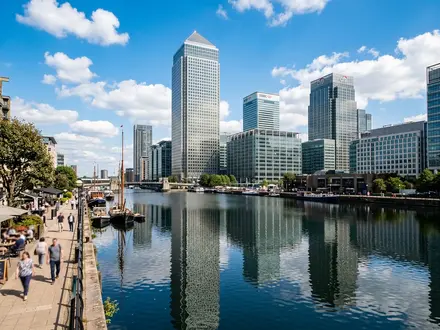
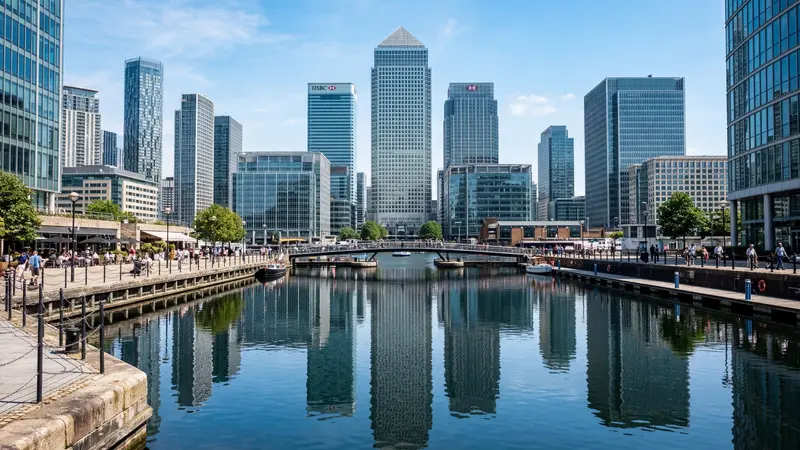
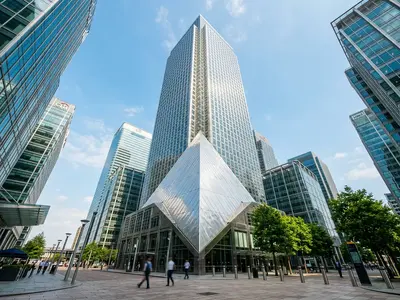
Canary Wharf occupies 97 acres of the former West India Docks, where sugar and rum from the Caribbean were unloaded from the 1800s until the docks closed in 1980. One Canada Square, the 235-metre stainless steel tower designed by Cesar Pelli, was the tallest building in the United Kingdom for nearly two decades after its completion in 1991.
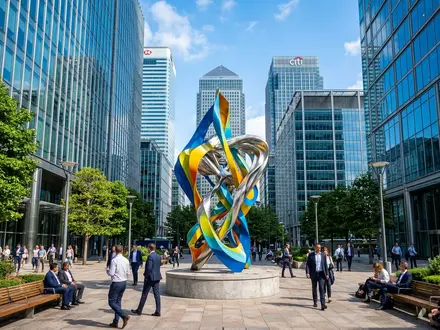
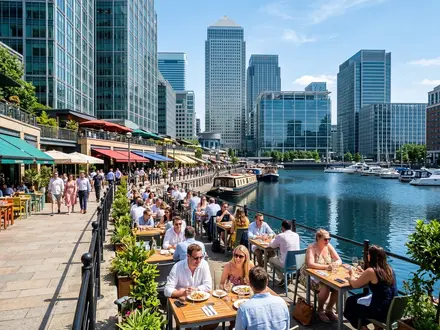
Today the estate holds more than 100 pieces of public art — the largest outdoor collection in London — alongside five interconnected shopping malls, over 300 shops and more than 60 restaurants. Visitors can walk the art trail, explore the waterside gardens and eat well without spending a penny on admission.
The West India Docks opened in 1802 as a secure compound for unloading sugar, rum and mahogany from the Caribbean. For nearly two centuries they were among the busiest commercial docks in the world, but containerisation made them obsolete and the last ships departed in 1980. The London Docklands Development Corporation was created in 1981 to regenerate the area, and in 1988 Canadian developer Olympia and York began construction on what would become Canary Wharf.
One Canada Square was completed in 1991, its distinctive pyramidal cap instantly recognisable on the London skyline. The project nearly collapsed when Olympia and York went bankrupt in 1992, but recovery came with the extension of the Jubilee line in 1999 and the arrival of major financial tenants including HSBC, Citigroup and Barclays. The estate now covers 97 acres and houses over 120,000 workers in some of London's most striking modern architecture.
The public art trail is the standout attraction. Over 100 works are scattered across the estate, from Henry Moore's Draped Seated Woman in Cabot Square to Lynn Chadwick's Couple on Seat and Konstantin Grcic's Six Public Clocks. A free art map is available from the Canary Wharf website. In January, the annual Winter Lights festival transforms the estate with large-scale illuminated installations that draw visitors from across London.
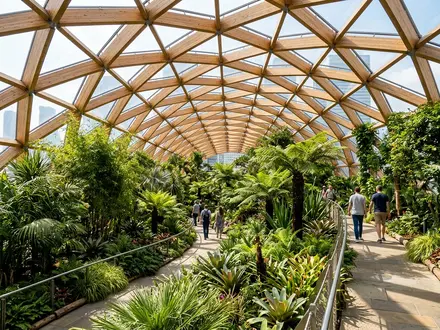
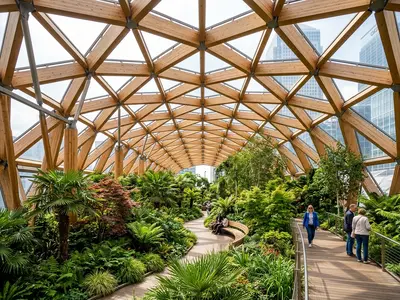
Crossrail Place Roof Garden is a hidden highlight. The 300-metre timber lattice roof designed by Foster + Partners shelters a planted garden above the Elizabeth line station, with species grouped by their continent of origin. The five shopping malls offer everything from Montblanc and Paul Smith to Zara and Boots, connected by covered walkways so you can browse in any weather.
The Museum of London Docklands is a five-minute walk north on West India Quay, housed in a Georgian sugar warehouse and telling the full story of the Thames and its docks from Roman times to the present. Admission is free. The Emirates Air Line cable car crosses the Thames from the nearby Royal Docks to Greenwich Peninsula, offering aerial views of the estate and the river.
Greenwich is two stops away on the DLR. The Cutty Sark, National Maritime Museum and Royal Observatory are all within walking distance of Greenwich station, making it easy to combine Canary Wharf with a half-day exploring maritime Greenwich.
Canary Wharf is a public estate with free access to all outdoor areas, gardens and art installations. No tickets or booking required.
Download the art trail map from the Canary Wharf website before visiting. It marks all 100-plus works across the estate and makes a self-guided tour straightforward.
Crossrail Place Roof Garden is easy to miss. Enter via the upper level of the Elizabeth line station building. The garden is open daily and completely free.
The annual Winter Lights festival in January fills the estate with large illuminated artworks. It runs for about two weeks and is free to attend after dark.
Many restaurants along the old dock basins have outdoor terraces. Arrive before 12:30 on weekdays to beat the office lunch rush and secure a waterside table.
The Elizabeth line reaches Liverpool Street in 6 minutes and Paddington in 17 minutes. It is often faster than the Jubilee line for central London connections.

London Travel Writer · 12+ years covering UK attractions and tourism
Last reviewed: March 9, 2026