Banqueting House
The sole survivor of Whitehall Palace — Inigo Jones's Palladian masterpiece with Rubens ceiling paintings and the site of Charles I's execution
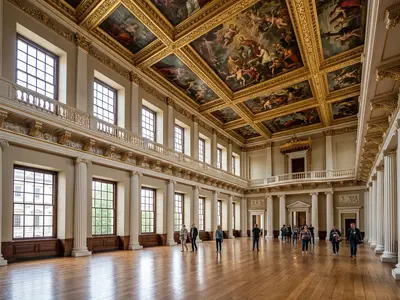
The sole survivor of Whitehall Palace — Inigo Jones's Palladian masterpiece with Rubens ceiling paintings and the site of Charles I's execution
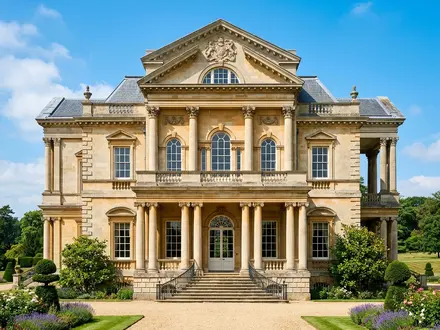
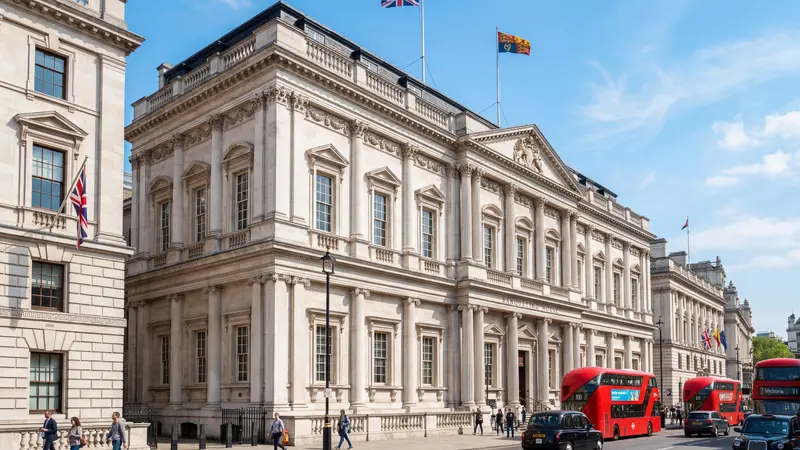
Banqueting House is the only surviving building from the Palace of Whitehall, which served as the main London residence of English monarchs from 1530 until a fire destroyed it in 1698. Completed in 1622, Inigo Jones's design introduced Palladian architecture to England — a double-cube hall measuring 110 feet long, 55 feet wide and 55 feet high.
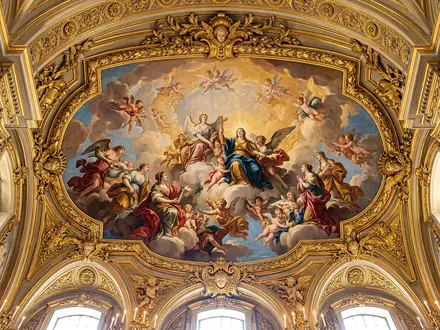
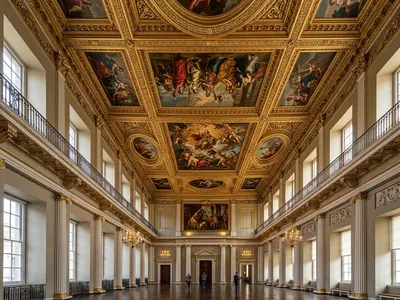
The centrepiece is a set of nine ceiling canvases painted by Peter Paul Rubens, commissioned by Charles I and installed in 1636. Visitors stand beneath 225 square metres of baroque art glorifying the Stuart monarchy, in the same hall from which Charles I walked to his execution in 1649.
The Banqueting House was completed in 1622, designed by Inigo Jones for James I at a cost of £15,618. Jones had studied architecture in Italy, particularly the work of Andrea Palladio, and this building became the first in England to follow purely classical principles. Its facade of Portland stone — later refaced by John Soane in the 1830s — brought the language of Roman columns, pilasters and entablatures to a London streetscape still dominated by timber-framed Tudor buildings.
James I commissioned the hall as a setting for court masques, diplomatic receptions and state ceremonies. His son Charles I continued this use and in 1629 commissioned Peter Paul Rubens to paint the ceiling. Rubens completed the nine canvases in his Antwerp studio by 1634, and they were installed in early 1636. The three central panels celebrate the union of England and Scotland under James I, depicting the wise rule of kingship and the apotheosis of the monarch ascending to heaven.
The building's most notorious event came on 30 January 1649, when Charles I was led through the hall and out through a first-floor window onto a scaffold erected on Whitehall. The ceiling he had commissioned — showing his father's divine ascent — was among the last things he saw.
The main hall is the centrepiece. Standing on the ground floor and looking up at Rubens's ceiling is the defining experience, and mirrors positioned around the room allow visitors to study the paintings without craning their necks. The nine canvases cover the entire ceiling area of 225 square metres, with the central oval depicting the apotheosis of James I surrounded by allegorical figures representing peace, plenty and the triumph of royal wisdom.
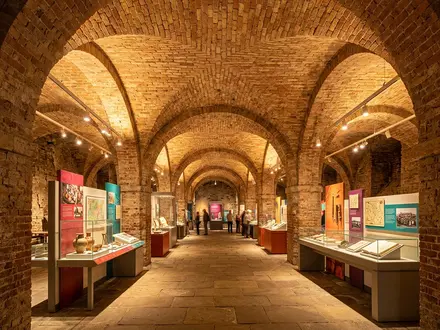
The undercroft beneath the main hall is worth exploring. This vaulted brick space dates from the original 1622 construction and was used as a drinking den by James I's courtiers. It now houses displays on the building's history, the Stuart court and the Civil War period.
An audio guide is included with admission and provides detailed commentary on the ceiling paintings, the architectural design and the events of 1649. The interpretation panels throughout the hall give context to each of Rubens's nine compositions.
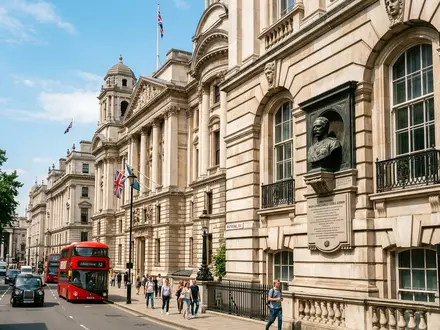
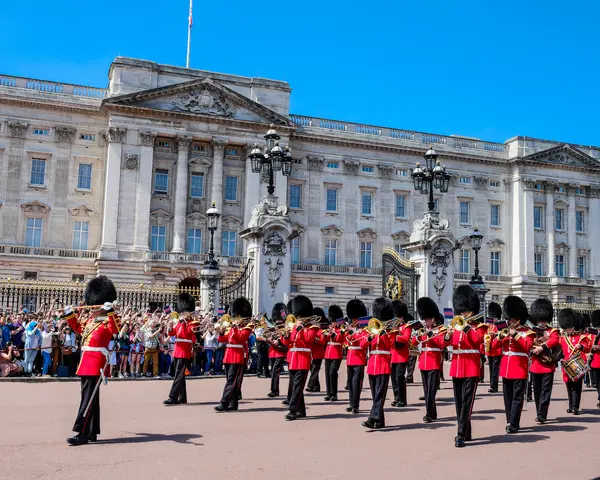
Horse Guards Parade is directly opposite, where the Changing of the Guard ceremony takes place daily. Walking south along Whitehall brings you to the Cenotaph and Downing Street within two minutes, and the Houses of Parliament and Westminster Abbey are a ten-minute stroll beyond.
Heading north, Trafalgar Square and the National Gallery are five minutes away. The Churchill War Rooms are a seven-minute walk south through St James's Park, and the Guards Museum on Birdcage Walk is equally close. The Banqueting House sits at the heart of Westminster's historic core, making it easy to combine with several other landmarks in a single morning.
Historic Royal Palaces members enter free. Under 16s must be accompanied by an adult. Pre-booking online is recommended.
Mirrors placed around the hall let you study Rubens's paintings without straining your neck. Position yourself near the centre of the room for the best reflected view.
The Banqueting House operates limited open days and a summer season rather than daily opening. Always check the Historic Royal Palaces website for confirmed dates before travelling.
The Changing of the Guard at Horse Guards Parade is directly opposite. Time your visit to catch the 11am ceremony then walk across to the Banqueting House afterwards.
The free audio guide included with admission explains each of the nine Rubens ceiling panels in detail. It runs about 45 minutes and adds considerable depth to the visit.
Natural light flooding through the tall windows illuminates the Rubens ceiling at its best. Overcast days can leave the paintings looking flat and harder to appreciate.

London Travel Writer · 12+ years covering UK attractions and tourism
Last reviewed: June 2, 2026