Early Life
Marie Grosholtz, later known as Madame Tussaud, was born on 1 December 1761 in Strasbourg, France. Her father, Joseph Grosholtz, had died two months before her birth. Her mother worked as a housekeeper for Philippe Curtius, a physician and skilled wax modeller who had moved from Bern, Switzerland, to Paris. It was Curtius who would shape Marie's life and career.
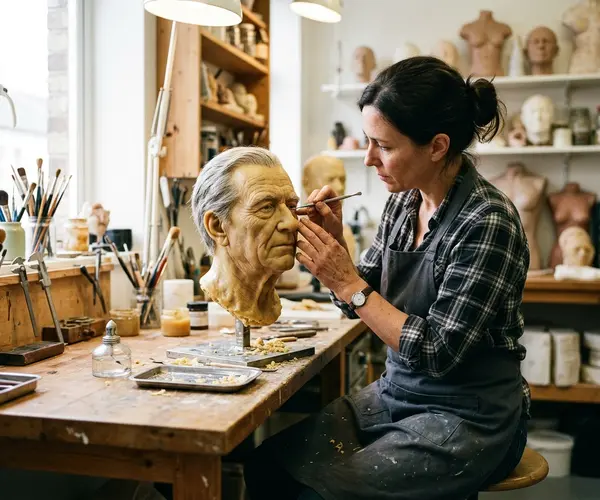
Curtius had developed a reputation for creating anatomical wax models for medical purposes, but he soon discovered that portraiture in wax attracted far more public interest. He opened exhibition spaces in Paris that displayed wax likenesses of public figures and celebrities of the day. Marie grew up surrounded by this work and began learning the techniques of wax modelling from childhood.
The French Revolution
By her late twenties, Marie had become a highly skilled wax sculptor in her own right. She created portraits of prominent figures including Voltaire, Jean-Jacques Rousseau and Benjamin Franklin, who sat for her in person. Her connections to the French court, where Curtius had gained patronage, placed her at the centre of Parisian society.
When the Revolution began in 1789, those connections became dangerous. Marie was imprisoned briefly and claims to have had her head shaved in preparation for the guillotine before being released. Whether this account is entirely accurate has been debated by historians, but what is certain is that the revolutionary authorities put her skills to grim use.
Marie was tasked with making death masks of guillotined victims, including Louis XVI, Marie Antoinette and Robespierre. She reportedly had to search through piles of bodies to find the heads she needed. These masks became some of the most compelling objects in her later exhibitions, providing a direct, physical connection to the violence of the Revolution.
Coming to London
Philippe Curtius died in 1794, leaving his wax collection to Marie. She had married Francois Tussaud in 1795, but the marriage was unhappy and the political situation in France remained unstable. In 1802, she left France with her elder son Joseph and a collection of wax figures, crossing the Channel to exhibit in London.
She never returned to France. For the next 33 years, Marie toured her exhibition around Britain and Ireland, travelling from city to city and displaying her figures in hired halls and assembly rooms. The touring show was a success, drawing large crowds who were fascinated both by the lifelike quality of the figures and by the revolutionary death masks that formed the centrepiece of the collection.
The Permanent Museum
In 1835, at the age of 74, Marie established a permanent exhibition on Baker Street in London. The location gave her a stable base after decades of travelling, and the museum quickly became one of London's most popular attractions. The collection continued to grow, with new figures added to reflect current events and public interests.
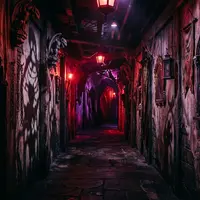
The Baker Street museum included a section that Marie called the "Separate Room," later renamed the Chamber of Horrors, which displayed the revolutionary death masks alongside figures of criminals and scenes of violence. This combination of celebrity portraiture and macabre spectacle proved irresistible to Victorian audiences.
Legacy
Marie Tussaud continued to work until very late in life, and a self-portrait she made at the age of 81 is still displayed at Madame Tussauds London. She died on 16 April 1850, and the business passed to her sons and then to subsequent generations of the family.
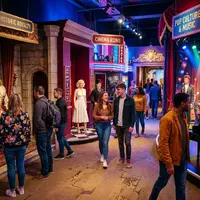
The museum moved to its current location on Marylebone Road in 1884 and has since expanded into a global brand with branches in more than 25 cities worldwide. But the London original remains the flagship, and Marie Tussaud's story remains at the heart of what makes it distinctive. She was not simply a businesswoman who displayed wax figures. She was a sculptor who lived through one of the most violent periods in European history and turned that experience into an art form that has endured for more than two centuries.