Royal Burials Spanning Five Centuries
St George's Chapel at Windsor Castle is one of the most significant royal burial sites in England. While Westminster Abbey is more closely associated with coronations, St George's Chapel has been the preferred resting place for many monarchs and their families since the late 15th century.
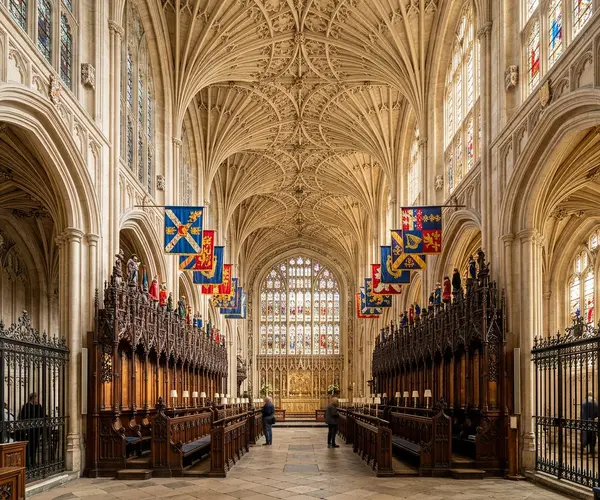
The chapel was begun by Edward IV in 1475 and completed under Henry VIII in 1528. Its Perpendicular Gothic architecture, with soaring fan-vaulted ceilings and vast stained-glass windows, makes it one of the finest ecclesiastical buildings in the country. But it is the royal vault beneath the chapel floor and the various side chapels that give this building its extraordinary historical significance.
The Monarchs
Henry VIII and Jane Seymour
Perhaps the most famous burial here is Henry VIII, who lies in a vault beneath the choir alongside his third wife, Jane Seymour. Jane was the only one of Henry's six wives to receive a queen's funeral, having died shortly after giving birth to the future Edward VI in 1537. Henry was interred here in 1547. The vault is marked by a simple stone slab in the floor of the choir, surprisingly modest for so powerful a king.
Charles I
The executed king was buried in the same vault as Henry VIII in 1649, after Parliament refused permission for him to be interred at Westminster Abbey. His coffin was rediscovered in 1813 when the vault was opened during renovations.
George III and Later Hanoverians
George III, who reigned for 59 years, is buried in the Royal Vault beneath the chapel along with his wife Queen Charlotte. George IV and William IV are also interred here, making St George's the primary burial site for the Hanoverian monarchs of the late 18th and early 19th centuries.
Elizabeth II and Prince Philip
The most recent royal burial took place in September 2022, when Queen Elizabeth II was laid to rest in the King George VI Memorial Chapel, a small side chapel added in 1969. She joined her father George VI, her mother Queen Elizabeth the Queen Mother, and her sister Princess Margaret. Prince Philip, who died in April 2021 and was initially placed in the Royal Vault, was moved to the Memorial Chapel to rest alongside his wife.
Beyond the Monarchs
The chapel also contains the remains of numerous other members of the Royal Family and significant figures. Edward VII's son Prince Albert Victor, Duke of Clarence, is buried here, as is Princess Charlotte of Wales, the only child of George IV, whose early death in 1817 triggered a succession crisis.
The Garter stalls in the choir, with their colourful heraldic banners and carved misericords, honour the living Knights and Ladies of the Order of the Garter. When a knight dies, their banner is removed, but their brass stall plate remains as a permanent record. Hundreds of these plates line the backs of the stalls, creating an unbroken record of the order's membership stretching back to the 14th century.
Visiting the Chapel
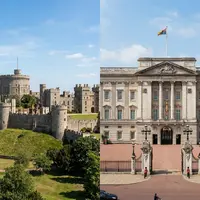
St George's Chapel is an active place of worship and holds regular services. Visitors can access the chapel as part of their Windsor Castle visit, though it is closed to tourists on Sundays when services take place. If you are weighing up whether to visit Windsor or London's other major royal residence, our Windsor Castle vs Buckingham Palace comparison covers what each one offers. The King George VI Memorial Chapel, where Elizabeth II is buried, is visible through a glass screen but visitors cannot enter it.