A Temple and a Bathing Complex
The Roman Baths in Bath sit above the only naturally occurring hot springs in Britain. The Romans arrived in the area around 43 AD and recognised the significance of the thermal waters, which rise from deep underground at a constant temperature of 46 degrees Celsius. By around 70 AD, they had constructed an elaborate bathing complex and a temple dedicated to the goddess Sulis Minerva, a fusion of the Celtic deity Sulis and the Roman goddess Minerva.
The original complex was far larger than what survives today. It included a series of heated rooms, cold plunge pools and the Great Bath itself, which remains the centrepiece of the site. The Romans used the baths not just for washing but as a social gathering place, much as they did throughout the empire.
What You Can See Today
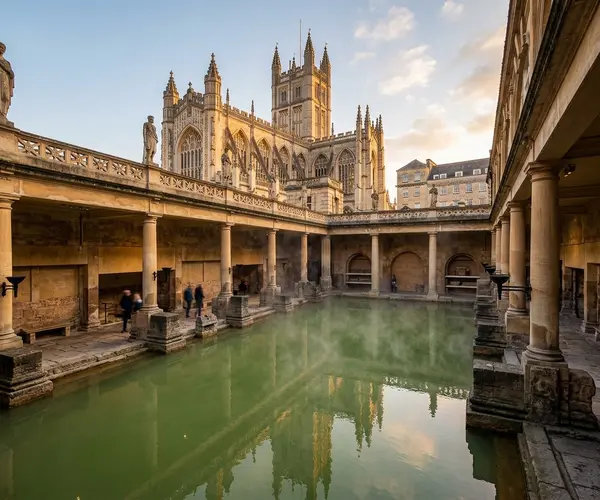
The museum and bath complex take visitors through several distinct areas. The Great Bath is the most striking, an open-air rectangular pool still filled with naturally heated water that has a distinctive green colour caused by algae growing in the light. The water itself is clean and constantly replenished from the spring below.
Around the Great Bath, visitors can see the remains of the original Roman paving, alcoves where bathers would have rested and the bases of columns that once supported a roof over the pool. Below ground level, the museum displays thousands of objects found during excavations, including Roman coins thrown into the sacred spring as offerings, carved stone heads and beautifully crafted jewellery.
The Sacred Spring
The spring itself is one of the most fascinating parts of the site. Over 1 million litres of hot water rise here every day, and the spring has been flowing continuously for thousands of years. The Romans considered it sacred, and archaeological digs have recovered curse tablets, small sheets of lead or pewter on which people scratched messages asking the goddess to punish those who had wronged them. These tablets provide a vivid and sometimes darkly amusing glimpse into everyday Roman life in Britain.
The Georgian Connection
The baths fell into disrepair after the Romans left Britain in the early 5th century and were gradually buried under later buildings. They were rediscovered in the 18th century, when Bath was reinventing itself as a fashionable Georgian spa town. The building that now surrounds the Roman remains is largely Victorian, designed to showcase the ancient site while adding terraces and statues above.
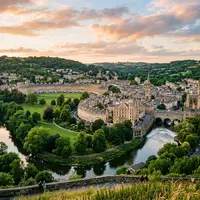
The Roman Baths and the Georgian city that grew up around them are so significant that Bath is one of only a handful of entire cities designated as a UNESCO World Heritage Site. The two eras of bathing culture, separated by more than a thousand years, give the city its unique character.
Visiting the Roman Baths
The site is well laid out for visitors, with an audio guide included that covers both the archaeology and the history of the spring. Allow at least 90 minutes to see everything properly. The museum section is extensive and worth taking time over, particularly the displays of Roman life and the collection of curse tablets. At the end of the visit, you can taste the thermal water at the Pump Room next door, which has been serving water from the spring since the 18th century. If you want to actually bathe in the thermal water, Thermae Bath Spa is a short walk away and draws from the same ancient springs.