The Founding of Chelsea FC
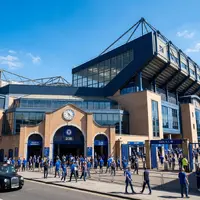
Chelsea Football Club has one of the most unusual origin stories in English football. The club was not formed by local enthusiasts or factory workers, as was common in the Victorian and Edwardian eras. Instead, it was created by businessman Gus Mears to give a purpose to a stadium he had already built.
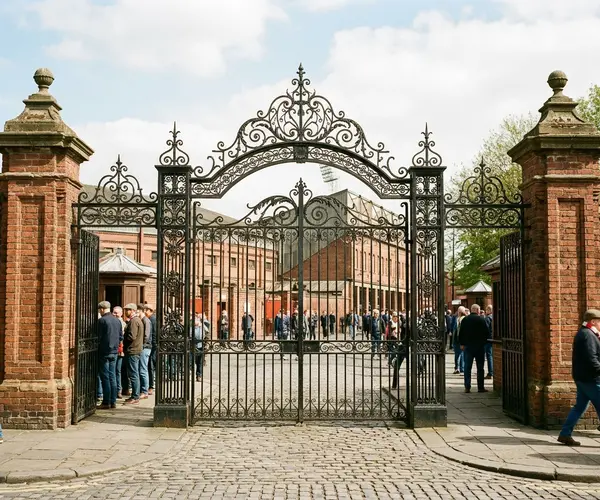
Mears had acquired the Stamford Bridge athletics ground in Fulham and wanted to turn it into a major football venue. He first offered the ground to nearby Fulham FC, who turned him down. Rather than sell the site for development, Mears decided to found his own club. On 10 March 1905, Chelsea Football Club was born at a meeting in a pub called The Rising Sun on the Fulham Road.
The club was elected to the Football League within weeks of its formation and began competing in the Second Division for the 1905-06 season. This rapid entry into professional football was remarkable and reflected the ambition that has characterised the club throughout its history.
The Early Decades
Chelsea's early years were marked by fluctuation between the First and Second Divisions. The club developed a reputation for attractive football and attracted large crowds to Stamford Bridge, but consistent success proved elusive. The ground itself became a major sporting venue, hosting FA Cup finals and international matches.
The club won its first major trophy in 1955, when they claimed the First Division championship under manager Ted Drake. This title came half a century after the club's founding and was a watershed moment in Chelsea's history.
The Swinging Sixties and Seventies
Chelsea became synonymous with the glamour and energy of 1960s London. Players like Peter Osgood, Charlie Cooke and Alan Hudson brought flair and style to the team, and Stamford Bridge became a fashionable destination for celebrities and cultural figures.
The club won the FA Cup in 1970 after a famous replay against Leeds United at Old Trafford, and followed this with the Cup Winners' Cup in 1971. These successes established Chelsea as a major force in English and European football.
However, the 1970s and 1980s brought financial difficulties and relegation. The club came perilously close to losing Stamford Bridge to property developers, and only the determination of supporters and key individuals saved the ground.
The Modern Era
Chelsea's transformation into one of Europe's wealthiest and most successful clubs began with the takeover by Roman Abramovich in 2003. Massive investment in players and infrastructure brought immediate results. Under Jose Mourinho, the club won back-to-back Premier League titles in 2005 and 2006, ending a 50-year wait for the league championship.
Further Premier League titles followed in 2010, 2015 and 2017. The crowning achievement of the modern era came in 2012, when Chelsea won the Champions League for the first time, defeating Bayern Munich in their own stadium in a dramatic penalty shootout.
A second Champions League title arrived in 2021, with the club beating Manchester City in Porto. This cemented Chelsea's position among the elite clubs in world football.
A Club Shaped by Its Ground
Throughout all of these changes, one constant has remained. Chelsea have played at Stamford Bridge for every single season of their existence, and you can experience that history first-hand on a Stamford Bridge stadium tour. The club and the ground are inseparable, a legacy of Gus Mears' decision in 1905 to create a football team rather than sell a piece of west London real estate.